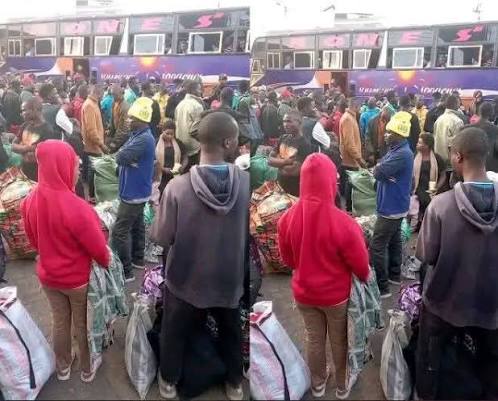
Undocumented Burundian nationals living in Kenya will be granted temporary legal protection as the government launches a process to document and regularise their status.
Government Spokesperson Charles Owino said the government was establishing a formal registration and documentation window for undocumented East African Community (EAC) nationals, with particular attention to Burundian citizens.
Owino urged affected individuals to present themselves to their respective High Commissions or Embassies to undergo formal identity registration.
“We call upon all undocumented East African Community nationals, and specifically Burundian citizens currently residing in Kenya, to immediately present themselves to their respective High Commissions or Embassies for formal identity registration,” Owino said.
Undocumented migrants to receive temporary protection
According to Owino, the Ministry of Foreign Affairs will work with the Embassy of Burundi and other regional partners to process and regularise the cases.
Individuals who present themselves for registration will, during the designated registration period, be presumed to be legally present in Kenya.
The arrangement is intended to allow those undergoing the process to access essential services, including healthcare and banking, as well as legal protections, without fear of harassment over their documentation status.
Owino said the government recognised that some EAC nationals had been living and working in Kenya without complete documentation due to historical circumstances and regional dynamics.
He warned that undocumented status could expose affected individuals to exploitation, difficulties during health emergencies and harassment by law enforcement.
“In many instances, this lack of documentation leaves these individuals vulnerable to exploitation, health emergencies, and unnecessary harassment by law enforcement. We recognize and deeply appreciate the rich contributions made by East African nationals, particularly our Burundian brothers and sisters, to Kenya’s trade, culture, and socio-economic fabric,” he said.
Government warns against xenophobia
The government also cautioned against harassment, intimidation and xenophobic attacks targeting foreign nationals.
Owino directed national security agencies, local authorities and businesses not to subject foreign nationals, including those undergoing registration, to arbitrary harassment or discrimination.
He warned that individuals who attempted to use recent immigration and trade directives to fuel xenophobia or mistreat Kenya’s neighbours would face legal action.
The government said it was also strengthening monitoring of migrant safety in urban centres in collaboration with civil society networks and humanitarian organisations.
Kenya reaffirms EAC commitments
Owino clarified that the measures should not be interpreted as a blanket ban on foreign nationals living or working in Kenya.
He reaffirmed the country’s commitment to the East African Community Common Market Protocol, saying Kenya’s relationship with its regional neighbours remained rooted in shared history, culture and economic ties.
The clarification comes amid heightened public debate and media reports surrounding recent government directives on foreign workers, small-scale retail businesses and informal trade.
The government has maintained that its immigration and trade measures are aimed at regulating economic activity and protecting opportunities for Kenyan citizens, rather than targeting nationals of neighbouring countries.