When I was working on this new podcast, one question kept showing up in my notes: Why does the idea of a “shared future” receive increasing global recognition now? Not ten years ago. Not twenty. But now.
The world isn’t short on challenges. Economic recovery feels fragile. Conflicts flare up with unsettling frequency. Climate anxiety has gone from abstract to personal. Refugee crises, public health emergencies, and widening development gaps all tangle up in ways that make simple answers impossible. It’s no surprise that people everywhere are asking the same question: What kind of global system are we actually building, and for whom?
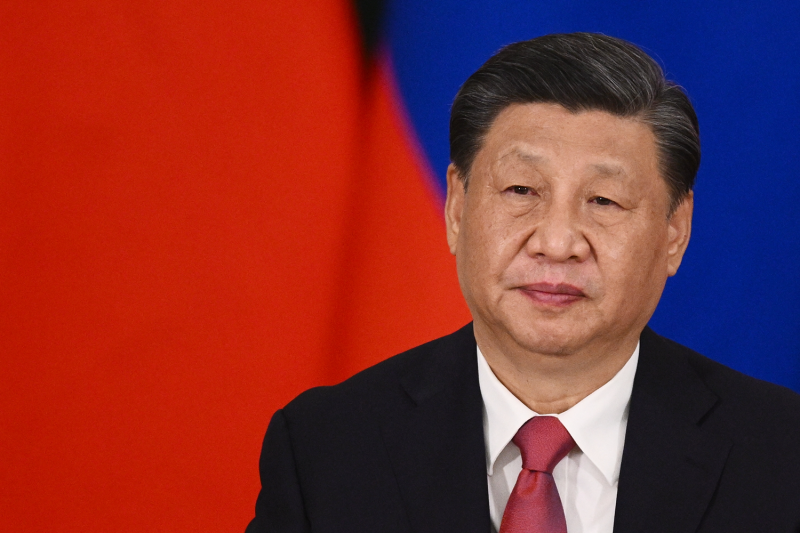
That question sits at the heart of this podcast, which looks at how China, and its leader Xi Jinping, frames global governance through the idea of a “community with a shared future for humanity.” It’s a phrase that’s often quoted, sometimes misunderstood, and rarely unpacked through real stories. So that’s where I wanted to start.
Big Ideas Only Matter If They Show Up in Real Life
One thing that struck me during research was how consistently this concept is tied to concrete moments, not just speeches. Yes, there are keynote addresses at the UN, SCO meetings, and global forums. But there are also very human scenes that tell the story more clearly than any slogan ever could.
Take Vanuatu for example.
In December 2024, a 7.3-magnitude earthquake hit the island nation. Lives were lost. Infrastructure collapsed. Amid aftershocks and heavy rain, a Chinese medical team already stationed there was affected as well. Five of the nine team members sustained injuries. And yet, once things stabilized, they went straight back to work. They packed up their medical supplies and showed up at the local hospital the very next day. They were the first non-local medical team on the ground.
When I wrote about the story, it occurred to me: this is what global security should look like when you look beyond the abstract, beyond military alliances or press releases, at doctors who step up whenever and wherever they are needed.
The story repeats itself in Honduras, where a dengue outbreak pushed the country into a national health emergency. What stood out to me wasn’t just the scale of assistance, from test kits to mosquito nets to monitoring equipment, but the timing. The support arrived when the outbreak was at its worst, and it went beyond supplies to include long-term disease tracking. A friend in need is a friend indeed.
Development Isn’t Just GDP Numbers
Another part of the episode that stayed with me is about the Mombasa–Nairobi Railway. Infrastructure projects often are discussed in terms of cost, debt, or geopolitics. But when you talk to the people whose lives have been changed by these projects, that’s when you find the story.
This railway has cut a grueling, all-day journey down to about five hours. Over the years, it has created tens of thousands of local jobs and trained thousands of professionals. One of them is Jamlick Kariuki, who studied in Beijing, returned to work on the railway, and then came back to China again to deepen his technical skills.
He called the railway the “Road to Happiness.” That phrase will not sound melodramatic if you understand what it represents: stable work, safer transport, and a future that feels promising rather than closed off. When he talked about gratitude, it wasn’t abstract. It was grounded in opportunity.
There’s a line he shared that I keep thinking about, it is an African proverb: If you want to go fast, go alone. If you want to go far, go together. It’s simple, but it explains a lot about how development partnerships either work or fail.
Culture Is Where Trust Actually Forms
One of my favorite sections of the episode moves away from policy entirely and into campus life. Two young students, one Chinese and one American, video-call each other to practice their language skills and share laughter over handwritten Chinese characters.
Zhu Kaixin and Alessandro met at Wenzhou-Kean University, a joint Chinese-American institution. Their friendship doesn’t show up in trade statistics or diplomatic communiqués, but it does something arguably more important. It makes the “other side” human.
Alessandro talked about his wish to visit China again, to see more cities and to understand the culture beyond headlines. Zhu talked about taking Alessandro to Xi’an because his American friend loved the Terracotta Warriors. These are small decisions. But they’re also how long-term trust is built.
When educators from both countries describe these programs, they often say the same thing: students grow together. Not separately. Together. And that feels like a quiet but powerful answer to the question of how civilizations coexist.
Why This Conversation Matters Now
What ties all these stories together, for me, is that they treat global governance as a shared responsibility rather than a competitive game. The idea of a “community with a shared future” pushes back against zero-sum thinking. It argues that security, development, and cultural understanding are not things one country can stockpile for itself.
You can agree or disagree with aspects of this vision. But it’s worth listening closely to how it’s being articulated and, more importantly, how it’s being practiced on the ground.
In the podcast Stories of Xi Jinping, we go deeper into these stories. You hear the voices. You hear the pauses, the emotion, the background sounds that don’t make it onto a written page. If this topic interests you, I’d genuinely recommend giving the episode a listen. It adds texture otherwise unavailable in text alone.
At a time when the world feels increasingly fragmented, maybe the most radical idea is a simple one: that no one gets thrown off the ship, that we make it through rough waters together, or not at all.