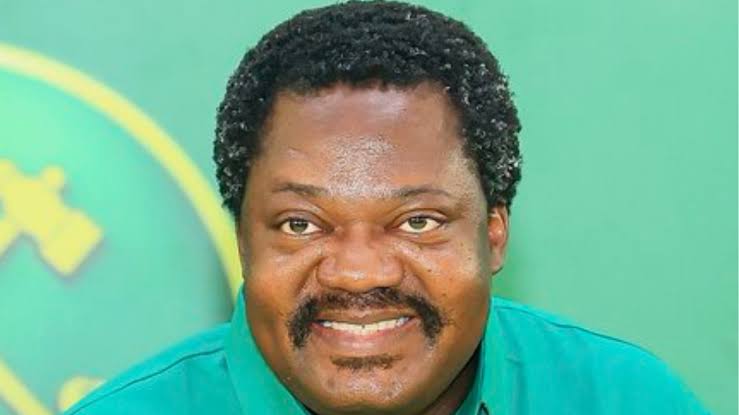
DODOMA, Tanzania | August 25, 2026 — Tanzania’s Vice-President Emmanuel John Nchimbi has resigned from office and announced his retirement from public service, saying he will leave his position on September 4, 2026.
Nchimbi announced his decision in a public notice issued on Tuesday, August 25, from the Office of the Vice-President in Dodoma.
The Vice-President said he had formally submitted his resignation to President Samia Suluhu Hassan, citing provisions of Tanzania’s Constitution that allow the President to appoint a new Vice-President following a vacancy.
Nchimbi says he promised to step aside
In explaining his decision, Nchimbi referred to a commitment he made to President Hassan on August 27, 2025.
He said he had promised to serve the President and Tanzania faithfully and to leave office whenever the President believed a change in the Vice-Presidency was necessary.
Nchimbi said he was now satisfied that Hassan wanted a change and had therefore decided to honour the commitment.
The announcement means President Hassan will have to move quickly to identify and appoint a replacement as the country prepares for a new phase of its political leadership.
Nchimbi thanked Hassan and the ruling Chama Cha Mapinduzi (CCM) for entrusting him with senior responsibilities.
He also thanked Tanzanians for supporting him throughout his public-service career and said he would continue serving the country as a patriotic citizen.
Who is Emmanuel Nchimbi?
Nchimbi was born on December 24, 1971, in Tanzania’s Mbeya Region.
He comes from a family with a strong public-service background. His father, John Nchimbi, served as an Assistant Commissioner of Police and Regional Police Commander in Mtwara.
Nchimbi attended Oysterbay Primary School in Dar es Salaam before studying at Uru Secondary School, Sangu Secondary School and Forest Hill Secondary School in Mbeya.
He later obtained an Advanced Diploma in Administration from the Institute of Development Management in Mzumbe.
His political career developed rapidly within CCM.
In 1998, he became chairman of the party’s youth wing, Umoja wa Vijana wa Chama Cha Mapinduzi (UVCCM).
He subsequently worked at the National Environment Management Council (NEMC) while pursuing further education.
Nchimbi obtained an MBA in Banking and Finance from Mzumbe University and later completed a PhD at the institution.
From Parliament to Cabinet
Nchimbi entered Tanzania’s national political scene after winning the Songea Town parliamentary seat in the 2005 General Election.
He secured the constituency for CCM with 67.6 per cent of the vote, defeating his main challenger, Edson Mbogoro of CHADEMA.
President Jakaya Kikwete subsequently appointed him Deputy Minister for Information, Culture and Sports in 2006.
He later served as Deputy Minister for Labour, Employment and Youth Development before becoming Deputy Minister for Defence and National Service.
Nchimbi retained his parliamentary seat in the 2010 General Election, defeating Mbogoro again.
His influence within government continued to grow.
He was appointed Minister for Information, Culture and Sports before later becoming Minister for Home Affairs, a position he held until December 2013.
A long career inside CCM
Nchimbi’s career has been closely connected to CCM, Tanzania’s governing political party.
His rise from the party’s youth leadership to Parliament, Cabinet and eventually the Vice-Presidency made him one of the country’s most experienced political figures.
His resignation therefore represents a significant change at the top of Tanzania’s government.
However, Nchimbi’s statement did not provide detailed reasons for why President Hassan now wants a different Vice-President.
Instead, he framed the decision as the fulfilment of the undertaking he made to the President a year ago.
What happens next?
Nchimbi will remain in office until September 4, after which the Vice-Presidency will become vacant.
Under Tanzania’s constitutional framework, President Hassan will then have to nominate a replacement who will take over the position.
The resignation comes at a significant moment for Tanzania, where changes in senior government positions can have implications for the balance of power within CCM and the wider administration.
For now, Nchimbi has signalled that his political career is coming to an end.
After decades in government and party politics, Tanzania’s Vice-President says he is ready to leave public office and continue his life as a private citizen.