Safaricom PLC has reported a 35.9 per cent increase in net profit to KSh58.2 billion for the first half of the 2026/2027 financial year, driven by strong growth in its Kenyan business and improved performance in Ethiopia.
The telecommunications giant attributed the performance to rising M-Pesa revenues, increased customer activity and significant improvements in its Ethiopian operations, which are now approaching profitability.
According to the half-year financial results, Safaricom Group’s service revenue increased by 13.1 per cent to KSh226.1 billion, while earnings before interest, tax, depreciation and amortisation (EBITDA) grew by 27.5 per cent to KSh129.2 billion.
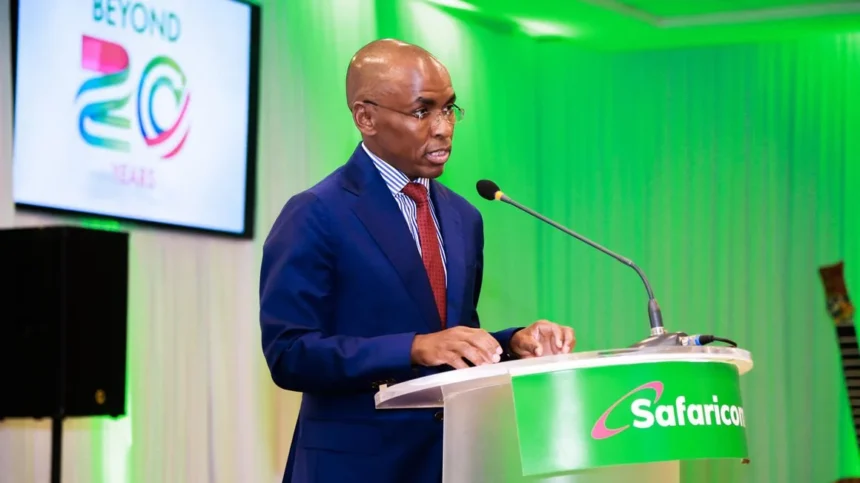
Safaricom Group Chief Executive Officer Peter Ndegwa attributed the growth to the company’s execution strategy, increased customer engagement and efforts to make its services more affordable.
“This has been supported by disciplined execution and stronger customer engagement. You saw we are growing customers, we are growing usage and we are actually reducing price, making the business much more affordable,” Ndegwa said.
Kenya remained Safaricom’s biggest revenue contributor, generating KSh216 billion in service revenue, representing an 11.3 per cent increase during the reporting period.
The Kenyan business also recorded a significant milestone after earnings before interest and tax (EBIT) crossed KSh100 billion for the first time in a six-month reporting period, reaching KSh101.8 billion.
M-Pesa Revenue Crosses KSh100 Billion
M-Pesa continued to strengthen its contribution to Safaricom’s financial performance, with revenue growing by 13.6 per cent to KSh100.1 billion.
The milestone marked the first time the mobile money platform had generated more than KSh100 billion in revenue during a half-year reporting period.
Safaricom Chief Finance Officer Dilip Pal said the company was expanding its existing financial services while exploring new opportunities to meet the changing needs of customers.
“While we are expanding the business we already have, I think the newer areas are also beginning to show up. So for us, all financial needs of customers is what we are trying to fulfil,” Pal said.
Safaricom Ethiopia Losses Narrow by 96.5%
Safaricom’s Ethiopian operation also recorded significant improvements, with service revenue surging by 71.6 per cent to KSh10.6 billion.
The business had attracted 15.4 million customers, supporting its growing contribution to the group’s overall financial performance.
More notably, losses in Ethiopia narrowed by 96.5 per cent to KSh434.4 million, bringing the operation closer to breaking even after years of investment in the market.
Pal said Safaricom would continue investing in Ethiopia but would now build on the operation’s improving financial position and progress towards profitability.
“So you can imagine we will also be investing in Ethiopia, but we will be investing on the position of strength, on the position of the balance sheet strength and the profitability strength of Ethiopia, going beyond the investment phase that we have done,” he said.
Safaricom’s Plans for the Second Half of 2026/2027
Looking ahead, Safaricom plans to increase investment in broadband connectivity and digital services during the second half of the financial year.
The company also intends to expand its use of artificial intelligence (AI) to improve operations, customer experience and service delivery.
Another key priority will be pushing its Ethiopian business towards breaking even by the end of the 2026/2027 financial year.
The latest results underline the contribution of Kenya’s telecommunications and mobile money businesses to Safaricom’s earnings, while highlighting the growing importance of Ethiopia as the company expands its regional operations.