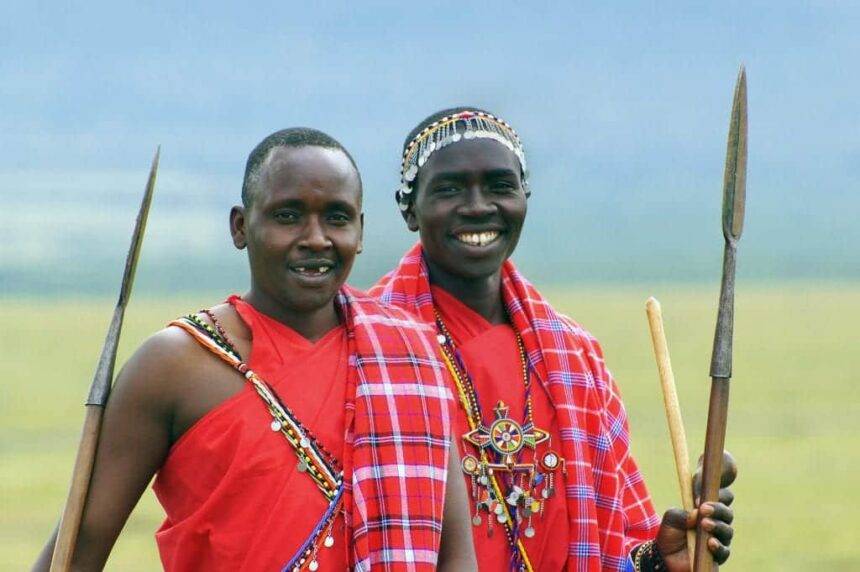
One of the most notable traditions in the Maa culture is their distinctive attire, which has attracted both local and international attention.
The Maasai attire, according to the community, is not merely clothing but a reflection of their history, traditions, and way of life. With its vibrant colours, intricate beadwork, and unique designs, Maasai attire serves as a powerful symbol of cultural pride and resilience.
In August this year, the Maa Cultural Event was declared an annual event by President Dr. William Ruto when he participated in the cultural event that was held in the Sekenani area of Narok County.
The cultural event brought participants from all the Maa-speaking counties, which include Narok, Kajiado, Laikipia, Samburu, and Ilchamus communities in Baringo County.
Mzee Nariku Ole Simel, 90, of Entaseekera area, Loita Ward says the attire differs according to sex, age, and location. Although Shuka is now considered traditional clothing for the Maasais, Mzee Simel reveals the community only began to wear commercial cotton cloth in the 1960s.
Before independence, he recalled, the community used to put on leather garments mostly made from calf hides and sheep skins.
One of the most distinctive features of Maasai attire is the intricate beadwork, which he revealed is carefully selected for its colour and symbolic significance.
He says red represents bravery and strength, white symbolises peace and health, and blue stands for energy and the sky.
“In my youth, the shukas were used during the rite of passage when graduating from one age set to another. It was a symbol of strength and courage,” he adds.
The elderly man reiterates that recently circumcised morans (ilaibartak) put on different kinds of bird features on their heads to show their identity.
“The young men are supposed to hunt for the birds, which they slaughter, and pick the long features to decorate their heads,” he reveals, adding that this is done across all the Maa clans.
The young morans plait their hair and wrap a slim, small shuka around their waist, exposing the rest of their body. On special occasions, they apply red ochre colour to their bodies to signify decency, he continues.
“The red ochre has a deep significance. Those who apply it are regarded as sacred, such that their instructions are respected by both the young and the old,” he says.
The adoption of Western clothing by some Maasai members, particularly those living in urban areas, he says, has raised questions about the preservation of traditional attire and called on the community not to abandon their culture, quoting a Swahili proverb, ‘Mwacha mila ni mtumwa’ translated to mean, anyone who abandons his or her culture is a slave.
Mama Seela Parkisua, an expert in the art of beadwork, says beads are passed on from one generation to another in a bid to preserve the culture.
“It’s not just about making something beautiful, but also about passing down our history and values to the coming generations,” she says.
She believes that putting on the beads connects them with their tradition and ancestors, hence sharing in their wisdom and knowledge.
Ms. Parkisua says that unlike the Samburu men who love wrapping a ‘Kikoi’ on their waist, exposing their upper part, the communities in Narok and Kajiado use two shukas to wrap their bodies.
She observes that the Purko clan that lives in Narok County mostly adorns themselves with mixed-coloured beads and bright red shukas, while the Kajiado people love a mixture of red and blue shukas.
The Maasai consider red to be the most important type, since it stands for courage, strength, and the togetherness of the Masaai people.
“Red also symbolises blood and protection against wildlife,” she concludes.