The US strikes on Iran’s nuclear facilities did not destroy the country’s nuclear programme and probably only set it back by months, according to an early Pentagon intelligence assessment of the attack.
The Islamic Republic’s stockpile of enriched uranium was not eliminated in Saturday’s bombings, sources familiar with the Defense Intelligence Agency evaluation told the BBC’s US partner CBS.
The White House said the “flat-out wrong” assessment was leaked by “a low-level loser in the intelligence community”.
President Donald Trump again declared the nuclear sites in Iran “completely destroyed” and accused the media of “an attempt to demean one of the most successful military strikes in history”.
The US has 18 intelligence agencies, which sometimes produce conflicting reports based on their mission and area of expertise. For example, the American intelligence community is still not in agreement over the origins of Covid-19.
It is possible future intelligence reports will include more information showing a different level of damage to the facilities.
According to CBS, officials familiar with the report warned it was an early assessment that could change as more information becomes available about the sites. It is also not clear at what confidence level the findings included in the report were made.
The US struck three nuclear facilities in Iran – Fordo, Natanz and Isfahan – with “bunker buster” bombs capable of penetrating 18m (60ft) of concrete or 61m (200ft) of earth before exploding.
But sources familiar with the Pentagon’s intelligence assessment say Iran’s centrifuges are largely “intact” and the impact was limited to above-ground structures.
Entrances to two nuclear facilities were sealed off, and some infrastructure was destroyed or damaged, but much of the facilities, which are deep underground, escaped the brunt of the blasts.
The anonymous sources told US media it is estimated that the attack only set Iran back “a few months, tops”, and that any resumption of its nuclear programme may be based on how long it takes the country to dig out and make repairs.
Sources also confirmed to CBS that some of Iran’s enriched uranium stockpile was moved before the strikes, according to the intelligence assessment.
The US 30,000lb (14,000kg) Massive Ordnance Penetrator bomb was thought to be the only weapon capable of destroying Iran’s underground enrichment facilities.
Tehran has always said its nuclear programme is for peaceful purposes.
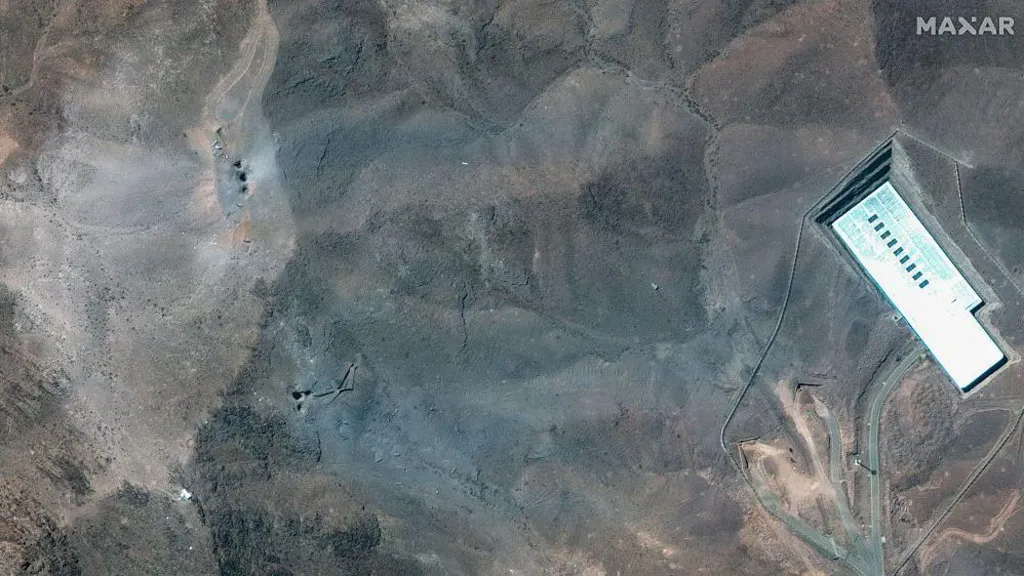
In the hours that followed Saturday’s strikes, Gen Dan Caine, chairman of the joint chiefs of staff, told reporters that it would take time to assess the damage to the facilities.
But he added that “all three sites sustained extremely severe damage and destruction”. Satellite images showed six fresh craters clustered around two entry points at the Fordo nuclear sites, as well as grey dust and debris.
It is unclear from the images, however, how much damage the sites sustained below the surface.
Hassan Abedini, the deputy political director of Iran’s state broadcaster, claimed the three sites targeted by the US had been evacuated a “while ago”, and that Iran “didn’t suffer a major blow because the materials had already been taken out”.
US officials, on the other hand, hailed the mission as a success, as have Israeli officials.
In a statement on Tuesday, Defence Secretary Pete Hegseth said that “based on everything we have seen – and I’ve seen it all – our bombing campaign obliterated Iran’s ability to create nuclear weapons”.
“Anyone who says the bombs were not devastating is just trying to undermine the President and the successful mission,” Hegseth said.
US Congressman Brad Sherman, a Democratic member of the House Foreign Affairs Committee, told the BBC the Trump administration was using vague terms to declare victory – when it’s still unclear what the bombing mission accomplished.
He added that the administration hasn’t said whether the strikes destroyed Iran’s ability to weaponise its uranium, its uranium-enriching centrifuges or depleted its stockpile, which he said would be enough to create nine nuclear weapons.
“When they say obliterate the programme, they’re not even saying whether it’s obliterated the centrifuges and the ability to create uranium in the future or whether it is obliterating the stockpile,” Sherman told the BBC.
“All indications, including Vice-President Vance’s statement, indicate that we don’t think we got the stockpile,” he said, noting images that show trucks going to one of the facilities days before the strikes.
Israeli Prime Minister Benjamin Netanyahu said on Tuesday that since hostilities with Iran began on 13 June, Israel has been successful in curbing Iran’s nuclear ambitions, as well as destroying its missiles arsenal.
“We have removed two immediate existential threats to us – the threat of nuclear annihilation and the threat of annihilation by 20,000 ballistic missiles,” Netanyahu said in video remarks issued by his office.
A report in Saudi news outlet Al Hadath, citing an unnamed Israeli source, said that Israel believes most of Iran’s enriched uranium is buried under the rubble.
David Albright, president of the Institute for Science and International Security and an expert on secret nuclear weapons development, said the damage Iran sustained by the US attacks will mean “it will take significant time, investment and energy” for it to restore its nuclear programme.
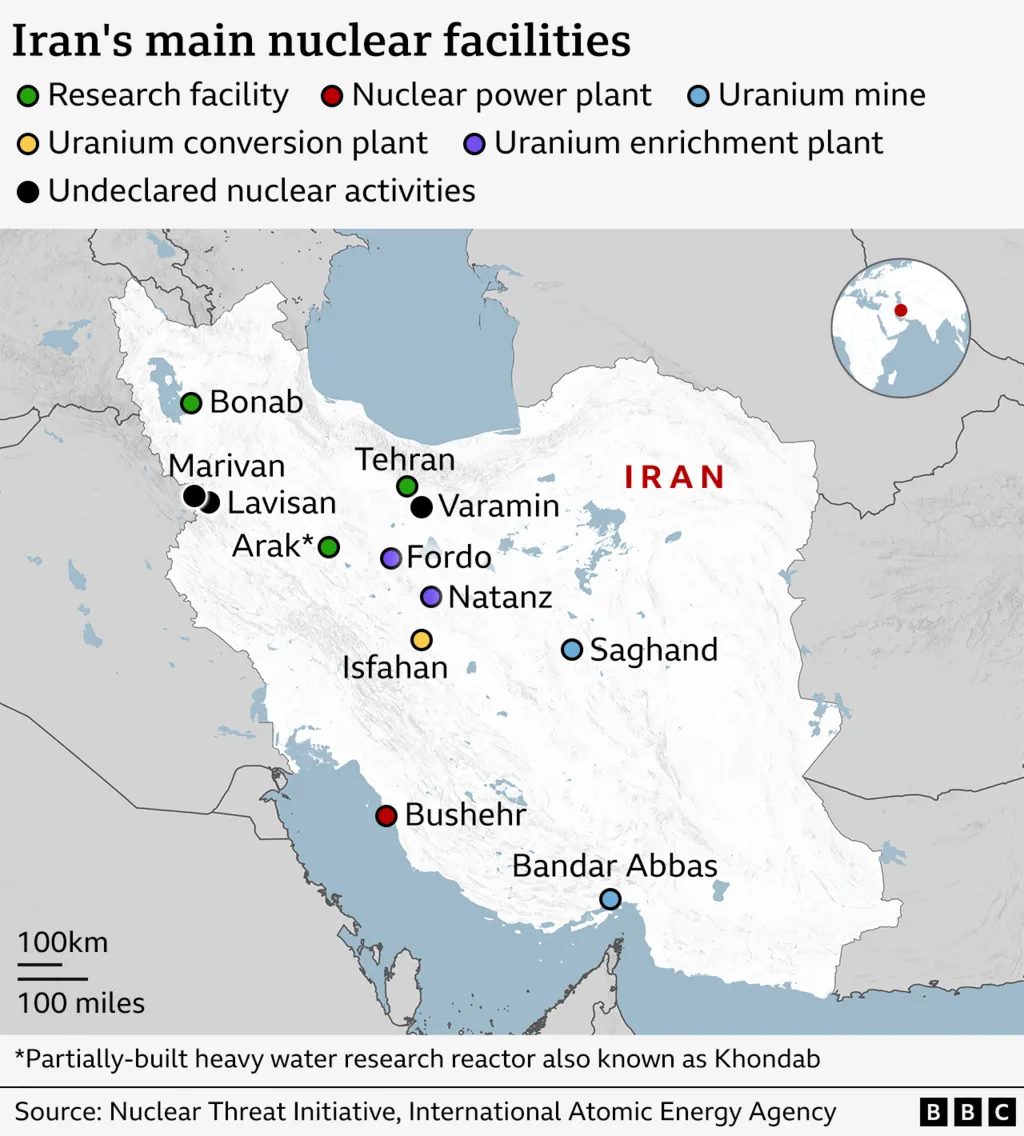
In a post on X, Albright added that Iran is “under intense scrutiny and observation from the United States and Israel”, and it risks further attacks if it tries to rebuild.
On Monday, Iran retaliated against the US airstrikes by launching a missile attack on Al-Udeid Air Base in Qatar, which is home to thousands of US troops.
That attack was largely intercepted, and no casualties or injuries were reported.
Since Iran’s retaliation, an Iran-Israel ceasefire – brokered by President Trump and Qatari mediators – is in place.