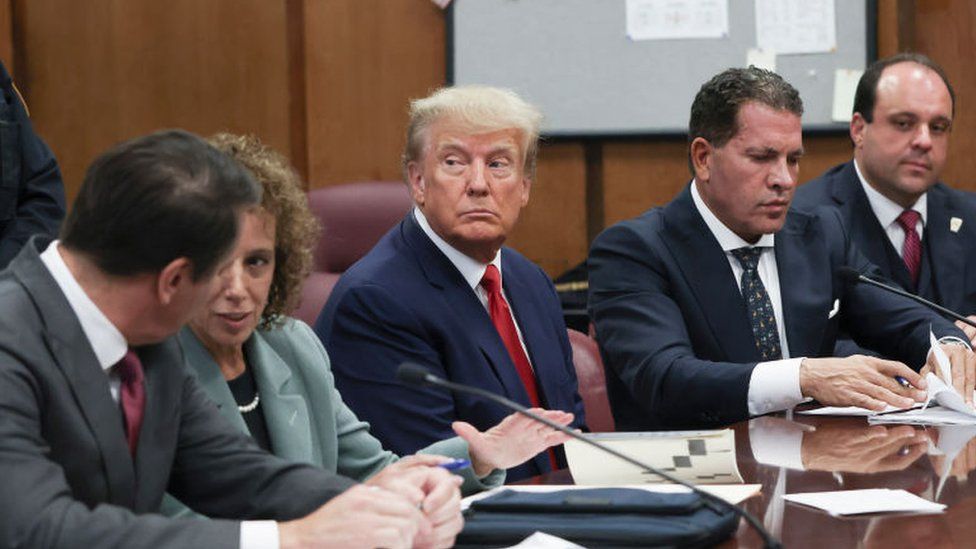
Donald Trump has become the first former American president ever to be criminally charged, pleading not guilty to 34 counts of falsifying business records. So what comes next for him and his defence team?
Although these charges are usually treated as lesser misdemeanours, Mr Trump is accused of committing felonies – more serious offences that carry a maximum penalty of prison time.
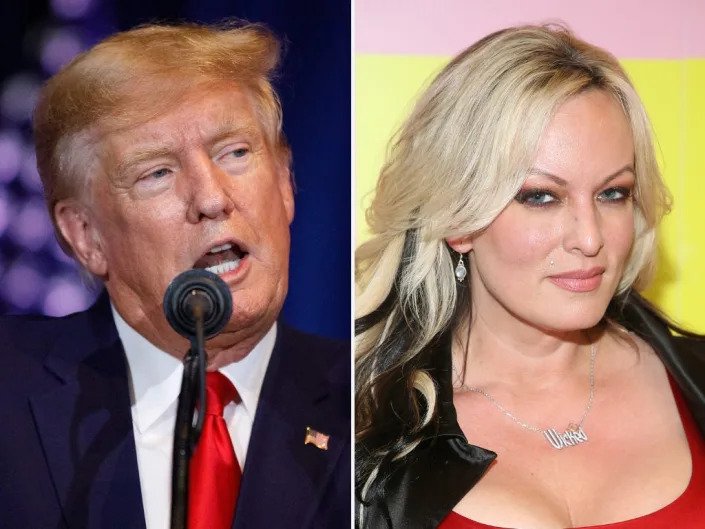
The charges relate to Mr Trump’s involvement in hush money payments to former porn star Stormy Daniels ahead of the 2016 presidential election.
If the case gets to trial, it will be watched worldwide.
But the legal process that lies ahead could last months – and will certainly see Mr Trump’s lawyers fighting to get the case dropped.
Judge could ‘gag’ Trump
Legal experts have speculated that the judge may impose a so-called “gag order” on Mr Trump – barring him and his legal team from publicly discussing this case.
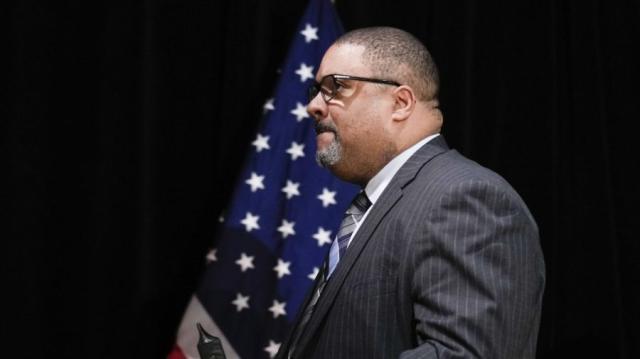
On social media, the former president has claimed Judge Juan Merchan “HATES” him and treated his company “VICIOUSLY” in an earlier tax fraud case. He has also bashed Manhattan District Attorney Alvin Bragg, the prosecutor, as an “animal” and “degenerate psychopath” whose investigation could bring “death and destruction”.
At his Tuesday arraignment, no gag order was requested and Judge Merchan said he would not impose one “at this time even if it were requested”.
But in pointed remarks, he told the former president: “Please refrain from making comments or engaging in conduct that has the potential to incite violence, create civil unrest, or jeopardise the safety or well-being of any individuals.”
About five hours later, Mr Trump made comments criticising the judge and prosecutor by name. In a speech among supporters at his Florida home, he slammed Judge Merchan as a “Trump-hating judge with a Trump-hating wife and family” and Mr Bragg as a “failed district attorney” who should himself be prosecuted.
If Judge Merchan does impose a gag order in the future and the Trump team violates it, the former president will be held in contempt of court, which could come with a fine of $1,000 (£800), up to 30 days of jail time, or both.
Prosecutors hand over evidence

The Manhattan District Attorney’s office has been investigating the Trump hush money payments for five years.
Mr Bragg alleges Mr Trump falsified the true nature of the payments because they were made in support of a crime – attempting to influence the 2016 presidential election, which is a violation of election law.
With Mr Trump’s arraignment complete, prosecutors must now turn over evidence they have gathered during their probe to Mr Trump’s legal team, a standard process known as discovery.
This is generally completed within 35 days of arraignment, but the Bragg team has been given 65 days – or until 8 June – to produce the “vast majority” of its materials.
Evidence will include law enforcement interviews with, and witness testimony from, key figures like Ms Daniels and Mr Trump’s former lawyer Michael Cohen, as well as prosecutors’ internal communications.
It will also include minutes from, and exhibits shown to, the grand jury convened earlier this year by Mr Bragg to take a closer look at the allegations.