In the ever-changing world of technology, three groundbreaking technologies have emerged with the potential to revolutionize our interaction with the digital realm: augmented reality (AR), virtual reality (VR), and mixed reality (MR). These immersive technologies offer users interactive experiences, but each has its own distinct features and applications.
Augmented Reality (AR)
An excellent example of AR is the widely popular mobile game, Pokémon Go. Players use their smartphones to view their surroundings through the device’s camera, while virtual Pokémon characters are superimposed onto the real world. This game showcases how AR can merge the virtual and physical worlds, enabling users to interact with virtual objects in their actual environment.
Another noteworthy application of AR is the Ikea Place app, which allows users to virtually place furniture items in their homes using their smartphones. By leveraging AR, users can visualize how specific pieces of furniture will look in their space before making a purchase.
AR finds applications in various industries, including education, healthcare, and marketing. In education, AR can create interactive learning experiences by overlaying educational content onto textbooks or real-life objects. In healthcare, AR can assist surgeons by displaying critical patient information during complex procedures. In marketing, AR can enhance product demonstrations by allowing customers to see virtual representations of products in real-time.
Virtual Reality (VR)
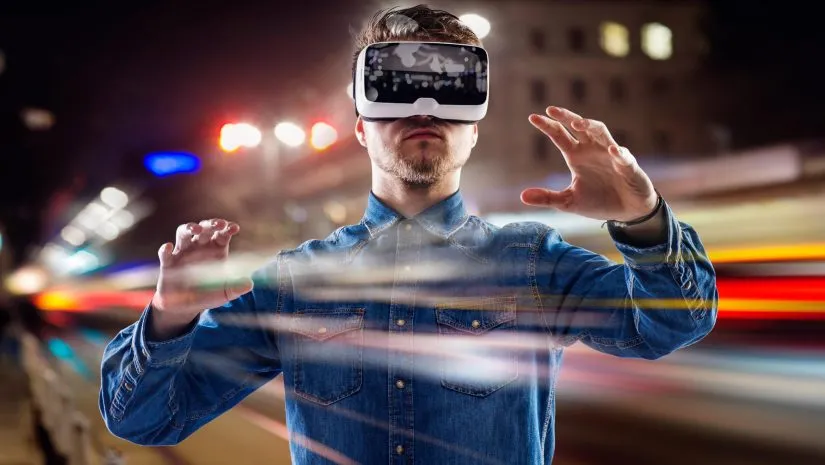
Unlike AR, virtual reality immerses users in completely simulated environments, disconnecting them from the physical world. VR aims to create a sense of presence, making users feel truly immersed in a virtual environment. It typically involves the use of a headset with a screen that provides a 3D visual and audio experience.
VR finds applications in gaming, training simulations, virtual tours, and therapy. In gaming, VR enables players to fully immerse themselves in the virtual game world, offering a more engaging experience. In training simulations, VR recreates real-world scenarios for purposes such as pilot flight training or surgical practice. VR also allows users to take virtual tours of famous landmarks and explore destinations they may never visit in person. Additionally, VR is used in therapy to treat phobias, anxiety disorders, and PTSD by exposing patients to virtual environments that help them confront and overcome their fears in a controlled setting.
Mixed Reality (MR)
MR combines elements of both AR and VR to create a new and immersive experience. Unlike AR and VR, which are often used interchangeably, MR aims to seamlessly blend virtual and real-world environments. In MR, virtual objects interact with the physical surroundings, and users can interact with them naturally and intuitively. Advanced sensors, cameras, and algorithms are used to map and understand the real-world environment in real-time.
An example of MR is Microsoft’s HoloLens, a head-mounted display that allows users to see and interact with virtual objects in their real-world environment. Users can wear the HoloLens and experience holographic content seamlessly integrated into their surroundings. They can place virtual furniture in their living room or interact with virtual characters that appear to be present in their physical space. Another example is Magic Leap’s Magic Leap One, which combines virtual and real-world elements to provide users with interactive and lifelike digital content integrated into their environment.
MR has the potential to revolutionize various industries. In healthcare, MR can assist surgeons during operations by overlaying vital patient information directly onto their field of view, enhancing precision and reducing the risk of errors.
Now that we have explained each technology, let’s explore their differences for better understanding.
AR vs VR vs MR: Differences
Here are the differences between Augmented Reality (AR), Virtual Reality (VR), and Mixed Reality (MR) technologies:
Integration with the Real World:
- AR: Adds digital content on top of the real-world environment.
- VR: Completely replaces the real-world environment with a virtual one.
- MR: Combines digital content with the real world, allowing them to interact with each other.
User’s Awareness of the Real World:
- AR: Users remain aware of and can interact with the real world.
- VR: Users are isolated from the real world and fully immersed in the virtual environment.
- MR: Users can interact with both the real world and virtual objects.
Hardware:
- AR: Typically requires hardware like a camera and display (e.g., smartphone, tablet, AR glasses).
- VR: Requires a VR headset that blocks out the real-world view and often handheld controllers.
- MR: Requires specialized headsets (e.g., Microsoft HoloLens) that blend real-world and digital content.
Interactivity:
- AR: Digital content is static and does not interact with the real-world environment.
- VR: Allows interaction within the virtual environment but not with the real world.
- MR: Digital content can interact with the real world in a contextually aware manner.
Use Cases:
- AR: Often used for information overlay, gaming, navigation, and educational apps.
- VR: Mainly used for gaming, simulations, virtual tours, and therapy.
- MR: Used for applications requiring interaction between real and virtual objects, such as collaborative 3D design, advanced training, and simulations.
Level of Immersion:
- AR: Provides a low level of immersion as it simply overlays digital content on the real world.
- VR: Provides a high level of immersion by placing the user in a fully simulated environment.
- MR: Offers a medium to high level of immersion by blending real and virtual objects in a contextually aware manner.
Future of AR, VR, and MR
The future of Augmented Reality (AR), Virtual Reality (VR), and Mixed Reality (MR) holds immense potential for various industries. These emerging technologies are revolutionizing the way we interact with digital content and are set to transform industries such as gaming, healthcare, education, tourism, and manufacturing.
AR, VR, and MR have already made significant advancements in the gaming industry. With the introduction of immersive virtual environments, gamers can now experience a whole new level of realism and interaction. The technology allows users to be fully engrossed in the game, giving them a sense of presence and enhancing the overall gaming experience. As these technologies continue to evolve, we can expect to see more advanced gameplay, realistic simulations, and even greater integration with other forms of entertainment media.
The potential impact on the healthcare industry is also immense. Surgeons are using augmented reality to visualize 3D models of patients’ organs during surgeries, enabling them to perform complex procedures with greater precision. Virtual reality is also being used for pain management and therapy, creating immersive environments to distract patients from their discomfort. Additionally, medical students can benefit from virtual reality simulations that allow them to practice procedures in a safe and controlled environment.
Education is another industry that stands to benefit greatly from these technologies. Virtual reality can provide students with immersive and interactive learning experiences, enabling them to explore historical sites, travel to different countries, or even delve into complex scientific concepts. Augmented reality can enhance traditional textbooks by overlaying digital content such as videos, images, and interactive elements, making learning more engaging and interactive.
With products like the Apple Vision Pro making these technologies mainstream, it is clear that these three technologies will enhance the way we interact with many industries in the near future.