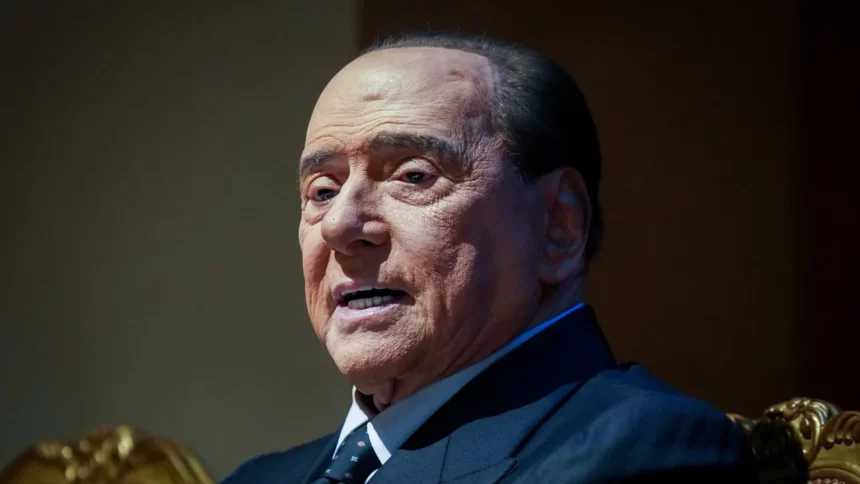
Berlusconi’s famous quotes, among them, his perma-tan, gaffes, “bunga bunga” parties, and outsized ego, was a proto-Trumpian populist,
He was the man to beat in Rome for more than two decades and one of European politics’ most controversial figures.
Italy’s longest-serving postwar prime minister, Berlusconi, who has died aged 86 according to Italian media, held the job on three occasions, amassing along the way a fortune ranked by Forbes magazine last year as the country’s fourth-biggest.
Skilled in the art of not just weathering scandals but emerging from it with his profile and popularity enhanced, he faced prosecution more than 30 times on charges of embezzlement, false accounting, and bribing judges.
Many cases failed to go to trial, sometimes because Berlusconi changed the law under which he had been charged.
Only once was he convicted, of tax fraud, in 2013. That led to a four-year prison term, of which three were pardoned, a year’s community service, and a six-year bar from legislative office – from which he instantly bounced back, in 2019, as an MEP.
A Singer
Saying Italy needed a charismatic self-made businessman to make it great again, Berlusconi dabbled in music and sang on cruise ships before building a vast personal fortune as a property developer in Milan.
Successfully, with his Fininvest Media and TV empire, founded his conservative, pro-market Forza Italia party and entered politics in late 1993.
He became prime minister in January 1994, although his center-right coalition government lasted barely nine months before collapsing.
Silvio devoted much of his first term, according to his many critics, to passing laws and promoting policies that would protect him from prosecution and boost the profits of his private businesses.
Losing Elections
He lost the 1996 election to the center-left leader Romano Prodi, but triumphed again in 2001 and then become the first Italian politician in fifty (50) years to complete a full five-year mandate, before losing again to Prodi in 2006.
His third term began in 2008, after Prodi’s government collapsed, and ended with Berlusconi’s resignation in 2011.
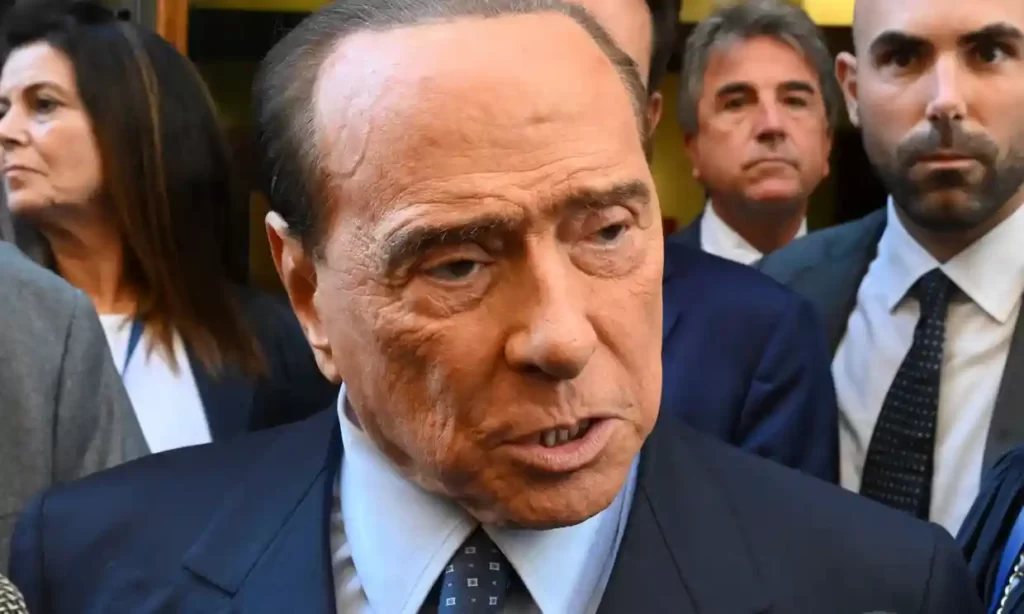
With Italy under IMF and EU surveillance that November, even his closest allies criticized Berlusconi’s reluctance to take the drastic action needed to bring Europe’s third-largest economy under control in the wake of Europe’s financial crisis, ushering in a technocratic government.
Italy’s public debt doubled during Berlusconi’s tenure.
In his enforced six-year absence, Italy’s politics changed.
The former PM’s voters defected en masse to Matteo Salvini’s far-right Lega, which formed an uneasy coalition with the anti-establishment Five Star Movement after the 2018 elections in which Berlusconi’s party scored 14% of the vote – down from 37% in 2008.
A Billionaire
But the billionaire tycoon had no difficulty winning election as an MEP while returning to the national fray last year when Forza Italia entered an uneasy far-right-led coalition with Giorgia Meloni’s Brothers of Italy and Salvini’s Lega.
Reinforcing a career-long reputation for jaw-dropping gaffes and outrageous asides, he subsequently called Meloni “patronizing, overbearing, arrogant, and offensive.”
Silvio boasted of his close ties with Vladimir Putin and claimed Ukraine’s president, Volodymyr Zelenskiy, was to blame for his country’s devastation.
Among many other politically incorrect sallies, Berlusconi also suggested the German center-left politician Martin Schulz could play a Nazi guard in a war film, reportedly called the German chancellor, Angela Merkel, an “unfuckable lard-arse”, and, in 2008, shocked many by describing then-US President-elect Barack Obama as “handsome, young and … suntanned”.
The Scandals and Controversies
His career was also marked by sex and related corruption scandals epitomized by lurid tales of “bunga bunga” sex parties at his luxurious villa outside Milan, claims of unlawful sex with a 17-year-old nightclub dancer, and subsequent allegations of witness-tampering.
The parallels with Donald Trump are striking: both men began as real-estate magnates, became media stars, and segued into politics.
Both have made a point of undermining their country’s established institutions, including the press and judiciary.
Rejected by their respective liberal establishments, both also have responded – despite their great wealth – with the populist tactic of portraying themselves as the true voice of the people against an out-of-touch and corrupt elite.
Throughout his political career, Berlusconi’s dominance of the Italian media – including ownership of three television channels – drew justifiable accusations of conflict of interest and excess of influence.
It would be wrong, however, to conclude that this was the sole explanation for his enduring success.
The reason Berlusconi was constantly re-elected (“Bastava non votarlo,” his opponents would endlessly lament:
“All you have to do is not vote for him”) is that he represented a part of Italy that places money and power above justice and ethics.
His legacy is likely to be not the bunga bunga parties, the bling and the vulgarity, but the Italian electorate’s loss of faith in their political class – a loss that has led, ironically, to the emergence of a new generation of altogether more radical, and harder-right, populist politicians.