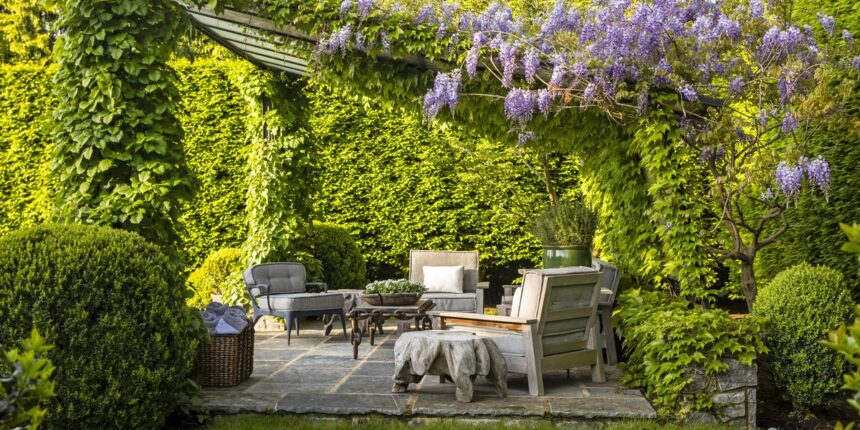
City parks and green spaces help counter heat, boost biodiversity and instill a sense of calm in the urban jungle – and they also help slow biological aging, a study found.
People who have access to green spaces were found to be on average 2.5 years biologically younger than those who do not, according to the study, published Wednesday in Science Advances.
“Living near more greenness can help you be younger than your actual age,” Kyeezu Kim, the study’s lead author and a postdoctoral scholar at Northwestern University’s Feinberg School of Medicine, told AFP.
“We believe our findings have significant implications for urban planning in terms of expanding green infrastructure to promote public health and reduce health disparities.”
Exposure to green spaces has previously been linked with better cardiovascular health and lower rates of mortality.
It’s thought that more physical activity and social interactions are at play, but whether parks actually slowed down aging on a cellular level has been unclear.
To investigate, the team behind the study examined DNA chemical modifications known as methylation.
Prior work has shown that so-called epigenetic clocks based on DNA methylation can be a good predictor of health conditions such as cardiovascular disease, cancer and cognitive function, and are a more accurate way of measuring age than calendar years.
Kim and colleagues followed more than 900 white and Black people from four American cities — Birmingham, Alabama; Chicago; Minneapolis; and Oakland, California — from 1986 to 2006.
Using satellite imaging, the team assessed how close the participants’ residential addresses were to surrounding vegetation and parks. It then paired this data with blood samples taken in years 15 and 20 of the study, to determine their biological age.
The team constructed statistical models to evaluate the results and control for other variables such as education, income and behavioral factors, like smoking, that might have affected the results.
They found that people whose homes were surrounded by 30% green cover within a 5-kilometer (3-mile) radius were on average 2.5 years younger biologically compared with those whose homes were surrounded by 20% green cover.
The benefits were not evenly shared. Black people with more access to green space were only one year biologically younger, while white people were three years younger.
“Other factors, such as stress, qualities of the surrounding green space, and other social support, can affect the degree of benefits of green spaces in terms of biological aging,” said Kim, adding that the disparities required further study.
For example, in deprived neighborhoods, parks used for illicit activities might be less frequented, negating the benefits.
Next steps might involve investigating the link between green spaces and specific health outcomes, she added. It’s also not yet clear how exactly greenery reduces aging, only that it does, she said.
Epidemiologist Manuel Franco of Spain’s University of Alcala and Johns Hopkins University called the research a “well-designed study.”
“We have more and better scientific evidence to increase and promote the use of urban green spaces,” said Franco, who was not involved in the study.