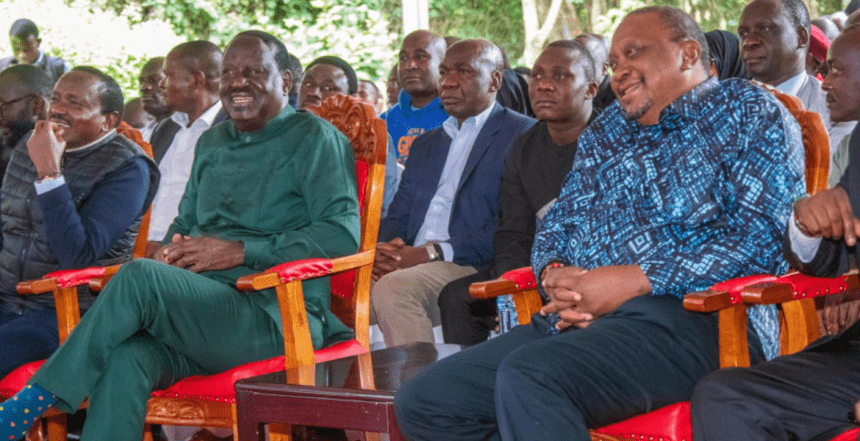
The Azimio la Umoja coalition has rejected a statement issued by Kimani Ichung’wah, the National Assembly majority leader, which provided details about consultations aimed at resolving the dispute between the government and the opposition.
According to Ichung’wah’s statement released on Saturday, the decision was reached through peaceful discussions involving both the Kenya Kwanza and Azimio coalitions. They agreed to form a 10-member committee with equal representation from each side, comprising 5 representatives each.
The breakdown of the committee members according to Ichungwa is as follows:
- 4 members from outside parliament (2 from each coalition).
- The Leaders of Majority and Minority from the National Assembly.
- 4 additional Members of Parliament (2 from each coalition).
Ichung’wah also claimed that the discussions would primarily focus on several key issues, including:
- Reconstitution of the Independent Electoral and Boundaries Commission (IEBC).
- Implementation of the 2/3 gender rule.
- Strengthening and formalizing the Constituency Development Fund.
- Establishment and formal recognition of the Office of the Leader of the Opposition.
- Establishment and formal recognition of the Office of the Prime Cabinet Secretary.
Azimo has disowned this statement saying that the agenda of the talks has not even been discussed yet.
According to Azimio, their official statement, released before KK’s (Kenya Kwanza’s), has not yet presented their core issues for discussion. The coalition has emphasized that its fundamental principles and values, always prioritizing the interests of the people in any political discourse.
Azimio reiterated that their four-point agenda remains unchanged, which includes addressing the high cost of living, conducting an electoral audit and implementing reforms, ensuring non-interference in coalitions and their constituent parties, and launching an investigation into police brutality that has resulted in the loss of numerous innocent lives. These key points remain central to Azimio’s stance and objectives during the ongoing political deliberations.