France started evacuation efforts from Niger for its citizens and citizens of other European nations. The evacuations started, on Tuesday, August 1, nearly a week after a military junta seized power.
France’s Foreign Ministry said in a statement that the decision to carry out the evacuations was prompted by violence against the French Embassy in Niamey and the closure of Niger’s airspace.
The ministry said French citizens were unable to leave the country on their own.
Italian Foreign Minister Antonio Tajani also that Italy is considering a special evacuation flight for its citizens in Niamey.
The U.S. ambassador to the United Nations said Washington is still assessing the situation before making a final determination about whether to pull its military assistance from Niger, a key counterterrorism ally in the region.
“Our hope, and what we are working on, is that the military will stand down and allow President [Mohamed] Bazoum to resume his authority,” Linda Thomas-Greenfield told reporters.
Ambassador of Niger in the U.S. Mamadou Kiari Liman-Tinguiri told VOA on Tuesday, “President Bazoum is physically doing well and mentally strong. I’m following the situation with sadness, as any Nigerien abroad.”
Military leaders put Bazoum under house arrest on July 26. They named General Abdourahamane Tchiani, commander of the presidential guard, as their new leader. Coup leaders said they were acting in response to what they described as a worsening security situation and the government’s lack of action against jihadis.
U.N. concerned with the humanitarian situation
On Tuesday, U.N. Secretary-General Antonio Guterres expressed concern over the reported arrest of several members of Niger’s government. Guterres’ spokesman said the U.N. chief is urgently calling for strict adherence to the country’s international human rights obligations. The U.N. is also asking for the prompt restoration of constitutional order.
“The secretary-general underscores the utmost importance of safeguarding civilians and ensuring humanitarian assistance reaches those in need in Niger,” spokesman Farhan Haq told reporters.
He added that the U.N. and its humanitarian partners are committed to remaining in Niger and continuing their work. More than 4 million people in the country require humanitarian assistance.
Regional tensions
Guterres’ West Africa envoy, Leonardo Santos Simão, told reporters in a video briefing from Accra, Ghana, that the United Nations is not involved in any negotiations and is playing a supporting role to regional bloc ECOWAS.
ECOWAS has imposed sanctions against the coup leaders and set a one-week deadline on Sunday for Bazoum’s return to power. Otherwise, it will consider the use of force.
The United States and the European Union have also called for Bazoum’s government to be reinstated immediately.
Liman-Tinguiri said, “This attempt of coup has no reason whatsoever, and it has to stop, it has to fade. But it will have consequences, if we let it go. Consequences are those that will come from the cutting of all influx of cash we are receiving from outside.”
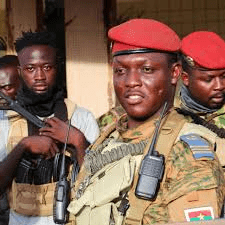
Burkina Faso and Mali, two of Niger’s neighbors operating under military governments, issued a joint statement Monday saying any military action against Niger would be considered “a declaration of war against Burkina Faso and Mali.”
Guinea, another neighboring junta-led country, expressed its opposition to the ECOWAS sanctions and the possibility of military intervention.
Santos Simão also said the priority is to find a peaceful solution to the situation.
He also raised concerns that if the situation is not reversed, terrorism, which is rampant in the Sahel region, could spread further.