China is an important economic player in Africa. In 2021 alone, China accounted for nearly US$5 billion in foreign direct investment in African countries. The rapidly increasing Chinese presence across Africa has become a contentious issue both for Beijing and African governments.
In particular, mega-projects funded by China have resulted in public controversies about the relationship between external investments and public debt. China is Africa’s biggest bilateral lender. In 2020, it held over US$73 billion of Africa’s public debt and nearly US$9 billion of its private debt. Due to this, US Treasury Secretary Janet Yellen has accused China of leaving countries “trapped in debt”.
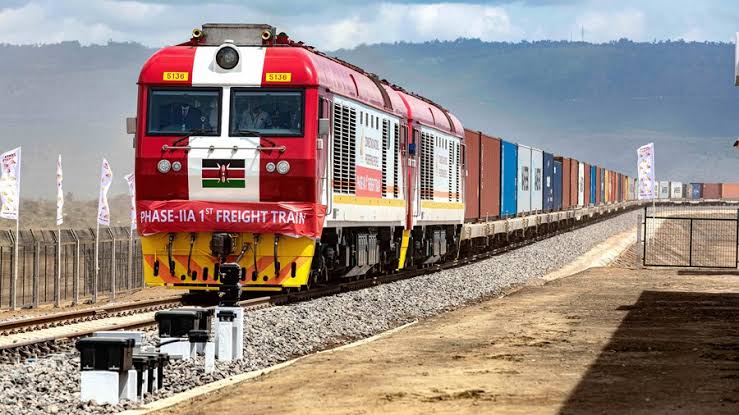
Kenya has been no exception. China’s involvement in the construction of Kenya’s Standard Gauge Railway is a typical example of controversies brought by China-supported investments. These include issues of increasing socio-economic inequalities between different population groups advanced by large-scale investments, local labour mistreatment by Chinese managers, accusations of neo-colonialism, and the long-term sustainability of loans issued by the Exim Bank of China for projects.
In 2022, with a total debt of US$6.83 billion, China was Kenya’s biggest bilateral creditor. Out of this amount, US$5.3 billion was advanced by the Exim Bank of China to finance the Standard Gauge Railway.
It is against this background that our study asked if Chinese actors indeed determined how mega-infrastructures are realised in African countries. We examined the specific ways in which Chinese state-owned enterprises are involved in the construction of Kenya’s Standard Gauge Railway. We analysed how infrastructure development was realised on the ground and how Chinese construction companies shaped the process.
The study showed that the decisions of Chinese state-owned enterprises in Kenya do not necessarily present a grand Chinese strategy. Instead, they result from changing political and economic circumstances in China, and reflect both state and private Chinese interests.
Acknowledging these dynamics is important because it demonstrates how narratives about China’s involvement in mega-infrastructure development might overemphasise the power of the Chinese state. Simultaneously, this highlights that African governments have more power to influence their industrial development and the sustainability of large-scale projects than mainstream narratives acknowledge.
Flagship projects
Alongside other large projects, such as the Lamu Port-South Sudan-Ethiopia Transport Corridor, the Standard Gauge Railway is central to Kenya’s national development programme Vision 2030. This is supposed to industrialise the country and advance socio-economic development.
But the sustainability of the railway project and its contribution to government debthas been widely debated. In 2022, according to the National Treasury, Kenya’s debt stood at KSh9.15 trillion (US$74.1 billion), equivalent to 67% of the country’s GDP. There are also concerns whether Chinese contracts protect national interests.
We took a closer look at the project to see if these fears were well founded. Between May 2019 and September 2020, we conducted interviews during multiple visits to Chinese construction camps alongside the railway construction sites.
We interviewed managers and employees in construction and operational departments of China Road and Bridge Corporation, the main railway project contractor. We interviewed informants from the public sector in Kenya, including from Kenya Railways Corporation and Kenya Ports Authority. We also spoke to local government workers, private sector representatives, lawyers and scholars.
Our research is unique because we directly engaged with the Chinese actors that built Kenya’s new railway. Their perspectives have been lacking in both public and academic debates. This is because public engagement of Chinese contractors is usually strictly guarded due to the state ownership of these enterprises.
Our interviews revealed that in Kenya, China Road and Bridge Corporation constantly shifted its strategies. It also adapted to local circumstances in the country and across East Africa, rather than only imposing its strategic priorities. This compromised its own interests of economic productivity and its public image. Our finding runs counter to any grand visions of transformative infrastructure development, the lens through which Kenya’s rail project has been interpreted.
The trade-offs
We found that the Chinese entity had adopted a method called the “Early Entry Scheme” to resolve issues of delayed land compensation. This involved direct, case-by-case negotiated payments to landowners. As a result, owners vacated land for project construction before the land settlement was officially approved by the National Land Commission of Kenya. This is uncommon among international contractors. Land compensation for a national infrastructure project is usually a responsibility of national governments. But with the delayed national compensation process, the China Road and Bridge Corporation resorted to the Early Entry Scheme.
In Kenya, this scheme was driven by various concerns. Cost-saving was one. The Chinese company had learnt from the first phase of the project that the late delivery of even a small parcel of land could raise the cost of the project if labour and equipment were idle.
Another concern was political. For a flagship project funded by the Chinese government, on-time delivery was crucial to promote China’s image as an efficient development partner.
Another interesting aspect of the project was how the Chinese company became the main operator of the Standard Gauge Railway – not just the construction contractor. According to our interviews, operating the railway would not benefit the company financially. But the stakes were too high to leave it to chance. Operational challenges that a new company could experience might have affected the public image of the project, as well as the corporation itself. Therefore, the company had to balance its short-term financial interests with long-term reputational concerns.
So far, there hasn’t been clear evidence of the Standard Gauge Railway contributing to Kenya’s national economic development. The current investment in the railway between Mombasa and Naivasha (120km away from Nairobi) is not enough to boost the economy. This could only be realised if the railway connected global maritime trade to the hinterland of East Africa, to accelerate transport efficiency at a regional scale. But the Kenyan and Ugandan governments did not manage to agree on financing terms to extend the project.
For this reason, in 2018, the Exim Bank discontinued funding for extending Kenya’s railway line to Uganda. This shows that Beijing’s strategies of infrastructure development are not set in stone but change, and can even be reversed, due to shifting circumstances in overseas regions.
Still, there are clear winners. Though the long-term profitability of Kenya’s Standard Gauge Railway remains in question, China Road and Bridge Corporation managed to enhance its global market position. In Kenya alone, despite the controversies that surround the new railway, the corporation was given new tenders to complete other key national projects, such as the Nairobi Expressway.
As we show in our study, this is not necessarily an outcome of a grand strategy in Beijing. Instead, this is a result of dynamic and ever-changing efforts of Chinese companies that try to align multiple demands between their own economic interests and various political priorities in China and across Africa.
This highlights that African countries are not passive recipients of Chinese-funded projects. They have an important role to play in counterbalancing Chinese actors to shape how these projects are realised on the ground.
Published first by ‘The Conversation’