The ceaseless, tumultuous reverberations of unrest echo across the vast expanse of Ethiopia, as international rights organizations muster their collective voices, resonating with an urgent plea.
Consequently, in a fervent outcry against the egregious infringement of fundamental liberties, these organizations have implored Ethiopia to desist from the labyrinthine maze of “arbitrary arrests” that have ensnared journalists, while imploring for an unwavering commitment to the sacrosanct right of peaceful protest.
Furthermore, a tempestuous temblor has shaken the foundations of journalistic freedom in Ethiopia, as the authorities, in their unyielding pursuit of control, have taken into custody no less than seven valiant scribes.
Currently, a draconian crackdown, unleashed in the aftermath of anti-government demonstrations in the Amhara region, has drawn the ire of Amnesty International and the Committee to Protect Journalists (CPJ).
Global advocates for human rights have resoundingly beseeched the Ethiopian government to promptly emancipate the beleaguered journalists and unshackle them from the coils of fabricated charges.
Amnesty International, in a resolute proclamation, has demanded nothing short of an immediate release for the seven unjustly detained journalists.
Ethiopia, against a backdrop of spiraling violence in the Amhara region, most organizations have called authorities to embark upon a rigorous investigation into allegations of physical assault, inflicted upon one of the detained journalists.
Moreover, it insists upon the safeguarding of the inalienable right to freedom of expression and the peaceful expression of dissent.
The cacophony of oppression reverberates with heightened intensity, as Amnesty International voices its disquietude regarding the harrowing reports of transgressions and brutality rampant in the Amhara region.
In this arid terrain of journalistic peril, the air is thick with the disconcerting symphony of gunfire, reverberating ominously across the vast expanses.
In the midst of the chaos, journalists and media workers find themselves precariously perched upon a precipice, teetering on the precipice of imminent danger.
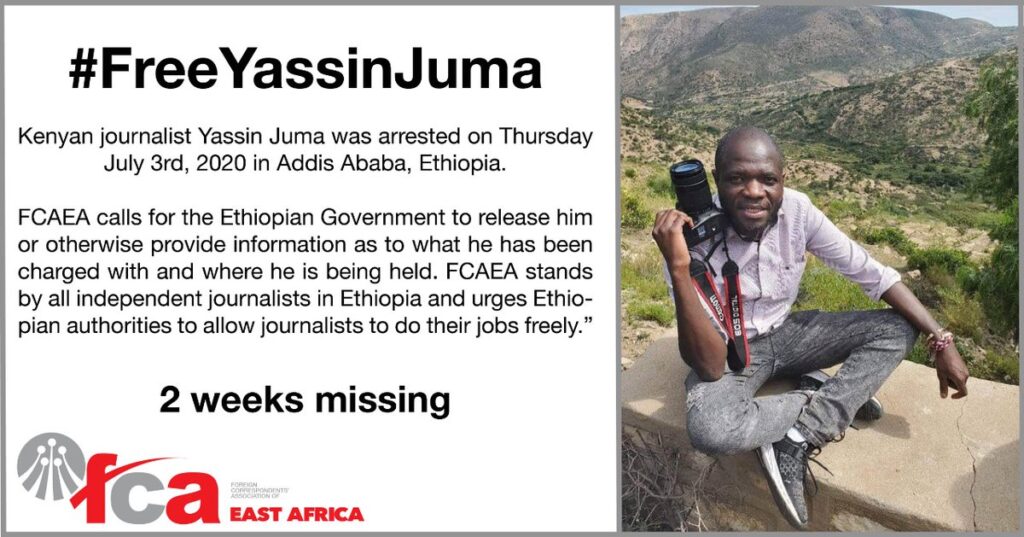
According to Yassin Juma, a veteran journalist – who was banned from covering news in Ethiopia and was recently jailed for covering the ongoing conflict, said that to fulfill the noble duty of disseminating information to an eager public and effectively holding those in power accountable, journalists must be provided with an environment free of the ominous specters of threats, intimidation, and harassment.
Flavia Mwangovya, the indomitable deputy regional director for East and Southern Africa at Amnesty International, vocalizes the exigency of the situation.
She underscores the indispensable imperative for journalists and media workers to operate within an ecosystem where the oppressive shackles of fear and persecution are shattered, and where their voices can resound with unimpeded clarity.
It is only through the liberation of these noble custodians of truth that the world can witness a transformative revolution, in which the pillars of justice and accountability are upheld.