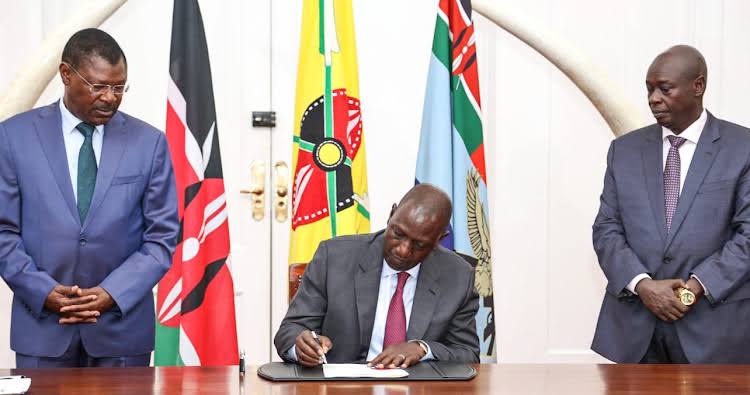
President William Ruto has given his approval to the Finance Bill 2023, the highly debated piece of legislation that recently passed through the National Assembly. The signing took place at State House in Nairobi on Monday morning.
Following its third reading by Kuria Kimani, the chairman of the National Assembly Finance and National Planning Committee, the Bill successfully made its way through Parliament. As a result, Kenyans will now be required to allocate additional funds from their pockets to support the government’s first budget.
During the late-night debates on Tuesday, the National Assembly discussed 87 proposed amendments to the Bill, ultimately approving several significant proposals. Notably, there will be a hike in the value-added tax on gasoline from 8% to 16%.
The majority of MPs, with the exception of Githunguri MP Gathoni Wamuchomba, lent their support to the bill, totaling at least 184 members, primarily from the Kenya Kwanza party. On the other hand, 88 MPs, mostly affiliated with Azimio, opposed the amendment.
Another point of contention, the Housing levy, was also passed but with adjustments. Initially set at 3% of gross pay, the levy was amended to 1.5% and transformed into a tax. Originally proposed as a savings account accessible after seven years, the revised version now requires individuals to contribute a percentage of their income.
Digital creators will now be subject to a 5% tax, significantly reduced from the initially proposed 15%. Furthermore, betting and insurance withholding taxes will be set at 12.5% and 16%, respectively.