The International Monetary Fund (IMF) has approved the disbursement of a Ksh 142 billion loan to Kenya. The approval came after Kenya met all the conditions set forth in IMF’s fifth review.
The loan is expected to provide relief to the National Treasury and assist the country in implementing economic and climate reforms.
Out of the total amount, Ksh56 billion is allocated to bolstering the country’s economy and foreign exchange reserves.
This financial injection comes at a crucial time as Kenya faces pressure on the value of its currency, especially since the government-to-government oil deal, aimed at stabilizing the shilling, yielded limited results.
EFG Hermes Research noted that the IMF loan is necessary to bolster Kenya’s foreign reserves. This is crucial especially since Kenya has a Ksh283 billion Eurobond maturing in June 2024.
The remaining funds are part of the IMF’s Resilience and Sustainability Facility Program. This program is intended to enhance resilience against climate change.
The IMF emphasized that Kenya’s economy has displayed resilience despite challenging external factors and severe drought conditions.
“Kenya’s economy has been resilient despite the worst drought in many decades and a difficult external environment,” states IMF.
“The funds will continue to support the country address emerging challenges to sustain macroeconomic stability and market confidence, promote growth and advance ongoing reforms,” IMF noted during the disbursement.
In total, Kenya has received Ksh283 billion from the IMF for economic development and climate change mitigation.
Two months ago, the IMF had ruled out the risk of Kenya slipping into default. This was despite acute pressure on the country’s finances by rising debt repayment obligations.
According to the IMF, some 19 out of 35 sub-Saharan African nations are at risk of debt distress. The risk has been associated with the impact of the Covid-19 pandemic, Russia’s war in Ukraine, high-interest rates, and weaker currencies.
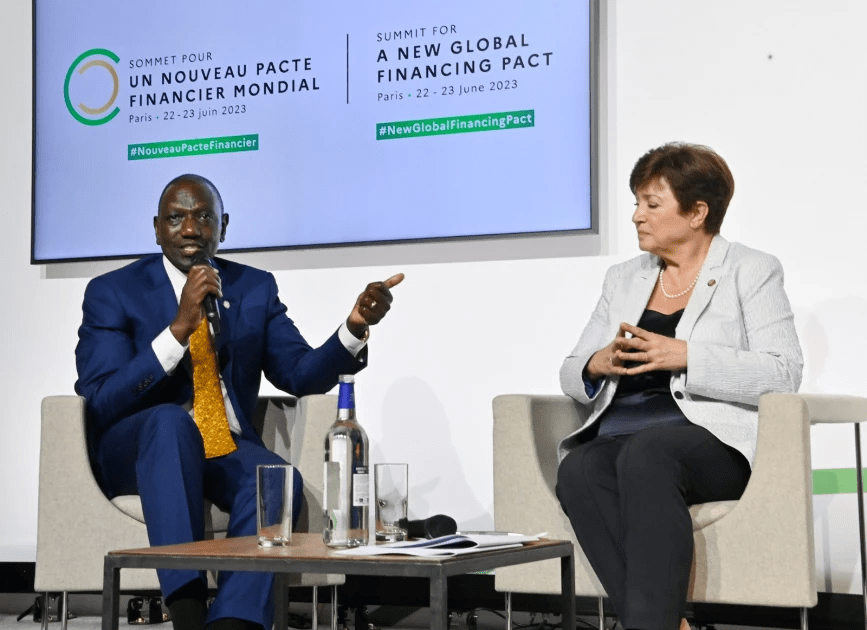
“Kenya is definitely not among them,” IMF’s MD Kristina said, citing a sustainable debt load and solid hard currency reserves.
President William Ruto expressed satisfaction with the increased funds allocated to Africa for combating climate change and its adverse effects.
Ruto has credited Africa’s unified voice and successful lobbying efforts during the COP27 meeting in Egypt for securing additional funds from developed nations.