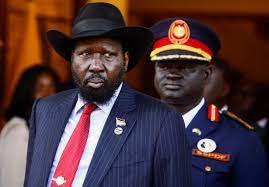
Salva Kiir, a towering guerrilla commander, has been the nation’s only president since he led it to independence from Sudan in 2011.
The world’s youngest nation has lurched from crisis to crisis during Kiir’s tenure and is held together by a fragile unity government of Kiir and Vice President Riek Machar.
A transition period was meant to conclude with elections in February 2023. But the government has so far failed to meet key provisions of the agreement, including drafting a constitution.
“I welcome the endorsement to run for the presidency in 2024,” Kiir stated. He was speaking to supporters of his governing Sudan People’s Liberation Movement party, describing it as a “historic event.”
“We are committed to implementing the chapters in the revitalized peace agreement as stated. I would like to assure you that the election will take place in 2024.”
No other candidate has declared their candidacy, but historical foe Riek Machar is expected to run.
In August, the two leaders extended their transitional government by two years beyond the agreed deadline. The extension was to enable them to address challenges that impeded the implementation of the peace agreement.
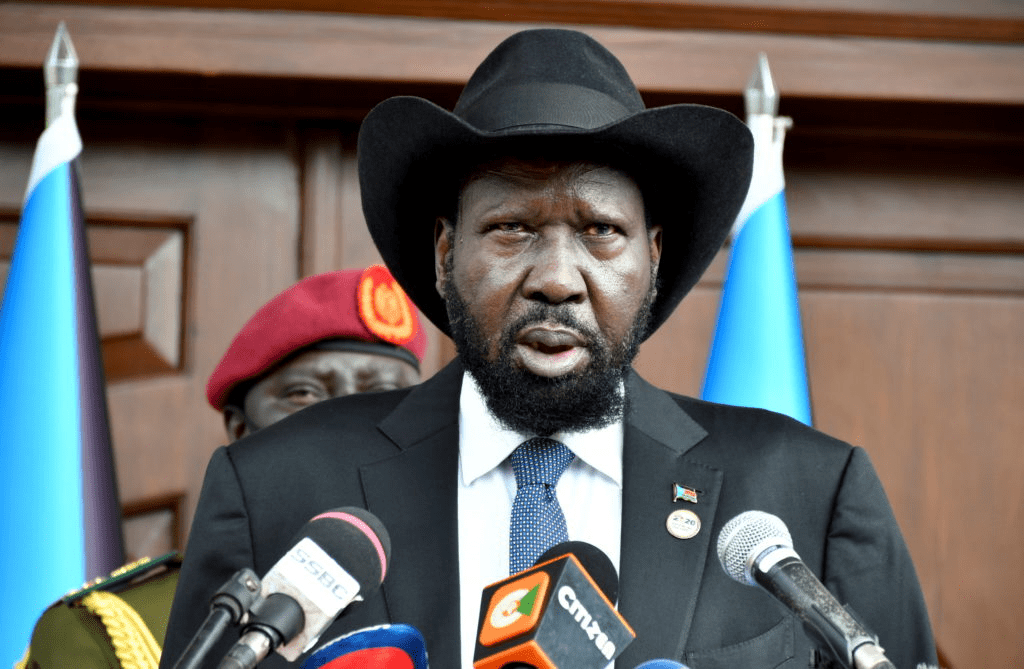
One of the poorest countries on the planet despite large oil reserves, South Sudan has spent almost half of its life as a nation at war.
Almost 400,000 people died in a five-year civil war before Kiir and Machar signed a peace deal in 2018. The peace deal was the basis that formed the unity government.
Since then, the country has battled flooding, hunger, violence, and political bickering. This happening as the promises of the peace agreement fail to materialize.
The United Nations has repeatedly criticized South Sudan’s leadership for its role in stoking violence, cracking down on political freedoms, and plundering public coffers.
U.N. envoy to South Sudan, Nicholas Haysom, warned in March the country faced a “make or break” year in 2023. He added that its leaders must implement the peace agreement to hold “inclusive and credible” elections next year.
Haysom stressed Juba had “stated clearly that there would be no more extensions of the timelines” for elections at the end of 2024.
Read more on South Sudan here