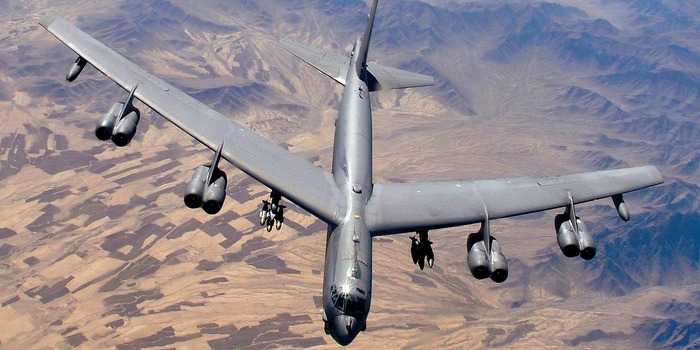
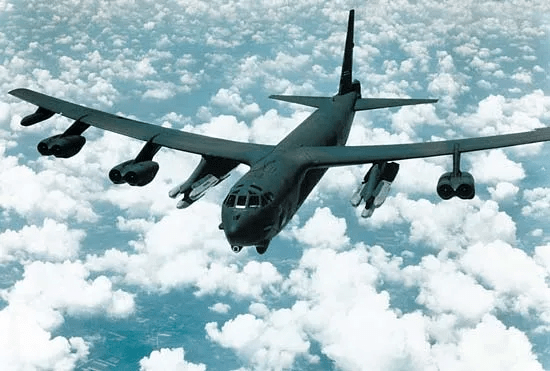
The United States flew nuclear-capable bombers to the Korean Peninsula on Friday 30 June. This is the Americans’ latest show of force against North Korea.
This deployment happened days after the North staged massive anti-U.S. rallies in its capital.
The long-range B-52 bombers took part in joint aerial drills with other U.S. and South Korean fighter jets over the peninsula, South Korea’s Defense Ministry said in a statement. The bombers’ flyover is the latest in a series of temporary U.S. deployments of strategic assets in South Korea. The deployment is in response to North Korea’s push to expand its nuclear arsenal.
Two weeks ago, the U.S. deployed a nuclear-powered submarine capable of carrying 150 Tomahawk missiles to South Korean waters for the first time in six years. The USS Michigan’s arrival came a day after North Korea resumed missile tests. The missile tests were in protest at previous U.S.-South Korean drills that the North viewed as an invasion rehearsal.
The South Korean Defense Ministry said the B-52 bombers’ deployment boosted the visibility of U.S. strategic assets in the peninsula. It said the allies have been demonstrating their firm resolve to strengthen combined defense postures. The allies will also continue joint drills involving U.S. strategic bombers.
On Sunday, more than 120,000 North Koreans participated in mass rallies in Pyongyang to mark the 73rd anniversary of the start of the Korean War.
During the rallies, officials and residents delivered speeches vowing “merciless revenge” against the United States over the war while accusing the U.S. of plotting an invasion on North Korea.
The Korean War ended with an armistice, not a peace treaty, leaving the peninsula in a technical state of war. The U.S. stations about 28,000 troops in South Korea as a deterrence against potential aggression by North Korea.
Since its June 15 launch of two short-range ballistic missiles, North Korea hasn’t performed any further public weapons tests. But the U.S. bombers’ deployment could prompt it to launch weapons again in protest.
Enhancing “regular visibility of U.S. strategic assets” to the Korean Peninsula was part of agreements reached between U.S. President Joe Biden and South Korean President Yoon Suk Yeol during their summit in Washington in April. Biden stated at the time that any North Korean nuclear attack on the U.S. or its allies would “result in the end of whatever regime” took such action.
Since the start of 2022, North Korea has carried out more than 100 missile tests. The tests are part of efforts to enlarge its arsenal of nuclear-capable missiles targeting the U.S. mainland and South Korea. The allies have responded by expanding their military exercises.
In late May, North Korea launched a rocket carrying its first spy satellite, which ended in failure. This is after the rocket plunged into the sea soon after liftoff. Pyongyang has since stated it would attempt a second launch as it bids to build a space-based surveillance system. The system aims to cope with what it calls ‘U.S. hostility’.