Kenya’s Ministry of Health (MOH) has announced the death of close to 200 people due to cholera, since last October. The Ministry has also stated that the shortage of the cholera vaccine has made it possible to only administer one dose of the vaccine, against the recommended double dose.
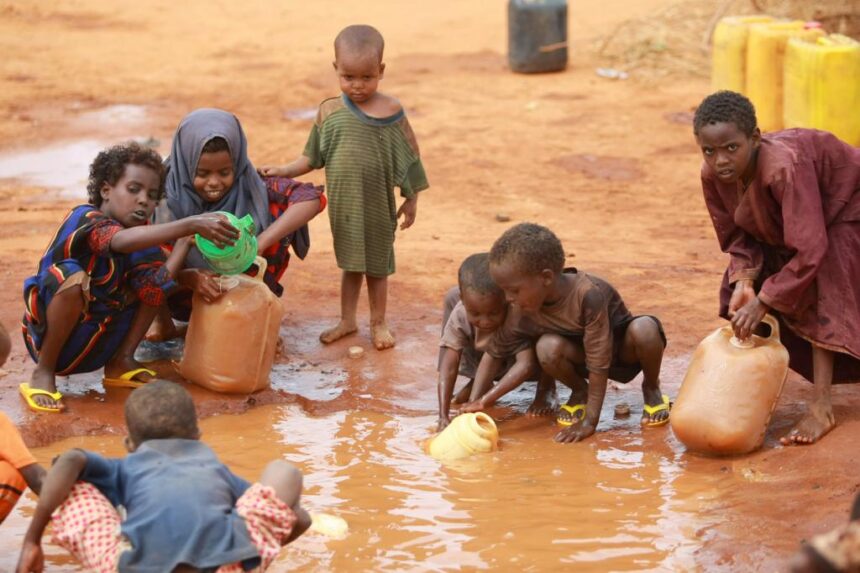
The shortage of the vaccine comes after the World Health Organisation raised concerns in Kenya’s arid northern region stating that the impact of a prolonged and severe drought triggered the cholera outbreak.
While announcing the launch of the Oral Cholera Vaccine (OCV), the Health Ministry stated that Kenya has recorded 11,872 cases and 194 deaths in under 10 months. The outbreak has also been reported across 25 counties with cases recorded from October last year to July 2023.
The OCV campaign is expected to start on Thursday, August 03.
Ideally, the vaccine is supposed to be administered in two doses. The two doses are administered 14 days apart with each dosage containing 1.5 ml of the vaccine.
However, in extreme contexts such as during outbreaks, or when there is a limited number of vaccines, a single dose of 1.5 ml is administered.
Immunity from the vaccines develops one week after administration. It also lasts up to six months after a single dose, and at least three years after two doses.
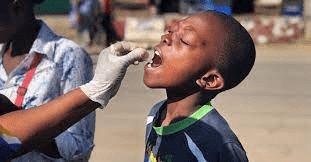
Vaccine campaign to target eight counties of Kenya
The vaccination program will target people over the age of one in eight counties. The targeted population will also include Machakos County prison and Special school, as well as the Dadaab refugee camp.
“The affected counties include Nairobi, Kiambu, Garissa, and Kajiado among others. Active outbreaks are still persisting in Nairobi and Mandera counties, “said MOH.
Up to 75 percent of cholera-reported cases do not show symptoms of cholera.
Dr. Emmanuel Okunga, Epidemiologist
Dr. Emmanuel Okunga, a medical epidemiologist at the Ministry said that the matter is further exasperated by the fact that up to 75 percent of cholera-reported cases do not show symptoms
“Twenty percent of the symptoms are mild while 2.5 have been severe and might need hospitalization, ”he said.
According to data from the ministry Garissa has recorded the highest number of cases with 2,853, Mandera 2,264, Nairobi 2,177, Wajir 945, Tana River 780, Kiambu 539, Machakos 491, Kajiado 398, Homa Bay 335, Mombasa 210, Siaya 162, Meru 138, Uasin Gishu 137 and Marsabit 112.
Other counties include Samburu with 60 cases, Kisumu 56, Nyeri 55, Murang’a 46, Isiolo 31, Kitui 27, Kirinyaga 17, West Pokot and Kwale 16 cases each, Nakuru 15, Busia 11 and Bomet with six cases.
Ministry activates national cholera coordination committee
A multi-sectoral national cholera coordination committee has been activated. The committee’s main focus will be on coordination, case management, infection prevention, and control, surveillance and laboratory as well as Water Sanitation and Hygiene (WASH), risk communication, and the Oral Cholera vaccination, the Ministry said.
This is the second OCV vaccination program with the country’s first-ever cholera vaccination drive having been launched in February 2023. The 10-day campaign targeted 2.2 million people in the four worst-affected counties of Nairobi, Garissa, Tana River, and Wajir.
The February launch was done with the help of the Ministry of Health, WHO, Save the Children, Kenya Red Cross, UNICEF, and other partners to bolster outbreak control efforts and end the disease.
The world health body has also disbursed US$6 million to kick-start emergency cholera responses in Kenya, Malawi, and Mozambique.