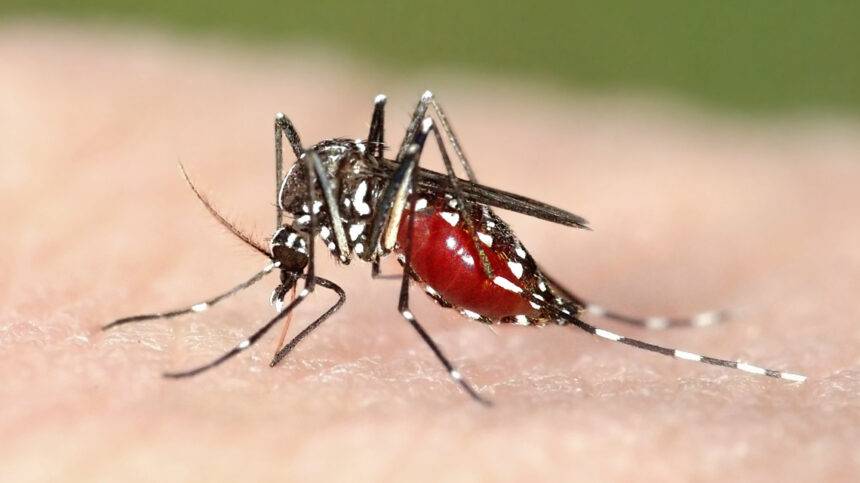
Malaria is a deadly tropical disease that claims the lives of over half a million people each year, with young children being the most vulnerable.
Controlling malaria has been a challenge, as mosquitoes become resistant to insecticides. Vaccines on the other hand only provide partial protection.
However, scientists may have discovered a new weapon in the fight against malaria: a naturally occurring bacterium that can halt the development of the malaria parasite in mosquitoes’ guts.
Researchers stumbled upon this bacterium, called Delftia tsuruhatensis TC1, when they noticed that some mosquitoes used in malaria research were becoming harder to infect with the malaria-causing Plasmodium.
When they fed the bacterium to other mosquitoes, it effectively blocked the parasite from infecting them.
Further investigation revealed that D. tsuruhatensis disrupts the growth of Plasmodium in the mosquito gut, reducing the number of parasite egg-like structures called oocysts by about 75%.
In experiments with mice, mosquitoes carrying the bacterium transmitted malaria to only one-third of the mice, compared to 100% transmission by regular mosquitoes.
The bacterium has several advantages as a tool for malaria prevention. Mosquitoes can be easily colonized by consuming a small amount of the microbe, and once inside the insect, the bacterium continuously blocks parasite development without affecting the mosquito’s survival.
Another important finding is that D. tsuruhatensis is not passed between mosquitoes. This enhances safety and simplifies the path to regulatory approval.
Harmane: the plasmodium inhibitor
The researchers also identified that the bacterium inhibits Plasmodium by secreting a compound called harmane. Harmane, which is found in certain plants, is used in traditional medicines. The researchers believe this compound could be used to treat bed nets or other surfaces where mosquitoes rest.
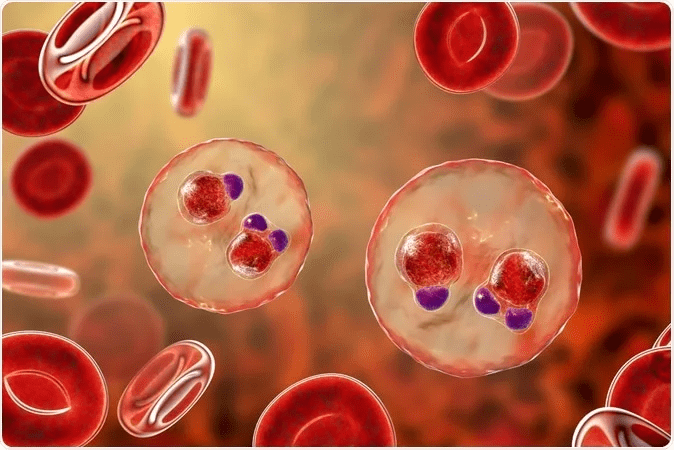
To test the approach in real-world conditions, researchers conducted experiments in a netted enclosure with mosquito populations.
The bacterium successfully colonized about three-quarters of the mosquitoes, and when they fed on blood from malaria-infected people, the bacterium blocked parasite development.
“It’s a really impressive piece of work,” says Grant Hughes, a vector biologist at the Liverpool School of Tropical Medicine who was not involved in the research. He praises the study’s use of multiple experimental approaches to understand the bacterium’s effects on malaria transmission.
Hughes says the identification of harmane as the Plasmodium-attacking compound is particularly useful for future work.
He further hopes the field will be spurred to look for other gut bacteria that might have similar effects. “There are so many different bacteria and microbes that are associated with these mosquitoes,” he says. “The implications [for using] these microbes to control disease are very promising.”
While more safety testing is needed, the eventual product could be a bacterium-containing powder or harmane mixed with sugary baits to attract mosquitoes.
Researchers are also cautious about potential harm to other insects like bees.
This breakthrough offers hope in the battle against malaria, and if successfully deployed, it could significantly reduce malaria transmission and save countless lives, particularly in regions where the disease is endemic.