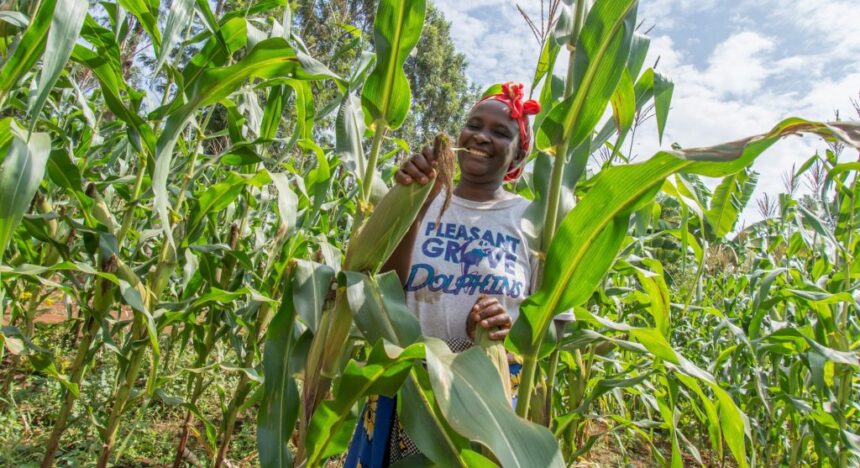
When it comes to maize farming in Kenya, one question plagues the minds of farmers – how many bags of maize can an acre yield?
Maize, being a staple crop in Kenya, has always been at the forefront of agricultural endeavors. The key to success lies in understanding the intricacies of maize farming and optimizing your practices. In this comprehensive guide, we delve into the details of maize farming in Kenya, exploring factors that affect yield and how you can maximize your harvest.
Understanding Maize Yield Per Acre
Ideal Yield: 40 Bags per Acre
In an ideal scenario where the best farming practices are applied, maize farmers can expect a bountiful harvest of 40 bags per acre. This represents the upper limit of yield, a goal that every farmer aspires to achieve. However, it’s important to note that most farmers fall short of this mark due to various challenges.
Realistic Expectations: 10 to 25 Bags per Acre
The actual yield of maize per acre largely depends on a multitude of factors, including farming practices, climate, and region. Farmers who encounter challenges such as limited resources and poor farming techniques may only yield around ten bags per acre. On average, expect a harvest of 10 to 25 bags of maize on an acre of farmland. This range accounts for the diverse conditions experienced by farmers across Kenya.
Regional Variations in Maize Yield
Highland Maize Varieties
In the high-potential highlands of Kenya, maize yields typically range from 4 to 8 metric tons per hectare, representing 50% or less of the genetic potentials of the hybrids. The hybrid maize yield per acre for high-altitude types like ADC 600-23A averages 43 to 68 bags per acre. These varieties thrive in regions like Trans Nzoia, Uasin Gishu, West Pokot, Keiyo, Marakwet, Laikipia, Nakuru, Kisii, and Kiambu.
Medium Altitude Varieties
Medium altitude maize varieties, including WH507, KH 500-33A, WH505, KH 500-13A, WH 402, WH 403, yield an estimated 30 to 40 bags per acre. These varieties perform well in regions such as Western Kenya (Kakamega, Bungoma, Busia, Kisii, Nyanza Region- Homa Bay, Suba, Migori, Rongo, Siaya, Bondo), Central, and Eastern Province.
Dryland Varieties
Kenya also boasts dryland maize varieties that mature within 90 to 120 days and thrive in areas like Taita Taveta, Mwatate, Lamu, Mpeketoni, Homa Bay, Rongo, Unguja, and Siaya. Understanding your region’s agroecological zone is crucial in selecting the right maize variety for optimal yield.
The Cost of Maize Farming in Kenya
Land Preparation
Achieving a high maize yield begins with proper land preparation. This involves four crucial steps:
- Soil Analysis: Determine the fertilizers needed for your farm based on a soil analysis, which costs around KES 2500.
- Basal Application: Apply well-decomposed manure, DAP fertilizer, or HUMIPOWER. An acre requires 1 ton of compost and 36 kilograms of DAP fertilizer.
- Tilth Preparation: Ensure fine tilth by ploughing the land early enough to allow solarization. Harrowing may be necessary to break clods.
- Planting Holes: Make holes at specific spacing (75 cm by 25 cm or 50 cm for mono-cropping/inter-cropping). The cost of ploughing and harrowing land in most areas is approximately KES 3000 per acre.
Seed Selection
Selecting the right maize seeds is crucial. There are various maize varieties in Kenya, each suited to specific regions. Use tools like the “mbeguchoice” app to make informed decisions. An acre typically requires 10 kg of seed, with each kilogram costing around KES 180.
Fertilizer Application
Maize farming necessitates the use of different fertilizers to maximize yields. While the fertilizer requirements may vary, a standard approach includes:
- DAP: Apply at least 36 kg per acre.
- Farmyard Manure: Use one ton during planting to enhance soil fertility.
- Top Dressing: Requires 40 kg of urea, CAN (Calcium Ammonium Nitrate), or ammonium sulfate (ASN) per acre.
Strategies for Maximum Maize Yield
Achieving a bumper harvest of maize is the ultimate goal for Kenyan farmers. Here are some strategies to help you maximize your maize yield:
- Timely Planting: Ensure you plant maize early to avoid losing precious planting time.
- Variety Selection: Choose the right maize variety for your region and farming conditions.
- Optimal Fertilizer Use: Follow recommended fertilizer application rates for your specific conditions.
- Crop Management: Implement effective weed, disease, and pest control measures to protect your crop.
- Proper Harvesting: Harvest maize at the right maturity stage to preserve quality.
- Storage: Use cost-effective methods like hermetic bags to store maize for extended periods without the need for toxic preservatives.
Calculating Profits
The financial aspect of maize farming is essential. Here’s a breakdown of the profits you can expect:
Gross Profits
The gross profit is the difference between total production costs and gross revenue. With total costs estimated at approximately KES 48,900, you can expect a gross profit of KES 51,100 per acre. This calculation assumes that you will store maize and sell it later when prices have increased.
Net Profits
Net profit in maize farming represents the actual income after deducting additional costs. These expenses include field surveys, communication with buyers, and transport costs, totaling approximately KES 9,700. This leaves you with final net profits of KES 41,400 per acre.
In conclusion, maximizing maize yield in Kenya requires careful planning, adherence to best practices, and a thorough understanding of regional variations. By selecting the right maize variety, optimizing land preparation, and managing your crop effectively, you can achieve impressive harvests and profitable returns on your investment. Maize farming in Kenya holds vast potential, and with the right knowledge and practices, you can succeed in this vital agricultural endeavor.