The Palestinian-Israeli conflict is a contentious and deeply rooted conflict that has spanned decades and captivated the attention of the international community. This multifaceted conflict is shaped by historical, political, religious, and social complexities, making it one of the most challenging conflicts in modern history.
To truly understand its historical context, one must delve into the origins, key events, and ongoing dynamics that have defined this conflict. This analytical story aims to provide a comprehensive overview of the Palestinian-Israeli conflict, shedding light on its historical underpinnings and the complexities that continue to fuel it.
Origins of the Conflict
The roots of the Palestinian-Israeli conflict can be traced back to the late 19th and early 20th centuries when the Zionist movement emerged. Founded by Theodor Herzl in 1897, the Zionist movement aimed to establish a Jewish homeland in Palestine.
The movement gained momentum in the wake of increasing anti-Semitism in Europe, culminating in the horrors of the Holocaust during World War II.
The British Balfour Declaration of 1917, which expressed support for the establishment of a “national home for the Jewish people” in Palestine, further fueled the aspirations of the Zionist movement.
The influx of Jewish immigrants into Palestine led to tensions with the Arab population, who saw this as a threat to their rights and land. This tension eventually erupted into violence, setting the stage for the decades-long conflict.
Key Events and Phases
The Palestinian-Israeli conflict can be divided into several distinct phases, each characterized by its own set of events and dynamics:
- The Pre-State Era (Early 20th Century): This phase saw the rise of the Zionist movement. It also saw the initial migration of Jewish settlers to Palestine. Growing tensions between Jews and Arabs marked the prelude to the conflict.
- The 1948 War and the Creation of Israel: The 1947 United Nations Partition Plan proposed the division of Palestine into separate Jewish and Arab states, with Jerusalem under international administration. The plan was accepted by Jewish leaders but rejected by Arab states and Palestinian leaders. The resulting 1948 Arab-Israeli War led to the establishment of the State of Israel, with Palestinian territories occupied by neighboring Arab states.
- The 1967 Six-Day War: This brief but impactful war resulted in Israel’s occupation of the West Bank, Gaza Strip, East Jerusalem, and the Golan Heights. The occupation of Palestinian territories became a focal point for the conflict.
- The Intifadas: The First Intifada (1987-1993) and the Second Intifada (2000-2005) were popular uprisings by Palestinians against Israeli occupation. These events put the conflict back in the international spotlight.
- Peace Processes and Stalemates: Several attempts have been made to broker peace agreements. Most notable are the Oslo Accords (1993) and the Camp David Summit (2000). However, these efforts often resulted in temporary solutions, with issues such as borders, refugees, and Jerusalem remaining unresolved.
- The Gaza Strip and West Bank: The Gaza Strip has been under Hamas control since 2007. Meanwhile the West Bank remains under Israeli military occupation. These territories are central to the ongoing dispute over Palestinian statehood.
Complex Dynamics
The Palestinian-Israeli conflict is marked by intricate and multifaceted dynamics that have prevented a lasting resolution. Some of these dynamics include:
- Territory and Borders: Disputes over the borders and land ownership remain a primary source of tension. Both sides lay claim to historical and religious sites, further complicating the matter.
- Refugees: The issue of Palestinian refugees, who were displaced during the 1948 and 1967 wars, remains a major point of contention. Palestinians demand the right of return, while Israel is concerned about demographic shifts.
- Jerusalem: The status of Jerusalem, a city sacred to both Jews and Muslims, is a deeply divisive issue. Israel claims Jerusalem as its capital, while Palestinians seek East Jerusalem as the capital of a future Palestinian state.
- Security Concerns: Israel cites security concerns and the need to protect its citizens as a major justification for its policies in the occupied territories, including building a security barrier and maintaining a military presence.
- Regional Influence: The involvement of neighboring countries, especially Iran, has added another layer of complexity to the conflict. These external factors have often exacerbated tensions in the region.
- National Identities: The conflict has deepened the national identities and narratives of both Israelis and Palestinians, making it more challenging to find common ground and achieve reconciliation.
- Settler Movement: Jewish settlements in the West Bank, considered illegal under international law, have been a constant source of friction. These settlements have expanded, complicating the possibility of a two-state solution.
International Engagement
The international community has been actively involved in efforts to resolve the Palestinian-Israeli conflict. The United Nations, the United States, and various regional actors have all played pivotal roles in peace negotiations. The Oslo Accords and the Camp David Summit are just a few examples of these diplomatic initiatives.
However, despite numerous peace talks and agreements, a comprehensive resolution has remained elusive.
In recent years, there have been shifts in international opinion, with some countries recognizing Palestinian statehood and expressing concerns over Israeli settlements. The United Nations has also passed resolutions condemning Israeli actions in the occupied territories. This reflects the complex and evolving dynamics of international involvement in the conflict.
Ongoing Challenges and Prospects
The Palestinian-Israeli conflict persists as one of the most enduring and intractable conflicts in the world. Despite numerous attempts to find a resolution, there are still significant challenges to overcome. Some of these challenges include:
- Political Leadership: The fractured nature of Palestinian politics, with the division between Fatah in the West Bank and Hamas in the Gaza Strip, hinders unified negotiations with Israel.
- Public Opinion: Public sentiment on both sides remains deeply divided, with many harboring deep-seated grievances and mistrust.
- The Regional Context: The changing dynamics in the Middle East, including the Arab-Israeli normalization agreements and Iran’s influence, may influence the trajectory of the conflict.
- Settler Movement: The expansion of Israeli settlements in the West Bank continues to complicate the prospects for a two-state solution.
- Economic and Humanitarian Challenges: The economic and humanitarian conditions in the occupied territories, especially in Gaza, remain dire. The region has recorded high unemployment rates and limited access to basic services.
- International Engagement: The ability of international actors to mediate the conflict effectively, given the shifting geopolitical landscape, remains uncertain.
Prospects for a resolution are uncertain, but many experts believe that a two-state solution, with a secure Israel and a viable Palestinian state, remains the most practical way to address the core issues.
However, reaching such an agreement will require political will, compromise, and sustained international engagement.
Conclusion
The Palestinian-Israeli conflict is a complex and deeply rooted conflict that defies easy solutions. Its origins in the early 20th century, the wars, intifadas, and diplomatic efforts have all shaped the narrative of the conflict. The ongoing dynamics, including territorial disputes, the status of Jerusalem, and the role of external actors, further complicate the path to peace.
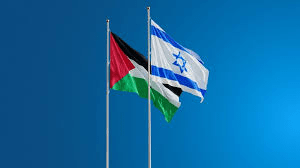
No doubt the conflict has had profound and lasting effects on the lives of both Israelis and Palestinians. It has established perpetuating cycles of violence and suffering.
Achieving a just and lasting resolution to the conflict remains a daunting challenge, but it is one that the international community must continue to address.