
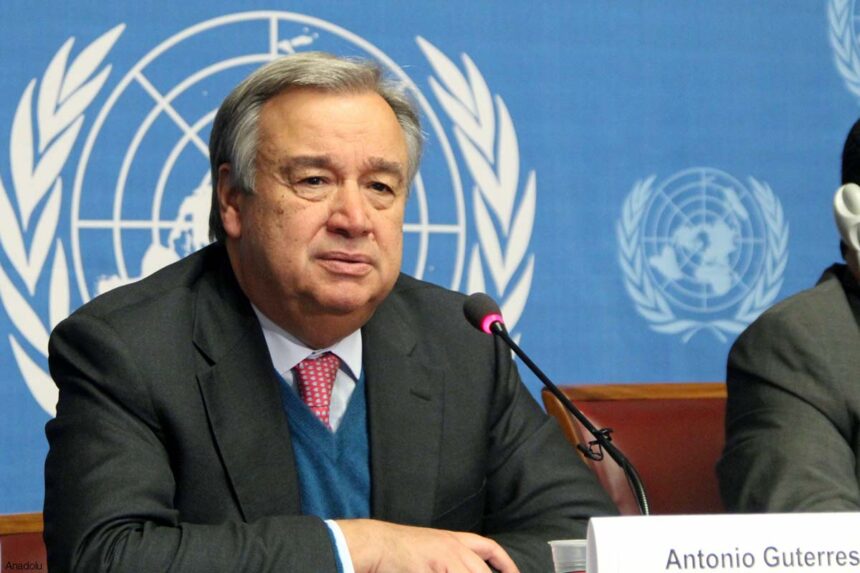
UN Secretary-General Antonio Guterres on Thursday called for a “united, sustained, global” strategy to tackle the risks posed by artificial intelligence’s rapid development, as world leaders met in the UK.
He called for “new solutions” to close the gap between AI and its governance. Guterres proposes that the governance should be based on the UN Charter and the Universal Declaration of Human Rights.
Guterres was joined by other political leaders including UK Prime Minister Rishi Sunak, US Vice President Kamala Harris and EU chief Ursula von der Leyen at the two-day conference at Bletchley Park.
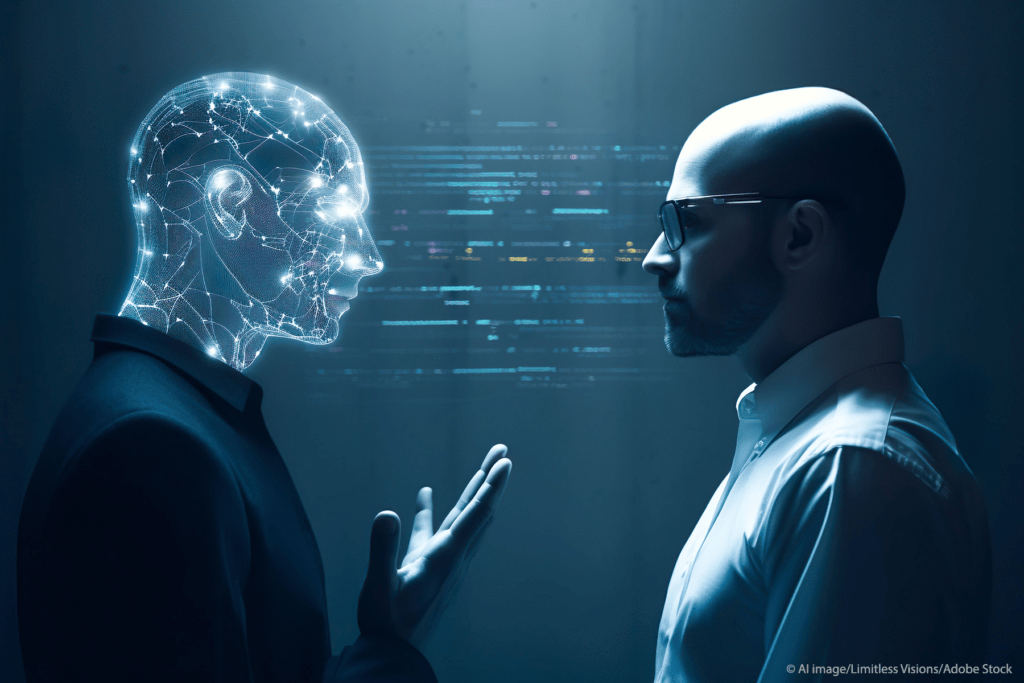
Getting ahead of the wave
The UN chief urged lawmakers and regulators to “get ahead of the wave” of emerging AI technology rather than playing “catchup”.
A failure to do so, he said, “increases the risk that the technology will be used maliciously by criminals or even terrorists”.
That will undermine security or information integrity. It will also run the risk that humans could lose control of it. This could potentially lead it to develop in “unintended directions”, he added.
“We urgently need frameworks to deal with these risks, so that both developers and the public are safe and can have confidence in AI,” he said in a statement.
Guterres also called for a “systematic effort” to spread the technologies around the world to avoid exacerbating “the enormous inequalities that already plague our world”.
“We need a united, sustained, global strategy, based on multilateralism and the participation of all stakeholders,” he said.
“The United Nations is ready to play its part.”
The AI Act of the European Union
The European Union has already taken measures to regulate the use of AI.
In an industry-first, the use of artificial intelligence in the EU will be regulated by the AI Act. This will be the world’s first comprehensive AI law.
As part of its digital strategy, the EU wants to regulate artificial intelligence (AI). They argue that this is to ensure better conditions for the development and use of this innovative technology.
AI can create many benefits, such as better healthcare; safer and cleaner transport. It can also enable more efficient manufacturing; and cheaper and more sustainable energy.
In April 2021, the European Commission proposed the first EU regulatory framework for AI. It says that AI systems that can be used in different applications should be analysed. They can then be classified according to the risk they pose to users. The different risk levels will mean more or less regulation. Once approved, these will be the world’s first rules on AI.
Daily use of AI
Many people have come to rely on AI for most of their daily basic assignments.
For instance, a ChatGPT-style AI assistant, developed by Microsoft and embedded into its office apps, can attend and summarise meetings held in Teams for anyone who chooses not to attend.
It can also draft emails, create Word documents, spreadsheet graphs, and Powerpoint presentations in moments.
Microsoft says it hopes the tool will eliminate “drudgery” but some worry tech like this will replace workers.
There are also concerns it could leave businesses dangerously reliant on AI-powered assistance.
In its current form, it could also fall foul of new rules governing AI. This is because it fails to explicitly make it clear when content has not been made by humans.
Both Europe’s AI act and China’s AI regulations state that people must know if they are interacting with artificial intelligence rather than humans.

