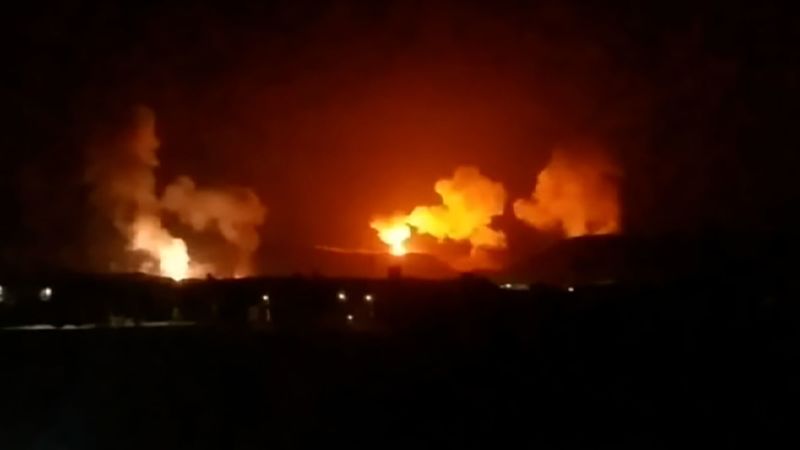
The US and UK militaries launched joint military strikes on 36 locations targeting Houthis in Yemen. The third round of strikes were in response to the Iran-aligned group’s ongoing attacks on commercial ships in the Red Sea.
These joint strikes also included support from Australia, Bahrain, Canada, Denmark, the Netherlands, and New Zealand.
According to a joint statement, the strikes targeted 36 locations within Yemen, focusing on “deeply buried weapons storage facilities, missile systems and launchers, air defence systems, and radars.”
Centcom asserted that these actions on Saturday were part of “ongoing international efforts to respond to increased Iranian-backed Houthi destabilizing and illegal activities in the region.”
In a social media statement, Centcom explained that the strikes aimed to “degrade Houthi capabilities” as the group persisted in “reckless and unlawful attacks on US and UK ships as well as international commercial shipping in the Red Sea, Bab al-Mandeb Strait, and the Gulf of Aden.”
The joint operation targeted various Houthi assets, including underground storage facilities, command and control missile systems, helicopters, and coastal drone control centers, as reported by the anti-Houthi coalition.
British Defence Secretary Grant Shapps further emphasized that these latest strikes should not be seen as an escalation.
This development occurred just one day after the US conducted strikes on 85 targets in Syria and Iraq in response to a deadly drone attack on a US military base in Jordan, which resulted in the loss of three soldiers.
Who are the Houthis?
The Houthis, a minority group from the mountainous north-west of Yemen, take their name from their movement’s founder, Hussein Al-Houthi.
They fought several wars against Yemen’s strongman ruler, President Saleh in the early 2000s. After Saleh was deposed by the Arab Spring protests, the Houthis marched down to the capital, Sana’a, and seized power in 2014.
The deposed President Saleh, still bitter at being ousted, put his loyal Republican Guard at the disposal of the Houthis. This enabled them to take over 80% of Yemen’s population.
The Houthis then assassinated Saleh.
The Houthis have been central to the decades-long civil war in Yemen since then, causing the death of an estimated 150,000 people and leaving millions dependent on food aid in the poorest Arab nation.