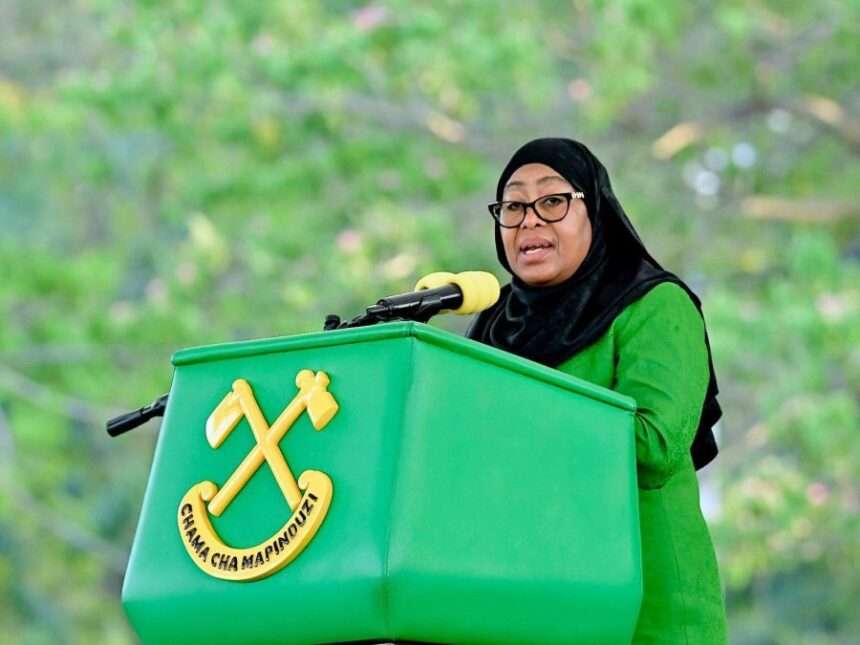
President Samia Suluhu Hassan has ignited nationwide debate after appointing two close family members to influential positions in her freshly reconstituted cabinet.
In the latest lineup, President Suluhu named her only daughter, Wanu Hafidh Wazir, as the Deputy Minister for Education, Science and Technology.
Wanu, a former legislator, steps into a high-impact role that will shape Tanzania’s education reforms, innovation agenda, and national academic standards — an assignment that has immediately thrust her into the public spotlight.
Equally notable is the appointment of Suluhu’s son-in-law, Mohamed Mchengerwa, who has been elevated to Minister of Health.
Mchengerwa, already a prominent figure in Tanzanian politics, now assumes responsibility for one of the nation’s most crucial ministries — overseeing public hospitals, steering national health strategy, and guiding the next phase of the country’s healthcare development.
The dual family appointments have stirred intense public debate.
Critics argue that the move amounts to nepotism, warning that the concentration of power within the President’s family could compromise institutional independence and chip away at public trust in government processes.
Opponents also highlight the sensitivity of the ministries involved, noting that education and health require impartial leadership insulated from political and familial interests.
However, supporters of the President have defended the appointments.
They insist that both Wanu and Mchengerwa possess the experience, track record, and competence needed to serve in high-level government roles. Their family ties to the President, they argue, should not be grounds for exclusion from public service.
The discussion continues to dominate social and political spaces in Tanzania, as citizens weigh the balance between merit, optics, and governance ethics.