As one of the oldest neighbourhoods in the country Jamhuri estate in Nairobi is slowly transforming into a beautiful tapestry of cultures that weaves unique customs and traditions. And all this is thanks to the cropping up of an array of businesses run by Sudanese, Tanzanian, and Eritrean communities.
Built in the late 1960’s as a model of how urban citizens would live in a newly independent Kenya, Jamhuri Estate, which borders Kibera slums has for years been a residential area consisting of a handful of manicured fields dotted with trees and several play areas for children.
That, however, is slowly changing. Unlike its neighbouring estates such as Kilimani and Riara on Ngong Road, that are slowly morphing into a concrete jungle owing to the city’s burgeoning population, Jamhuri is also experiencing an unusual marrying of cultures.
Exotic cultures
The vertical jails from the construction may swallow up this quiet neighbourhood but for now this neighbourhood stands out owing to its residents and businesses that are cropping up. A quick spot-check will reveal a variety of Eritrean coffee houses, Maasai of Tanzania decent-owned businesses, and Sudanese-filled homes.
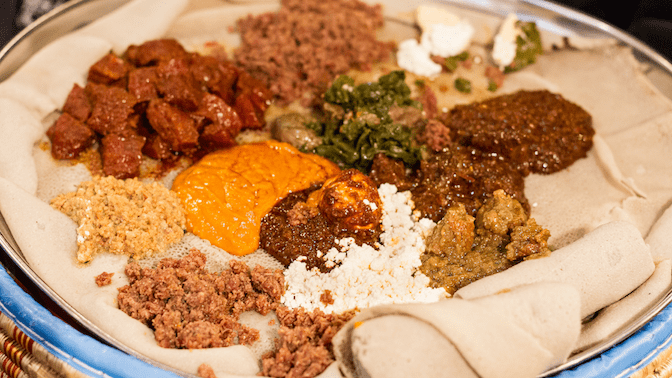
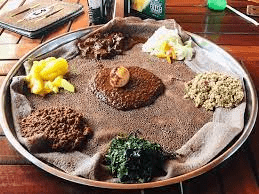
Right from the shopping center which is locally referred to as Kayole, it is not hard to spot the Eritrean-owned boona (coffee) shops that also sell Anjeera whose accompaniments such as tsebhi have a distinct aroma that can be quite inviting.
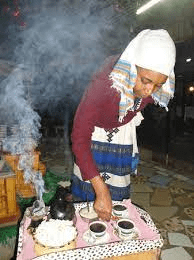
Men and women often sit right outside the shops with coffee urns and traditional colourful sini coffee cups enjoying their popcorn.
The women often walk around in their traditional garments with their long afro hair semi-covered especially when they head to church (mostly Orthodox Church) which is nearby.
The men are no different and though their hair may not be as long, next to now have clean-shaven heads.
The food business is not just the Eritrean domain, here is where the Maasai of Tanzanian-descent take over. The grocery shops are owned almost entirely by them and some are right next to each other as this community also is close-knit.
‘Story za Jaba’
They have meetings every week on one of the grounds in Jamuhuri to keep abreast of what is going on with their businesses and also have chamas to help themselves stay financially afloat in this foreign land.
While the Sudanese stay out of the business spectrum of things here, there is no denying that they exist. They rent most of the residential apartments and help keep the money change hands along with African nationals who sublet the Airbnb homes that are advertised and are often full in the area.
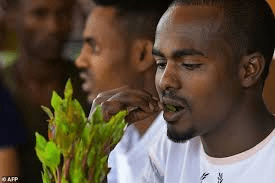
Locally owned businesses are also catering to these cultural needs and it is not hard to spot a jaba (muguga) ‘base’ in this area with a packet selling for at least Sh50.
In the evening the joints are dotted with various customers chewing away as they tell ‘story za jaba’.
The number of internationals in this area has made the area quite an interesting melting pot of culture serving various degrees of a heterogeneous society.