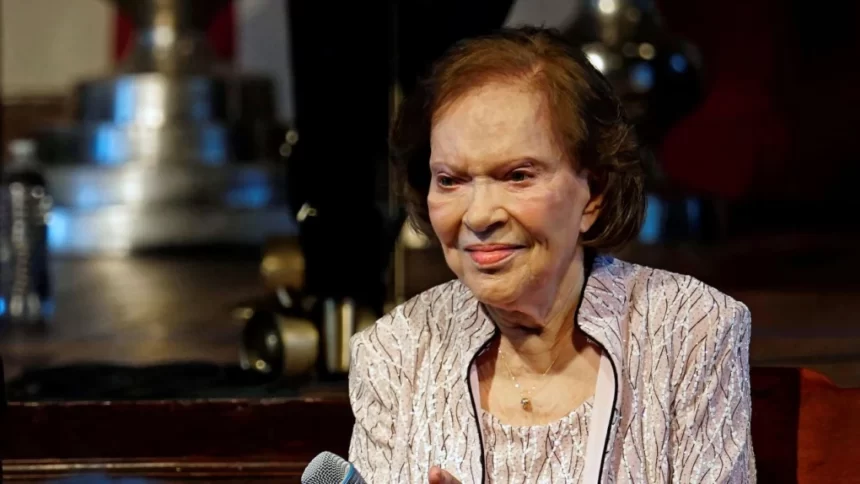
Rosalynn Carter, the esteemed former First Lady of the United States and wife of ex-President Jimmy Carter, has died at the age of 96, as confirmed by the Carter Center in a poignant statement.
Mrs. Carter, who had entered hospice care in Georgia, passed away peacefully with her family at her side.
Born Eleanor Rosalynn Smith on August 18, 1927, Mrs. Carter married Jimmy Carter on July 7, 1946.
Their enduring marriage marked its 77th anniversary in July. In a statement, Mr. Carter expressed the profound impact his wife had on his life, describing her as his equal partner and a source of wise guidance and encouragement.
Diagnosed with dementia in May, Mrs. Carter, throughout her life, demonstrated a commitment to raising mental health awareness and combating the stigma associated with mental illnesses. As the first lady of Georgia, she actively contributed to improving mental health services.
In her role as US First Lady, she became the honorary chair of the President’s Commission on Mental Health, a pivotal force in the passage of the 1980 act that funded local mental health centers.
Following their time in Washington, the Carters founded the Carter Center in 1982, where Mrs. Carter continued her advocacy work for mental health, early childhood immunization, and various humanitarian causes.
The couple also played key roles in the Habitat For Humanity charity, contributing to the construction of homes for families in need.
Their dedication to humanitarian efforts garnered global recognition in 2002 when President Carter was awarded the Nobel Peace Prize.
Mrs. Carter leaves behind a lasting legacy, remembered not only for her role as a first lady but also for her tireless work in destigmatizing mental health issues.
US President Joe Biden paid tribute to Mrs. Carter, acknowledging her inspiring influence, while former First Lady Michelle Obama expressed gratitude for Mrs. Carter’s support and generosity during her time in the White House.
Former President George W Bush and former First Lady Laura Bush emphasized Mrs. Carter’s dignity, strength, and important legacy in destigmatizing mental health.