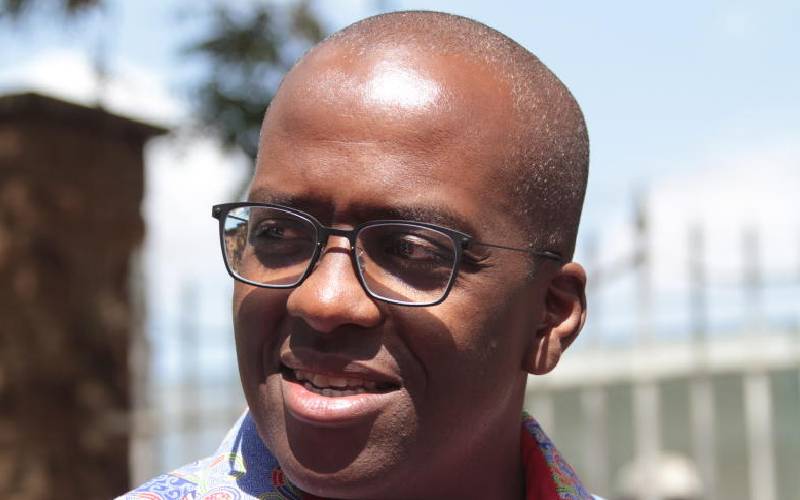
In the dynamic landscape of Kenyan business and politics, one name that resonates with innovation, strategic thinking, and transformative leadership is Polycarp Igathe. A seasoned executive, entrepreneur, and politician, Igathe has left an indelible mark on various sectors, earning a reputation as a visionary force or probably too lucky.
Early Life and Education
Born on October 15, 1972, in Nairobi, Kenya, Polycarp Igathe’s journey to becoming a prominent figure in business and politics is rooted in his early years. Raised in a middle-class family, Igathe exhibited a natural flair for leadership and entrepreneurship from a young age. His educational journey saw him graduate with a degree in Bachelor of Commerce from the University of Nairobi, laying the foundation for his future endeavors.
A Stellar Corporate Career
Polycarp Igathe’s foray into the corporate world was marked by a series of strategic moves and stellar achievements. His career trajectory included key roles in top-tier companies, where he demonstrated a keen understanding of business dynamics and an ability to navigate complex challenges.
One of the pivotal moments in Igathe’s corporate journey was his appointment as the Managing Director of Haco Tiger Brands, a leading consumer goods company. Under his leadership, the company witnessed unprecedented growth, solidifying its position in the market. His knack for innovation and efficiency earned him accolades, and he soon became a sought-after figure in the corporate world.
Entrepreneurial Ventures
In addition to his success in the corporate sector, Polycarp Igathe ventured into entrepreneurship, showcasing his versatility and determination. His entrepreneurial spirit led him to co-found Vivo Energy Kenya, a company specializing in the distribution and marketing of Shell-branded fuels and lubricants. This venture not only contributed to the energy sector’s development but also showcased Igathe’s ability to identify lucrative opportunities and turn them into successful businesses.
Leadership Philosophy
At the core of Polycarp Igathe’s leadership philosophy is a commitment to excellence, integrity, and inclusive decision-making. Known for his hands-on approach, Igathe believes in leading by example and fostering a culture of collaboration within teams. His emphasis on innovation and adaptability has been a driving force behind his success in both the corporate and entrepreneurial realms.
In an interview, Igathe shared, “Leadership is not about titles, positions, or flowcharts. It is about one life influencing another.” This philosophy underscores his belief in the transformative power of leadership and the responsibility that comes with it. Igathe’s approach goes beyond traditional leadership paradigms, emphasizing the need for leaders to inspire and empower those around them.
Career before politics
Education
Polycarp Igathe holds a Bachelor of Arts degree in economics and sociology, which he obtained from the University of Nairobi. Additionally, he is a graduate of the Strathmore University’s Advanced Management Program (AMP) with IESE Business School in Spain. During his time at the University of Nairobi, Igathe served as the National Chairman of AIESEC in Kenya.
Career Before Politics
Immediately after completing his studies at the University of Nairobi in 1995, Igathe secured employment in Australia as a finance officer at Queensland Health. After a year and a half, he returned to Kenya and joined Coca-Cola, where he worked until 2000.
Following this, he became part of Africa Online as a sales and marketing manager. Subsequently, Igathe joined Kenya Breweries Limited, initially as a sales operations manager and later as a marketing manager. His career then led him to serve as the managing director at Haco Industries for a decade before transitioning to Vivo Energy Kenya in 2003.
Beyond his roles in various corporations, Igathe has been actively involved in industry organizations. He chaired the Kenya Association of Manufacturers from 2012 to 2014 and also chaired the Petroleum Institute of East Africa from 2014 to 2016. Additionally, he served as a Director and Trustee of the Kenya Private Sector Alliance from 2014 to 2016 and held positions as chairman and member of the Board of Management of Bishop Gatimu Ngandu Girls High School since 2010.
In 2015, Polycarp Igathe was appointed by the President of Kenya to chair the Anti-Counterfeit Agency, where he served for a year. Subsequently, in October 2016, he was appointed as the chairman of the Special Economic Zones Authority of Kenya.
A Surprising Entry: From Boardrooms to Ballots
Polycarp Igathe’s entry into politics in 2017 was a surprising twist in his career trajectory. Having carved a successful path in the corporate world, notably as the Managing Director of Haco Tiger Brands and co-founder of Vivo Energy Kenya, Igathe shifted gears to join the political arena. His decision to run as the Deputy Governor alongside Mike Sonko, the Jubilee Party candidate for Nairobi Governor, marked a significant departure from the boardrooms to the ballots.
This unexpected move brought Igathe face-to-face with the intricate and often tumultuous world of Kenyan politics. However, it also showcased his willingness to leverage his skills and experiences for the greater good, emphasizing the need for transformative leadership in the public sector.
Challenges and Triumphs in Public Service
Assuming office as the Deputy Governor of Nairobi, Polycarp Igathe wasted no time in rolling up his sleeves to tackle the myriad challenges facing the city. His corporate background infused a results-oriented approach, and he quickly became involved in initiatives aimed at improving Nairobi’s infrastructure, healthcare, and education systems.
One of Igathe’s notable projects was the Nairobi Regeneration Committee, a task force that sought to address issues such as traffic congestion, garbage collection, and overall urban decay. His hands-on leadership style garnered attention, and he became recognized for his commitment to driving positive change within a short period.
However, the political landscape proved to be a complex terrain, with its own set of challenges and dynamics. Igathe faced hurdles in navigating the political structures, and differences with his boss, Mike Sonko, eventually led to his unexpected resignation in January 2018. His departure from the Deputy Governor position highlighted the intricacies and power struggles inherent in Kenyan politics.
Legacy in Nairobi’s Transformation
Despite the brevity of his political tenure, Polycarp Igathe’s impact on Nairobi’s transformation cannot be understated. His initiatives, such as the Nairobi Regeneration Committee, laid the groundwork for addressing longstanding issues affecting the city. While his time in office was cut short, Igathe’s commitment to public service and his proactive approach left an indelible mark on the city’s developmental landscape.
Furthermore, Igathe’s legacy serves as a reminder of the challenges faced by individuals transitioning from the private sector to politics. His experience shed light on the need for synergy and understanding between political leaders and their deputies, emphasizing the importance of trust and collaboration in achieving common goals.
Post-Political Endeavors: Lessons Learned and Future Prospects
Following his departure from the political scene, Polycarp Igathe returned to the private sector. However, the lessons learned during his political stint continued to shape his perspectives and endeavors. His resilience and adaptability became evident as he resumed his roles in the corporate world, carrying with him insights gained from the intersection of business and politics.
Surprise return to politics in 2022 and loss
Westlands MP Tim Wanyonyi, who had been marketing his bid for Nairobi governor for months until the surprise deal asking him to step down, insisted he could not deputize a political novice.
Following talks between Raila Odinga and Wiper Party chief Kalonzo Musyoka, reports indicated former Kibwezi MP Philip Kaloki had been fronted as Mr. Igathe’s running mate, while Mr. Wanyonyi was asked to contest the Senate seat.
This unprecedented move was announced by Azimio la Umoja One Kenya party leader Raila Odinga who laid out the political faction’s lineup for the country’s capital.
“We had a meeting here, as the Azimio la Umoja One Kenya coalition, and today we were talking about our Nairobi team. There have been consultations that have been going on for the last few days, and I’m happy to report that we have concluded and we’re ready now to unveil Team Nairobi for Azimio la Umoja One Kenya,” said Raila.
Igathe’s surprise candidature
“The governor candidate was going to be Mr. Polycarp Igathe; he would be deputized by Prof. Kaloki. As you know, there were other members of our coalition who had expressed the desire to become governors; one of them is Timothy Wanyonyi. Wanyonyi decided to step down from the governorship contest and go back and re-contest his seat as a member of the National Assembly for the Westlands Constituency.”
Odinga also announced that businessman Richard Ngatia, who was also seeking the city’s top seat on a Jubilee ticket, had also agreed to step down and support the candidature of Igathe and Kaloki. In return, he stated, Ngatia would assume an immediate role as President Uhuru Kenyatta’s advisor on trade.
Loss
Sakaja’s victory was anticipated by multiple pollsters who predicted a comfortable lead for him against Igathe, a corporate figure making a return to active politics after a brief stint as Nairobi Deputy Governor.
The outgoing senator faced challenges during his campaign, including addressing allegations that questioned the authenticity of his academic degree. Despite these hurdles, Sakaja’s significant voter support ultimately propelled him to victory in the gubernatorial race.
Raila’s regret on backing Polycarp Igathe
Odinga said it was a mistake to force Westlands MP Timothy Wanyonyi to step down in favour of Mr Igathe – who served as Nairobi deputy governor under former county boss Mike Sonko.
He described Nairobi County as a bastion of opposition, highlighting how his coalition swept the majority of county assembly (CA), MP, women’s representative and senate seats.
“We won the Senate seat, Woman Representative position, President. How come we lost the governor? We would have won. I regret prevailing on Mr Wanyonyi to step down,” he added.
From politics back to the boardroom again
On November 23, 2022 it was announced that South African-based Tiger Brands had appointed e Polycarp Igathe as its new Chief Growth Officer. Under the new role, Igathe was made responsible for marketing and strategy for the rest of Africa.
Tiger Brands’ core business is the manufacture, marketing and distribution of branded food and beverages, predominantly in South Africa with a growing presence in Africa.
The multinational said Mr Igathe brings strong commercial capability, as well as marketing, sales, strategy and business leadership experience through multi-geography leadership roles across Africa.
The company’s brands include Tastic, All gold and Jeyes. Tiger Brands also appointed Zayd Abrahams as its chief marketing and strategy officer.Is Polycarp Igathe Chris Kirubi’s son?
The question regarding the true paternity of Polycarp Igathe is not new, and misinformation on this matter has circulated widely. Various individuals, including well-known bloggers, have contributed to the dissemination of inaccurate information surrounding this topic.
In a past interview with Business Daily, Polycarp Igathe emphatically stated that Chris Kirubi is not his father, despite having worked for him at HACO Industries. When asked about the greatest misconception people have about him, Igathe debunked the belief that he is wealthy or Chris Kirubi’s son. He humorously remarked, “Kenyans think that if you work in a company diligently for long, a company owned by someone else, you can only be their son.”
Polycarp Igathe refusal
Igathe shared that he finds amusement in the misconception, especially when people extend gestures due to this belief. He mentioned enjoying the perks of being associated with the myth and humorously exploiting the situation, saying, “When I run into people who want to associate with me because of that myth, oh, I take advantage of it and just order a very expensive whisky.”
Born and raised in Ruiru 145, Igathe emphasized his roots and the simplicity of his upbringing. He expressed a genuine connection to his hometown, stating, “Those are my matatus. That’s home. And there, simplicity is key.” Igathe’s response sheds light on his down-to-earth nature and his ability to navigate public perceptions with humor and grace.