
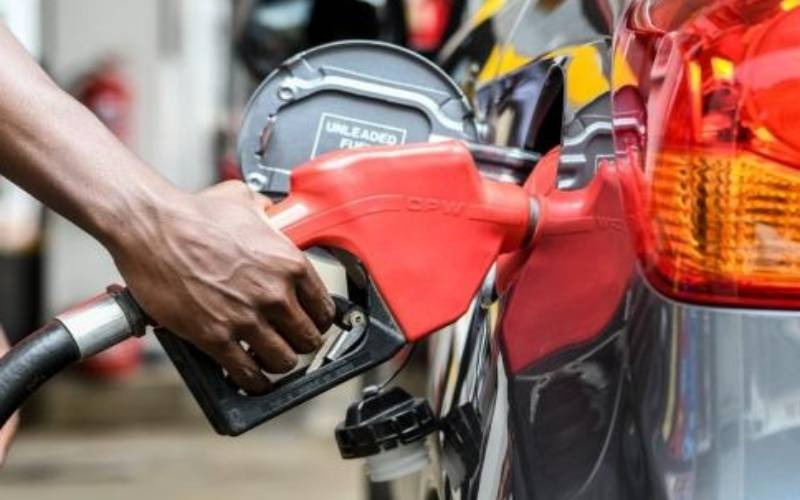
The Energy and Petroleum Regulatory Authority (EPRA) has announced a reduction in the prices of petrol, diesel, and kerosene by Sh1, effective February 15, 2024.
EPRA stated that the new prices include the 16 per cent Value Added Tax (VAT) as stipulated in the Finance Act 2023, the Tax Laws (Amendment) Act 2020, and the revised rates for excise duty adjusted for inflation as per Legal Notice No. 194 of 2020.
According to the statement released by EPRA, the maximum retail prices of petroleum products, applicable from February 15, 2024, to March 14, 2024, have been calculated in accordance with Section 101(y) of the Petroleum Act 2019 and Legal Notice No.192 of 2022.
During the review period, the maximum allowable pump prices for Super Petrol, Diesel, and Kerosene have decreased by Sh1.00 per litre respectively.
EPRA explained that the average landed cost of imported Super Petrol decreased by 1.71 per cent from US$677.78 per cubic metre in December 2023 to US$666.16 per cubic metre in January 2024. Similarly, Diesel decreased by 3.08 per cent from US$751.15 per cubic metre to US$728.03 per cubic metre, while Kerosene decreased by 1.17 per cent from US$727.00 per cubic metre to US$718.51 per cubic metre, leading to the price adjustment.
In Nairobi, the price of petrol will now retail at Sh206.36, diesel at Sh195.47, and kerosene at Sh193.23. Meanwhile, in Mombasa, super petrol will retail at Sh203.3, diesel at Sh192.41, and kerosene at Sh190.05.
In Nakuru, super petrol will retail at Sh205.35, diesel at Sh194.88, and kerosene at Sh192.66, while in Eldoret, super petrol will retail at Sh206.12, diesel at Sh195.65, and kerosene at Sh193.43.
EPRA clarified that the price of Diesel has been cross-subsidized with that of Super Petrol, while Kerosene has been fully stabilized.
Oil Marketing Companies (OMCs) will be compensated for the under-recovery of costs from the Petroleum Development Levy (PDL) Fund, according to EPRA.
EPRA reiterated that the Petroleum Pricing Regulations aim to cap the retail prices of petroleum products already in the country, ensuring that importation and other prudently incurred costs are recovered while maintaining reasonable prices for consumers.

