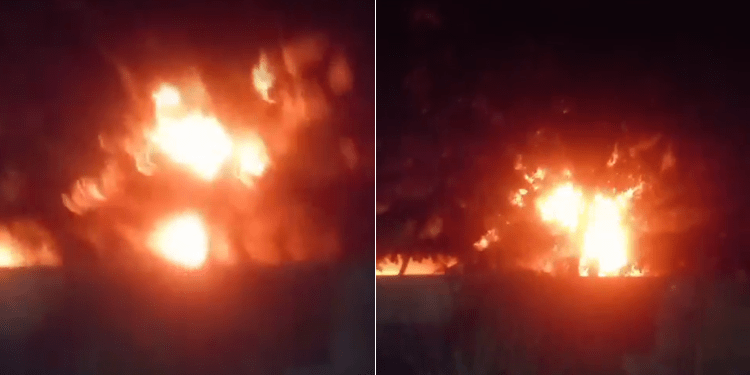
The individual responsible for the illicit gas filling plant in Embakasi, which exploded over the weekend, resulting in the death of at least 6 people and injuries to over 200, has voluntarily surrendered to the police.
The business owner appeared at the police station and faced questioning from investigators as they delve into the circumstances surrounding the tragic incident.
Law enforcement has been actively pursuing seven suspects linked to the explosion, including Derick Kimathi, the proprietor of the illegal gas filling plant; Steve Kioko, Kimathi’s business partner; the unidentified truck driver suspected to have triggered the explosion (whose status remains unconfirmed, whether escaped or among the casualties); and four officials from the National Environment Management Authority (NEMA) who were suspended for allegedly unlawfully granting a license to Kimathi’s company.
In his defense, Kimathi, through his legal representation, informed the police that he operates in the transportation of LPG products.
He claimed that he sought licenses from the Energy and Petroleum Regulatory Authority (EPRA) last year to establish a gas filling plant in the area, but his applications were rejected. Kimathi denies allegations that the site of the incident operated as an illegal gas plant, asserting that it had functioned as a garage for several years.
However, it raises questions as to why the garage exclusively focused on repairing trucks transporting Liquefied Petroleum Gas (LPG).
The lawyer argued that Kimathi abandoned the gas filling plant idea after EPRA rejected his applications due to the site’s perceived unsuitability in close proximity to the public.
Contrary to residents’ claims that the location was an unlawful gas filling plant, Kimathi’s legal representation insisted that the premises had been operating as a garage until the incident occurred. The lawyer alleged that the vehicle causing the explosion trespassed onto Kimathi’s property without his knowledge or consent.
Residents, on the other hand, contend that the area functioned as an illegal gas filling plant, favored for its more affordable gas prices.