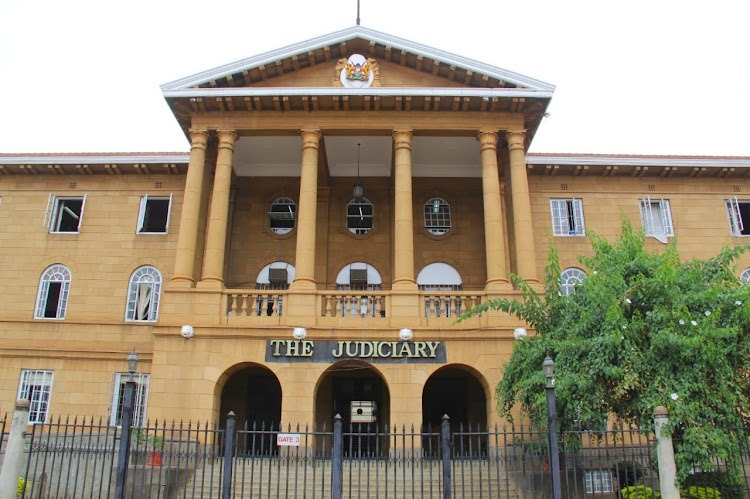
Residents of Jogoo Road Phase 2 Estate have taken legal action to halt the government’s initiative to evict them from their homes in preparation for an affordable housing project. Following a directive from the Ministry of Land, Public Works, Housing, and Urban Development, over 300 residents received notices on February 27, instructing them to vacate their residences and surrender them to the Director of Estate Management by April 30.
According to Housing PS Charles Hinga, the estates targeted for redevelopment, including Jogoo Road Phase 1 and 2, Jamaa, Mbotela, Ahero, and Mawenzi Gardens, are part of the Affordable Housing Program under the Bottom-up Economic Transformation Agenda.
In a legal move, Kennedy Ochuodho and 10 other residents have filed a lawsuit seeking a temporary order to prevent the CS and PS from demolishing or evicting them from their homes at Jogoo Road Phase 2 government estate. They represent themselves and the remaining 335 residents of the estate, which consists of 365 housing units initially constructed by the government to provide affordable housing for civil servants employed in various national government ministries.
The residents, who claim to have resided in the estate for over three decades, were surprised by the eviction notice received on February 29. They dispute the inclusion of Jogoo Road Phase 2 Estate in the government’s affordable housing agenda, stating that they had not been informed of such plans previously.
Citing the short 60-day notice period as unreasonable, particularly considering their lengthy tenure in the area with their families, the residents argue against the forced relocation. Many of them, including cleaners, government drivers, and clerks, rely on housing allowances ranging from S4000 to Sh6500 per month.
The residents further express concern about the impact of the eviction on their children’s education, highlighting the disruption it would cause to their schooling. Through their court documents, they advocate for a fair resolution that respects their rights and addresses their concerns regarding housing and livelihoods.