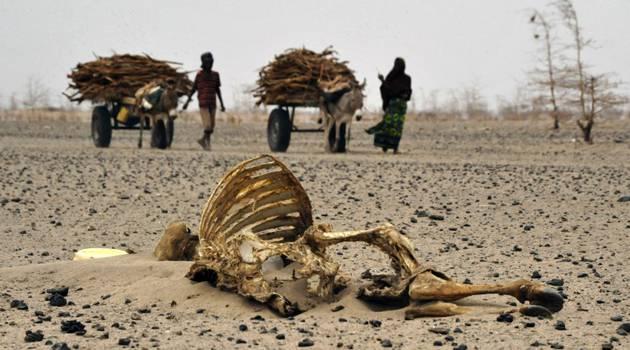
It is another planting season in Kenya, where farmers start preparing their farms in March, coinciding with the onset of the long rains that last until May. However, as farmers across the East African country prepare their farms, uncertainty over the rains lingers in their minds.
The Kenya Meteorological Department, in a recent update, indicated that the rains would be above average throughout the season and may lead to flooding.
Additionally, the period would be accompanied by higher-than-normal temperatures, with some regions expected to record temperatures over 30 degrees Celsius.
As farmers prepare their fields for planting, many are concerned that the heavy rains would harm their crops, while higher temperatures would lead to more pests and diseases.
The erratic weather, including drought, has become typical in Kenya, leaving farmers struggling with the impacts of climate change.
“Last year, I lost part of my harvest due to the El Nino rains that started in October and lasted through December. Even before I could recover, we are told that we are going to have another season of enhanced rainfall,” said Joseph Korir, a maize farmer in Uasin Gishu County, located about 330 km northwest of Nairobi, the capital of Kenya, in a recent interview with Xinhua.
Korir explained that the 2023 El Nino rains began just as many farmers were preparing to dry their produce.
“The government provided electric dryers, but they were not enough,” Korir recounted.
Consequently, Korir was unable to meet the requirement of the National Cereals and Produce Board, a state corporation, of 13 percent moisture content for maize.
This forced him to sell his produce at a discounted price to livestock farmers for use as feed.
According to the United Nations Office for the Coordination of Humanitarian Affairs, floods destroyed about 1.5 million hectares of farmland in countries in the Horn of Africa during the El Nino rains from October to December 2023.
Jonathan Bii, Uasin Gishu County governor, said that the agriculturally rich region is among the worst affected by climate change, with farmers finding it difficult to know when to plant or harvest.
“Our farming is mainly rain-fed, but with climate change, we can no longer rely on the rains. Not when we always have excessive rains or drought,” he said.
Uasin Gishu is among the maize-growing areas in Kenya that produce the bulk of the 45 million bags harvested annually in the country, according to the Ministry of Agriculture.
Not only are Kenya’s maize farmers affected by the erratic weather, but those growing horticultural crops like onions, tomatoes and capsicums also have to contend with increased diseases and pests due to unusually higher temperatures that encourage their multiplication.
Similarly, farmers cultivating Kenya’s main cash crops — coffee and tea — have to cope with increasingly erratic rainfall and a rise in pests and diseases, which diminish yields or the quality of the produce.
Tea and coffee are critical export crops, with the country earning a record 1.29 billion U.S. dollars from tea and 251 million dollars from coffee in 2023.
Fruit farmers, especially those cultivating avocados, mangoes and citrus, have also been affected by the effects of climate change.
“Higher than normal temperatures have made my avocados end up with irregular ripening that is rejected in the market, especially if you are selling internationally,” said Moses Ng’ang’a, a farmer from Murang’a in central Kenya.
Climate change effects, which include droughts, higher temperatures, hailstorms, rainfall variability and strong winds, are affecting fruit production globally, the Food and Agriculture Organization of the United Nations (FAO) noted in a recent policy brief.
The UN agency observed that in some areas, “changing weather patterns have made avocado production unviable and, in some cases, producers have been forced to relocate production areas or abandon production completely.”
The worst-affected countries include Colombia, Kenya and Peru, which the FAO said “will likely see an increase in rainfall by 2100, while Mexico, Chile and South Africa are expected to record decreases by the end of the century.”
“High temperatures and heat stress inhibit pollination and fruit setting, and alter the shape and size of avocado fruits. Temperatures of over 30 degrees Celsius cause irregular ripening and darkening of avocado flesh while increased solar radiation can lead to sunburn on fruits and damage to branches,” the FAO explained.
Climate change poses the single biggest threat to Kenya’s food security, said Kenyan President William Ruto last week at a farmers’ agricultural fair in Uasin Gishu.
He urged farmers to adopt climate-smart practices to sustainably grow food despite the rapidly unfolding effects of climate change.
To mitigate the impact of erratic weather on food production, the government is helping farmers adopt new technologies and practices, including irrigation, tree planting and the development of early warning systems.