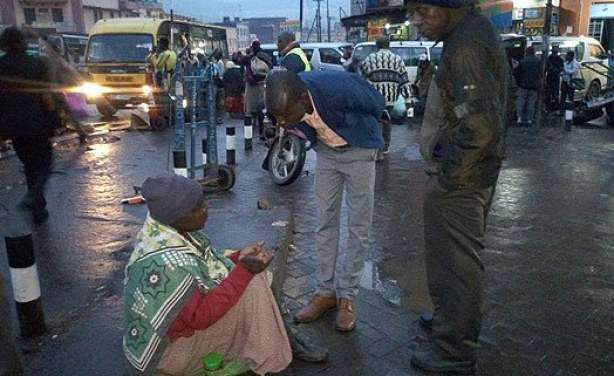
President William Ruto’s directive targeting foreign nationals engaged in small-scale retail and hawking has coincided with an unexpected development in Nairobi’s central business district, where streets that have long been associated with persistent begging were largely free of beggars on Tuesday.
The noticeable change has revived questions over longstanding claims that some people begging on Kenyan streets could be linked to cross-border networks that allegedly traffic vulnerable children and people with disabilities into the country.
One of the areas where the change was particularly noticeable was the stretch along Gaborone Road, linking Racecourse Road near St Peter Claver’s area to Tom Mboya Street near CGHU Primary School.
The road has for years been a familiar spot for street beggars, with some regularly positioning themselves along the road and at busy junctions to solicit money from pedestrians and motorists.
On Tuesday, however, no beggars were visible along the stretch.
Other alleys and backstreets in the CBD that had become familiar locations for beggars and street families also appeared quieter than usual.
Ruto directive triggers anxiety among foreign traders
The apparent change came days after Ruto directed foreign nationals engaged in hawking and small-scale retail businesses to stop operating enterprises he said should be reserved for Kenyans.
The directive initially gave affected traders until September 7 to comply.
It triggered anxiety among foreign traders, particularly Burundian nationals, some of whom reportedly sought travel documents from their embassy in Nairobi amid fears that the directive could result in deportations.
The Burundi Embassy subsequently raised concerns over the alleged harassment and deportation of its nationals and called for regional intervention.
Government gives foreigners 90 days to regularise status
The government, however, clarified on Tuesday that foreign nationals operating businesses in Kenya would be given 90 days to regularise their status.
The period will allow affected foreigners to address issues relating to their immigration status, work permits, business registrations and operating licences.
The clarification eased fears of an immediate mass crackdown or deportation of foreign traders who may have been affected by the directive.
However, the unusual reduction in the number of beggars observed in parts of Nairobi’s CBD has added a new dimension to the ongoing debate over street begging, migration and alleged exploitation of vulnerable people.
The apparent change does not, on its own, establish a connection between the President’s directive and street begging, nor does it confirm claims of organised trafficking networks. Further investigation would be required to establish whether such a link exists.