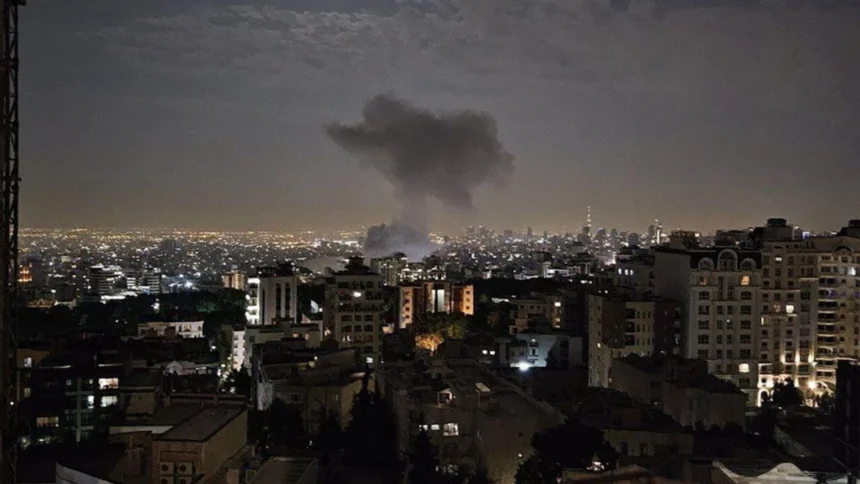
Global air travel is facing massive disruption as the ongoing Israel-Iran conflict forces major airports in the Middle East to shut down or pause operations, stranding thousands of passengers and rerouting critical flight paths across the globe.
Doha and Dubai Airports Hit Hard
In Qatar, operations at Hamad International Airport in Doha were suspended after Iran launched missiles at a U.S. military base, reportedly in retaliation for U.S. strikes on Iranian nuclear facilities.
Meanwhile, Dubai International Airport, the world’s busiest by international traffic, temporarily halted flights. Passengers were advised to expect delays, cancellations, and rebookings as airspace around the Gulf narrowed.
“This conflict is spreading aviation disruptions like wildfire,” said aviation consultant Tim Atkinson. “When one hub collapses, the ripple effects hit airlines worldwide.”
Stranded Passengers, Rerouted Jets
In Doha, hundreds of travelers were left lying on terminal floors, with many struggling to access food or sleeping space.
“We were scared when news of the missiles broke,” said Rob Liddle, a BBC journalist stranded en route to Dhaka. “But things calmed down quickly. The wait, though, is exhausting.”
Air India and Japan Airlines have both canceled all flights into the region, with Air India suspending routes to Europe and North America due to ripple effects.
The airports in Doha, Dubai, and Abu Dhabi see over 480,000 travelers daily, acting as critical transit points for long-haul flights between Asia, Europe, and Australia.
Airspace Closures Spark Safety and Cost Concerns
Airspace over Iran, Iraq, Lebanon, Syria, and Jordan remains closed, forcing reroutes over Turkey or Saudi Arabia. This has led to higher fuel costs, longer flight durations, and crew rotation issues, experts say.
“These extended routes come at a cost—both financial and logistical,” noted aviation expert John Strickland. “Airlines will struggle to keep to schedules.”
Multiple countries—including Kenya, Australia, and the United Kingdom—have issued travel advisories, warning citizens to avoid non-essential travel to affected areas.
Also read on Sauce.co.ke: Kenya issues travel advisory amid Middle East tensions
Global Aviation Feels the Squeeze
According to Osprey Flight Solutions, a growing number of commercial aircraft are being rerouted due to closed airspace over Russia and Ukraine. The Middle East, once the only viable detour, is now becoming increasingly unusable, squeezing global routes into narrower corridors.
“This is a flashpoint moment,” said Atkinson. “If this escalates further, we may see a full-blown air travel crisis.”
U.S. President Donald Trump posted on X (formerly Twitter) that a “complete and total ceasefire” had been reached—but neither Israel nor Iran has officially confirmed this.