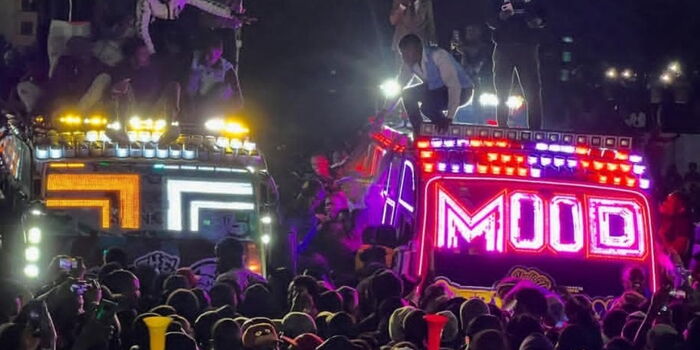
A Nairobi-based advocate has petitioned the High Court seeking orders to prohibit public service vehicles (PSVs) from playing loud music, arguing that the practice amounts to noise pollution and violates several constitutional rights.
In the petition, lawyer Samwel Barongo Nyamari has sued the Matatu Owners Association, the National Transport and Safety Authority (NTSA), the National Environment Management Authority (NEMA), and the Attorney General, accusing them of failing to protect commuters from what he describes as “cruel, deafening and disturbing noise disguised as music” in matatus.
Nyamari, who says he has lived and worked in Nairobi for the past six years, argues that the widespread use of high-powered sound systems in matatus exposes passengers to psychological torture and harmful noise levels, disproportionately affecting children, the elderly, the sick, and people living with autism.
Alleged Violation of Constitutional Rights
According to the petition, loud music in public transport violates multiple provisions of the Constitution, including:
- Article 42, which guarantees the right to a clean and healthy environment
- Article 29, on freedom and security of the person
- Article 46, which protects consumer rights
“Over the said six years, the Petitioner, as a consumer of transport services, has undergone gruesome torture from loud, unsolicited, repetitive noise disguised as music whenever he boards matatus,” the petition reads.
Nyamari further claims that he has witnessed countless commuters suffer silently from what he terms a “noise pandemic” in Nairobi’s public transport system.
Lack of Consumer Choice and Health Risks
The advocate argues that most matatus operating in Nairobi are fitted with powerful music systems that play loud, drum-heavy music throughout the day without warning passengers in advance.
He contends that this denies commuters the right to make informed consumer choices, as operators fail to disclose the nature of the service before passengers board the vehicles.
The petition also links prolonged exposure to loud music to serious health risks, including hearing damage, mental distress, and overall deterioration of well-being, particularly among vulnerable groups.
Nyamari describes the practice as an intangible form of violence that degrades the quality and dignity of public transport services.
State Agencies Accused of Failing to Act
In his court filings, Nyamari faults NTSA and NEMA for allegedly failing to enforce existing laws and regulations on noise pollution and public transport standards. He also accuses the State of neglecting its constitutional obligation to safeguard citizens’ rights and welfare.
Orders Sought from the Court
The petitioner is asking the High Court to:
- Declare the playing of loud music in public service vehicles unconstitutional
- Issue an order prohibiting all matatus from playing loud music
- Compel NTSA, NEMA, and the Attorney General to enforce compliance with the court’s directives
The case is expected to spark debate around noise pollution, commuter rights, and regulation of public transport in Kenya’s urban centres.