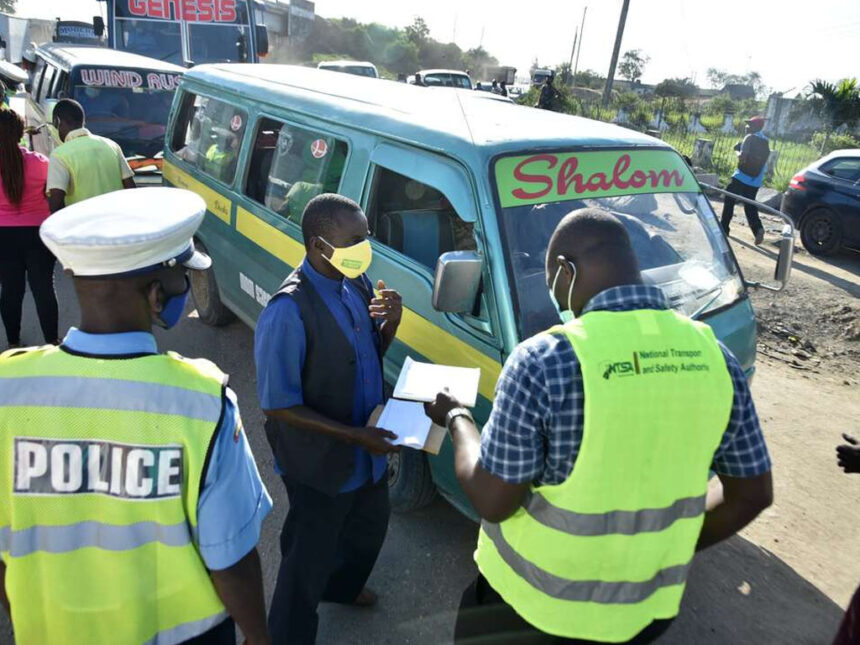
The National Transport and Safety Authority (NTSA) has issued a clarification following public concern over the government’s planned introduction of mandatory annual inspections for private motor vehicles.
The Authority had earlier announced that, effective July 1, privately owned vehicles older than four years would be subject to compulsory annual inspections at a cost of KSh 2,000 per vehicle. Motorcycles are also expected to undergo mandatory inspections under the new framework.
No Immediate Enforcement During Routine Checks
Following widespread public debate, NTSA emphasized that enforcement of the new inspection requirements will not begin immediately.
According to the Authority:
- Owners of private vehicles will not be required to produce proof of inspection during routine traffic checks.
- Operators of school transport vehicles and commercial service vehicles will not face penalties for non-compliance at this stage.
- Details on enforcement timelines and implementation procedures will be communicated separately.
“Information on implementation and enforcement of the above-mentioned sections/rules shall be communicated to the public in due course,” NTSA said in a statement.
Vehicles Covered Under the New Rules
The inspection programme is expected to apply to several categories of vehicles, including:
- Private vehicles more than four years old.
- Locally assembled vehicles.
- Vehicles involved in road accidents.
- Vehicles that have undergone structural or mechanical modifications.
Government Eyes Billions in Inspection Revenue
According to NTSA, Kenya has more than six million registered vehicles.
Based on the proposed charges—comprising a KSh 1,000 booking fee and a KSh 1,000 inspection fee—the government could potentially collect at least KSh 12 billion annually if all eligible vehicles undergo the mandatory inspections.
NTSA Director General Nashon Kondiwa said the annual inspection requirement is already provided for under existing law, although he acknowledged that a 12-month inspection interval may not adequately cater for vehicles that spend significant time on the road.
He also disclosed that the Authority is working to operationalize privately run vehicle inspection centres to increase inspection capacity nationwide.
Opposition Leaders Criticize the Policy
The proposed inspections have drawn criticism from opposition leaders, including Fred Matiang’i and Rigathi Gachagua.
Matiang’i described the move as insensitive to the financial challenges facing Kenyans, citing rising fuel prices, insurance costs, taxation and the high cost of living.
He called for the suspension of the policy until it undergoes broader public consultation and key questions are addressed, including:
- How many vehicles will be affected?
- How much revenue is expected annually?
- What evidence shows the inspections will reduce road accidents?
- Whether NTSA has adequate capacity to inspect millions of vehicles without creating delays.
- What safeguards exist to prevent corruption, rent-seeking and harassment of motorists.
“What safeguards have been put in place to ensure that this programme does not become another avenue for rent-seeking and harassment of motorists?” Matiang’i said.
NTSA has maintained that while the legal framework for annual inspections already exists, the public will receive further guidance before full implementation and enforcement begin.