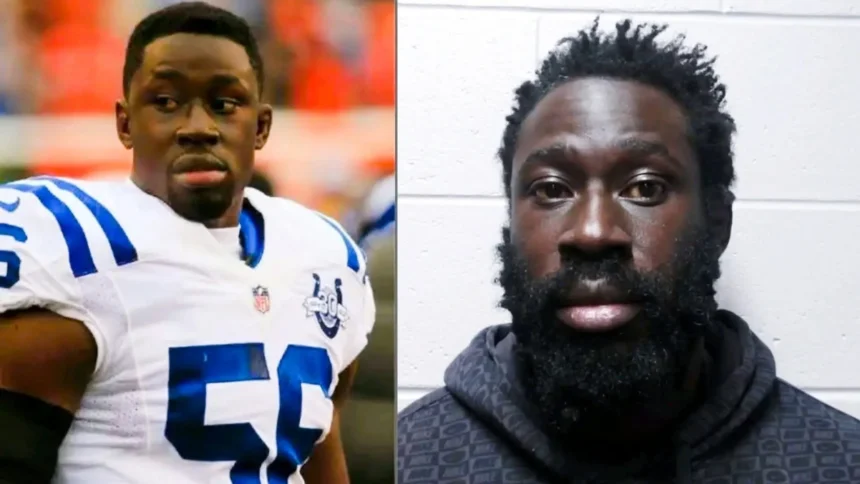
Former Kenyan rugby player and ex-National Football League (NFL) linebacker Daniel Adongo has been deported to Kenya by the United States Immigration and Customs Enforcement (ICE) after US authorities determined that he had overstayed his visa.
According to ICE and US media reports, the 37-year-old was removed from the United States on June 20 following a deportation order issued by an immigration judge in March.
Authorities said the ruling came after it was established that Adongo had remained in the country after his visa expired in 2016.
ICE said the deportation was also influenced by Adongo’s criminal record in the United States, including a 2020 conviction for criminal mischief.
The agency stated that Adongo had previously been arrested on charges including felony intimidation, battery and disorderly conduct.
However, ICE did not specify whether those arrests resulted in additional convictions.
ICE Chicago Assistant Field Office Director Douglas Thompson said the deportation underscores the agency’s commitment to enforcing immigration laws.
“Those who violate immigration law are held equally accountable, including former professional athletes,” Thompson said.
According to ICE, Adongo was sentenced to one year in jail after his 2020 criminal mischief conviction involving property damage.
The agency also said he became subject to mandatory detention after overstaying his visa, citing the Laken Riley Act, which requires certain undocumented immigrants convicted of specified offences to remain in custody while immigration proceedings are underway.
Adongo made headlines in 2013 after making the rare transition from rugby to American football, signing with the Indianapolis Colts despite having no prior experience in the NFL.
He played as a linebacker during the 2013 and 2014 NFL seasons before leaving the Colts in 2015.
Before relocating to the United States, Adongo represented Kenya in rugby and was widely regarded as one of the country’s most promising athletes.
In announcing his removal, ICE reiterated that individuals with criminal convictions remain a priority for immigration enforcement and reaffirmed its commitment to enforcing US immigration laws.