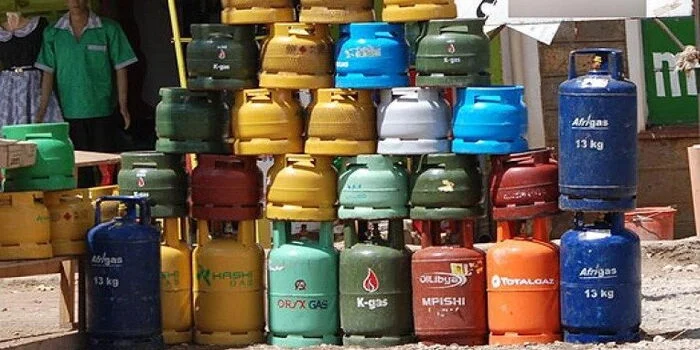
LPG consumption in Kenya rose by 14.62 percent during the 2025/2026 financial year, according to new statistics released by the Energy and Petroleum Regulatory Authority (EPRA).
The increase translates to 475,943 metric tonnes, as the government continues to promote liquefied petroleum gas (LPG) for use in homes, motor vehicles and learning institutions.
EPRA’s 2025/2026 Energy and Petroleum Statistics Report also shows that LPG consumption per person increased from 7.9 kilograms to 8.9 kilograms during the year.
LPG infrastructure supports consumption growth
EPRA Acting Director General Dr Joseph Oketch attributed the increase to improvements across the LPG supply chain.
“The overall energy and petroleum sector has registered continued growth, but it is commendable that clean energy consumption continues to grow,” Oketch said.
He noted that increased LPG use was supported by expanded importation, storage and distribution infrastructure.
Improved product availability also contributed to the growth.
Government policies promoting clean cooking solutions further supported LPG consumption across the country.
Electricity consumption rises
Electricity consumption also recorded significant growth during the year.
Domestic electricity consumption increased by 18.87 percent to 4,327.07 GWh.
The number of new individual electricity connections reached 411,710, pushing the cumulative number of grid-connected customers to 10.43 million.
Large commercial and industrial consumers remained the biggest electricity users.
The category accounted for 47.57 percent of total electricity consumption during the period under review.
Electric mobility records fastest growth
Electric mobility recorded the fastest year-on-year increase in electricity consumption.
Consumption rose by 143.01 percent, from 5.04 GWh to 12.25 GWh during the financial year.
EPRA linked the increase to growing uptake of the e-mobility tariff.
The Authority also reviewed the tariff by removing the 15,000 kWh monthly consumption cap.
The change is intended to support greater electricity use by electric mobility customers.
Petroleum imports increase
Petroleum product imports also increased during the period.
Imports rose by 11.52 percent to 10.88 million cubic metres.
Domestic petroleum consumption increased by 8.41 percent to 6.33 million cubic metres.
EPRA attributed the growth to increased economic activity in key sectors, particularly transport and construction.
Imports under the Kenya Government-to-Government framework accounted for 72.42 percent of total petroleum import volumes.
Kenya advances petroleum resource development
The report also highlighted progress in the development of Kenya’s discovered petroleum resources.
According to EPRA, development activities remained on course across 50 petroleum exploration blocks.
Regulatory and technical processes linked to petroleum development were also underway.
Kenya’s installed power capacity grows
Kenya’s total installed electricity generation capacity increased by 3.81 percent to 3,987.20 MW as of June 2026.
The capacity comprised:
- 3,263.02 MW of interconnected generation capacity
- 676.60 MW of captive generation capacity
- 47.58 MW of off-grid generation capacity
Installed captive solar photovoltaic capacity recorded a 24.22 percent increase during the year.
EPRA also approved 10 power purchase agreements (PPAs) for electricity generation during the period.
EPRA issues new energy licences
EPRA granted several electricity and renewable energy licences during the 2025/2026 financial year.
The Authority issued:
- 11 generation licences
- 8 distribution and retail supply licences
- 1 electricity export and import licence
The year also recorded the highest number of electrical worker and contractor licences issued in five years.
Electrical worker licences increased by 53 percent to 884.
Contractor licences rose by 22 percent to 648.
EPRA attributed the increase to greater public awareness and the decentralisation of licensing services to its regional offices.
EPRA resolves most consumer complaints
The Authority received 489 complaints during the financial year.
Of these, 482 complaints were resolved, while seven remained under review at the end of the financial year.
The figures form part of EPRA’s assessment of developments across Kenya’s energy and petroleum sectors between July 2025 and June 2026.
The report highlights continued growth in LPG, electricity, electric mobility and petroleum consumption as Kenya expands its energy infrastructure and clean energy initiatives.