
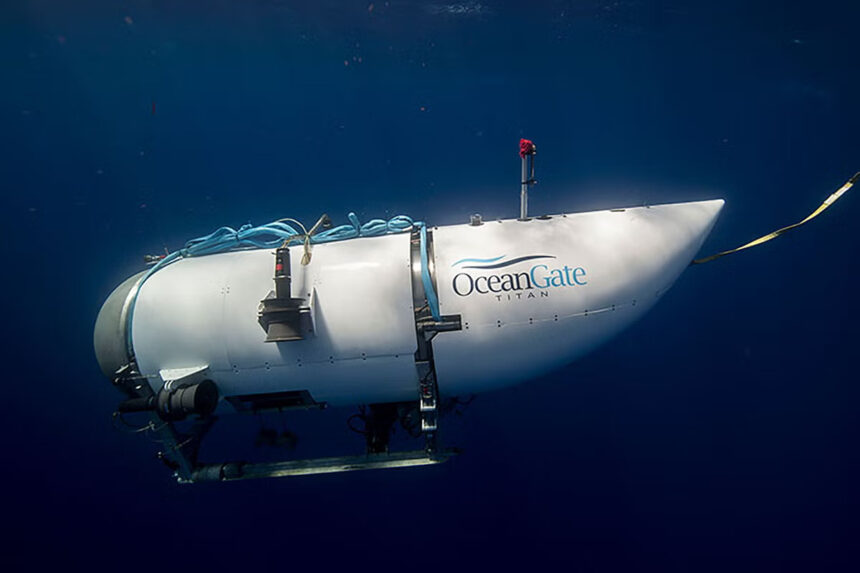
Bright, driven, and born into wealth, Mr. Rush’s dream was to be the first person to reach planet Mars.
When he realized that was unlikely to happen in his lifetime, he turned his attention to the sea.
“I wanted to be Captain Kirk and in our lifetime, the final frontier is the ocean,” he told a journalist in 2017.
The ocean promised adventure, adrenaline, and mystery. He also believed it promised profits – if he could make a success of the submersible he helped design, which he directed his company OceanGate to build.
He had a maverick spirit that seemed to draw people in, earning him the admiration of his employees, passengers, and investors.
“His passion was amazing and I bought into it,” said Aaron Newman, who traveled on Mr Rush’s Titan sub and eventually became an OceanGate investor.
Safety of the vessel in question
But Mr. Rush’s soaring ambition also drew scrutiny from industry experts who warned he was cutting corners, putting innovation ahead of safety, and risking potentially catastrophic results.
It wasn’t something he was willing to accept.
Last week, he and four other people on board the Titan lost their lives when it imploded.
“You’re remembered for the rules you break,” Mr. Rush once said, quoting US General Douglas MacArthur.
“I’ve broken some rules,” he said about the Titan. “I think I’ve broken them with logic and good engineering behind me.”
Ross Kemp turned down a filming trip to the Titanic wreck on an OceanGate submersible after it was deemed unsafe ‘on all levels’, his agent has revealed.
The former EastEnders star turned documentary maker was planning to take part in the deep diving mission last year for a programme to mark the 110th anniversary of the sinking of the ill-fated liner.
But an expert production company behind the documentary decided it was too risky to board the submersible after carrying out its own checks.
US Navy likely detected the “catastrophic implosion
The vessel would later on disappear with the governments of Canada and the USA launching search and rescue operations. This happened as many analysts globally calculated and counted down the remaining oxygen available for the five lives in the vessel.
The nave would later inform the anxious globe that they had found debris consistent with catastrophic loss of pressure chamber and that all five lives onboard the Titan were ‘lost’.
Five people died, including CEO Stockton Rush, Shahzada Dawood, and his son Suleman Dawood, Hamish Harding, and Paul-Henri Nargeolet in the implosion of the vessel.
The discovery of debris from the submersible comes as a senior official in the navy confirmed that an existing secret system designed to pick up audio heard a sound consistent with an “implosion”.
The sound was heard near where the submersible lost communication on Sunday.
While the official said the sound was “not definitive”, the navy said it shared the information “immediately” with the incident commander.
A navy statement said: “This information was considered with the compilation of additional acoustic data provided by other partners and the decision was made to continue our mission as a search and rescue and make every effort to save the lives on board.”
On Thursday, Rear Admiral John Mauger – who led the search – confirmed in a news conference that a remotely operated vehicle had discovered the nose cone of the lost submersible about 487m (1,600ft) from the bow of the Titanic on the seafloor.
Further debris was found nearby, with Rear Admiral Mauger adding: “In consultation with experts from within unified command, the debris is consistent with the catastrophic loss of the pressure chamber.
“On behalf of US Coast Guard and entire unified command, I offer deepest condolences to the families. I can only imagine what this has been like for them, and I hope this discovery provides some solace during this difficult time.”

