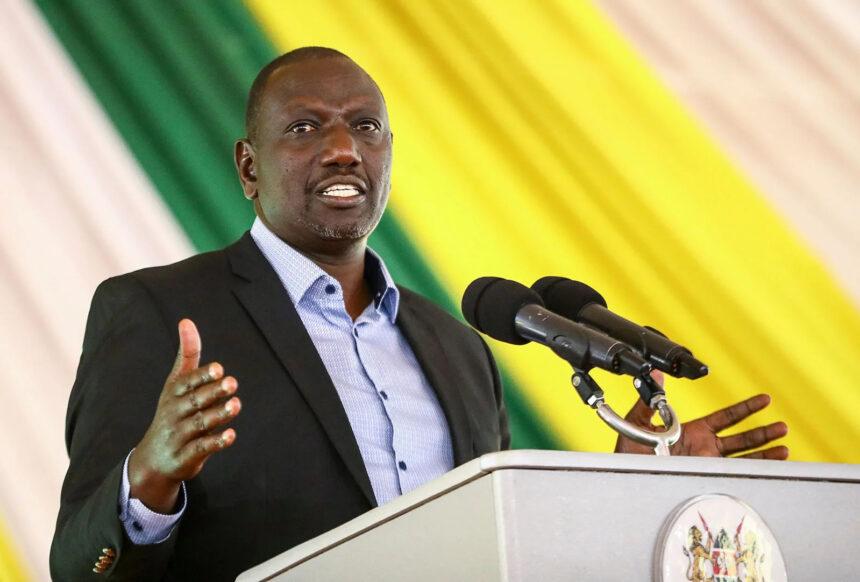
In a groundbreaking move, President William Ruto has outlined the comprehensive framework of his ambitious Universal Health Care (UHC) program, ensuring that no Kenyan will be denied access to medical care.
The UHC initiative, supported by three recently enacted laws, promises to safeguard medical funds and extend coverage to all citizens.
Under the new system, every Kenyan will receive a special social insurance card, ensuring access to medical treatment when visiting healthcare facilities.
President Ruto emphasized, “Each Kenyan will have a social insurance card, either self-funded or government-sponsored.”
While every Kenyan will contribute to the cost of the card, the government will step in to support those who cannot afford it. President Ruto confirmed, “If the limit is reached, the chronic illness fund will be activated, guaranteeing that no Kenyan is left without medical care.”
The UHC program commits to providing free medical services at all level 1, 2, and 3 healthcare facilities, with all medical expenses covered by the government through the primary health fund.
Moreover, President Ruto emphasized the importance of community involvement in the management of dispensaries and health centers, stating, “You will have the authority to address issues like drug shortages and report back to us, ensuring Kenyans have access to healthcare near their homes.”
The President acknowledged the current challenges Kenyans face, such as having to travel long distances due to inadequate local healthcare facilities.
He pledged that each health facility would have a ringfenced budget to prevent reallocation, and that a diverse group of stakeholders, including church leaders, development partners, civil society, residents, and administrators, would oversee facility management to combat corruption.
In case of emergency or chronic illness, President Ruto assured that all Kenyans would receive treatment at any hospital without prior payment or unnecessary inquiries.
The Universal Health Care Bills, including the Social Health Insurance Bill, Digital Health Bill, Primary Healthcare Bill, and Facility Improvement Financing Bill, were signed into law by President Ruto.
These laws will strengthen the Universal Health Coverage plan and enhance healthcare services in Kenya.
The Digital Health Bill aims to promote telemedicine and digitize healthcare transactions, while the Primary Healthcare Bill seeks to bolster preventive health services by involving community health promoters.
The Social Health Insurance Bill will create three new funds to improve healthcare accessibility, and the Facility Improvement Financing Bill will protect healthcare funds from being diverted to other purposes.
Furthermore, the government’s commitment to the education sector is evident as it plans to employ an additional 2,000 tutors in Technical and Vocational Education Training (TVET) institutions across the country.
This initiative is in line with the government’s policy to equip Kenyan youth with practical skills and competencies.
President Ruto highlighted the collaboration with the government of China to provide equipment for 70 technical training colleges in Kenya, aiming to enhance the acquisition of knowledge and skills necessary for job readiness.
The President also praised the significant reduction in teacher shortages, with the Teachers Service Commission recruiting 56,000 teachers in the past year, marking a historic achievement.
Additionally, plans are underway to establish TVET institutions in every constituency, ensuring that more Kenyan youth have access to relevant training and skill development.
Regional centers for the Kenya School of TVETs are also being established to equip youth with industry-ready skills across various provinces.