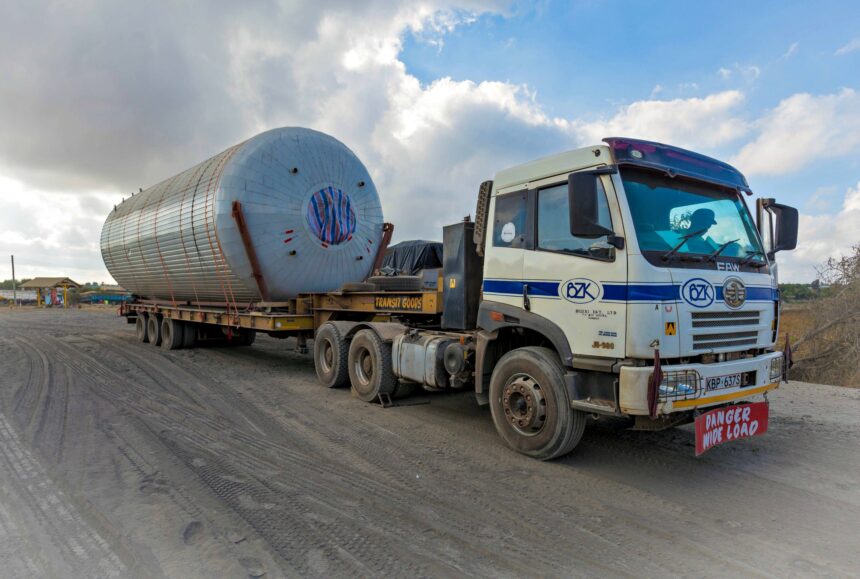
Billionaire Zedekiah ‘Buzeki’ Bundotich disclosed on Saturday, January 13, that the majority of his logistics company’s operations had been shut down.
Expressing dissatisfaction with the challenging business environment attributed to the exorbitant fuel costs, the billionaire, who heads the Buzeki Group of Companies, lamented that the closure had left hundreds unemployed.
Despite twice vying unsuccessfully for the Uasin Gishu gubernatorial seat, he has been unlucky in politics and hence opted to remain in the logistics business. However, Buzeki observed that the company that once generated millions now operated as a mere shell of its former self, managed by a handful of remaining employees.
“We parked trucks from November 1, 2023, as the increase in fuel prices rendered the business unprofitable,” Buzeki explained.
Buzeki links the adverse effects to President William Ruto’s tax policies and rising cost of fuel.
“We sent 300 staff parking. We still have some employed. Things are tough, and this is the truth,” Buzeki added.
In June 2023, Buzeki had previously hinted at downsizing his truck business following the parliamentary approval of raising Value Added Tax (VAT) on fuel from 8 % to 16 %. At that time, the billionaire announced intentions to scrap old trucks and allow financial institutions to repossess other vehicles acquired through loans.
“Due to the rise in VAT, we are now officially downsizing with immediate effect. All old trucks, including those with Euro 3 and below, will be sent to the scrap yard,” he declared then.
Facing continued challenges, the entrepreneur proceeded with the downsizing, reducing the logistics company to a mere shadow of its former stature.
The Buzeki Group of Companies, established in 1999, was once a leading transport service provider in East and Central African regions, offering transportation services to diverse industries in manufacturing, distribution, and agriculture.
Fuel prices expected to rise further
Meanwhile, a report from the Central Bank of Kenya has foreseen further depreciation of the Shilling and a decline in international oil prices ahead of the fuel review by the Energy and Petroleum Regulatory Authority (EPRA) scheduled for Sunday.
In its weekly report, the monetary policy regulator highlighted the strengthening of the dollar against the Shilling, with the local currency exchanging at Ksh160 against the greenback by the close of Friday. As of Friday morning, international prices had decreased due to increased supply from non-OPEC oil producers like the US.
However, recent air strikes by the US and the United Kingdom in Yemen caused prices to surge by close to 4 per cent.
Market analysts also anticipate that with heightened tensions from the Israel-Palestine conflict, international oil prices may continue to rise, potentially impacting pump prices starting in February.
“The US and UK launching air strikes on Houthis in Yemen are adding to the risk of Iran being directly drawn into the conflict, which would threaten oil supplies. The recent escalation of the conflict is not expected to majorly affect the prices to be announced tomorrow. However, owing to the depreciation of the Shilling, pump prices could remain high,” the report reads.