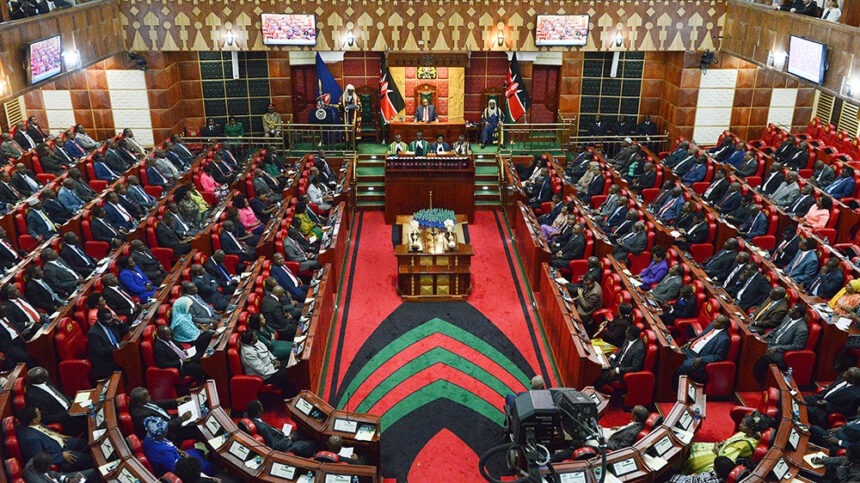
President William Ruto’s ambitious housing initiative has taken a significant stride forward as his supporters successfully pushed the Affordable Housing Bill, 2023 through its third reading in the National Assembly.
During Wednesday’s session, all proposed amendments from the joint committee were approved, propelling the bill forward. However, opposition MPs, faced with defeated proposals, expressed frustration and exited the House.
Notable amendments passed during the third reading included granting the Treasury Cabinet Secretary discretionary powers to determine the percentage payable by prospective homeowners before occupying the house. The original bill had specified a 10% deposit requirement.
Additionally, the bill now mandates tax recovery procedures for employers and employees who default on levy remittances, ensuring compliance with existing laws.
MPs also voted to authorize the fund board to allocate funds for institutional housing and housing project off-takes. Furthermore, loans will now be subject to reducing interest, with restrictions placed on buyers changing units arbitrarily.
However, lawmakers aligned with Azimio la Umoja One Kenya raised concerns regarding perceived gaps in the legislation. Of particular concern was the potential harassment of individuals, including informal sector workers, by the Kenya Revenue Authority (KRA). The bill stipulates that even non-salaried individuals must contribute 1.5% of their income, although the mechanism for collecting these contributions remains unclear.
The bill is now slated for swift consideration in the Senate, with Kenya Kwanza aiming to implement deductions from March salaries for the affordable housing tax.
Majority Leader Kimani Ichung’wah expressed confidence following the bill’s passage, criticizing opposition MPs for leaving the House when their proposals faced defeat.
“This bill aims at employment creation, wealth creation, and facilitating access to affordable homes for Kenyans, thereby fostering economic growth. It’s disheartening that those who had the opportunity to lead for ten years only managed to build 1,900 houses, while the current administration is set to deliver close to 40,000 houses within a year and aims to achieve a minimum of 200,000 units annually,” stated Ichung’wah.