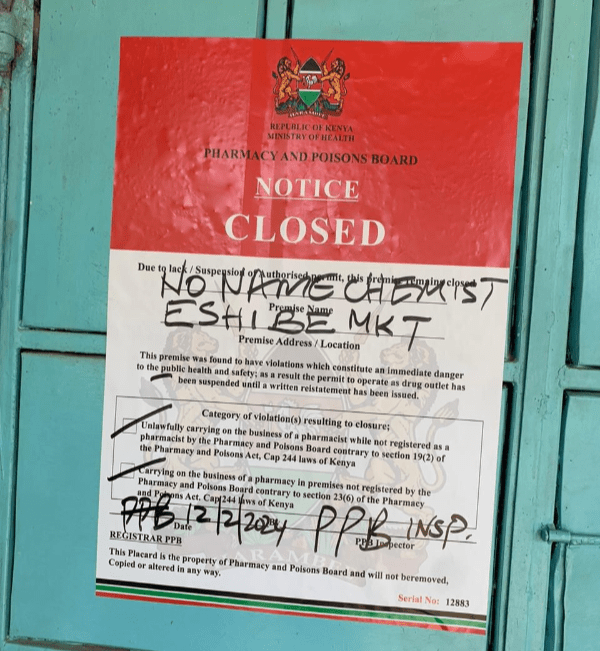
The Pharmacy and Poisons Board (PPB) has arrested 129 individuals in three regions following a crackdown that hunted down illegal pharmaceutical activities.
This joint initiative, led by the Pharmacy and Poisons Board (PPB) in collaboration with the National Police Service, has resulted in the seizure of over 200 cartons of illegal medications across Nairobi, South Rift, and Western regions.
Commencing on January 29th, the operation has specifically targeted unlicensed pharmaceutical premises and chemists peddling unregistered medicines. Those apprehended in connection with these activities are slated to face legal proceedings.
Julius Kaluai, Head of Enforcement and Surveillance at the PPB, underscored the imperative of this concerted effort in upholding public health standards. He emphasized the inherent risks posed by unregulated pharmaceutical establishments, citing concerns over safety and efficacy.
“The operation aims to uphold regulatory standards, ensuring public safety, and combatting illicit practices within the pharmaceutical sector,” Kaluai affirmed, warning of regulatory repercussions for any attempts to tamper with or remove closure notices.
The PPB remains steadfast in its commitment to rooting out unlawful practices within the pharmaceutical industry, with a particular focus on unqualified individuals operating pharmacies without requisite licenses. CEO Fred Siyoi highlighted the ongoing challenge of unauthorized individuals running pharmacies, stressing the need for stringent enforcement measures.
In a bid to further bolster regulatory efforts, the board has proposed the adoption of the “Nyumba Kumi” initiative to weed out quacks in the pharmaceutical sector. Through this grassroots initiative, members of the public are encouraged to identify and report suspicious operators within their communities.
Moreover, the PPB has embarked on developing guidelines to regulate the activities of pharmaceutical sales representatives, aiming to ensure their qualifications and ethical conduct in promoting medicines and healthcare products.
Kaluai reiterated the importance of verifying the registration details of pharmacy practitioners and urged healthcare facilities to adhere to proper procedures for pharmaceutical waste disposal. Additionally, pharmaceutical practitioners are encouraged to enhance transportation processes for pharmaceuticals to bolster efficiency and reliability.
Those arrested face charges related to the possession of Part I poisons without proper authorization, in contravention of the Pharmacy and Poisons Act.