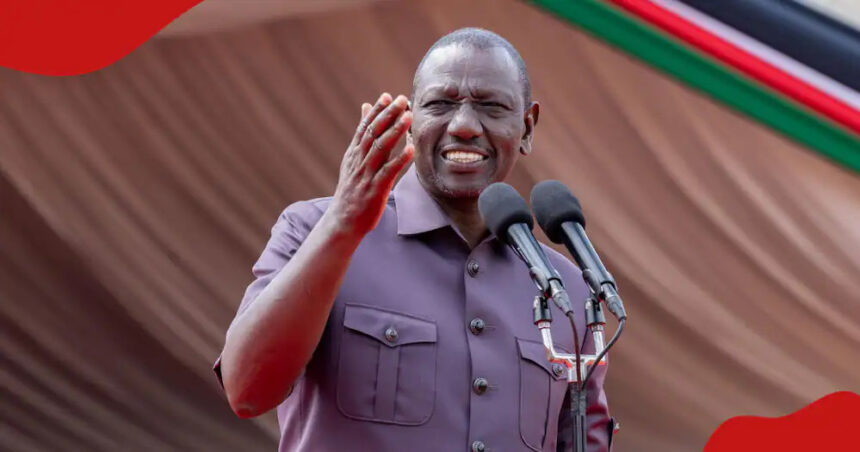
President William Ruto has received an endorsement as the new African Union Champion for Institutional Reforms.
The Assembly of African Union Heads of State and Government, which convened in Addis Ababa, Ethiopia on Saturday, entrusted President Ruto with the responsibility of providing political leadership and vision, as well as overseeing the completion of the Comprehensive Institutional Reform Initiative initiated in 2016.
Taking over from President Paul Kagame of Rwanda, President Ruto’s new role involves actively participating in the restructuring of the African Union Commission, AU organs, and specialized agencies. The aim is to enhance their effectiveness and efficiency in managing African Union programs, as outlined in a briefing from State House.
During the Presidential Dialogue on Reform of Global Financial Institutions, President Ruto expressed his readiness to lead the continent in advancing the international financial reform agenda. He emphasized Kenya’s unwavering focus on this subject, citing consistent messages across various global locations.
President Ruto highlighted Africa’s co-leadership in both the Taskforce on International Taxation to Scale up Development, Climate, and Nature Action, as well as the Expert Review on Debt, Nature, and Climate. He acknowledged the challenging negotiations between African teams and those from the developed world, emphasizing the significance of determining the focus and approach.
“We hope that an expanded and innovative toolkit to address Africa’s sovereign debt burden will not only include instruments such as debt pause clauses and debt-for-nature swaps but also appropriately differentiated treatment of debt incurred to finance green economic growth,” remarked Dr. Ruto.
Advocating for increased investments in renewable energy generation capacity, he asserted that green alternatives are not only more future-proof but also cost-effective. President Ruto called for innovative structuring of green growth investments, ensuring a robust business case and integrating discussions about trade and market access.
However, he cautioned against penalizing Africa for high upfront investments, suggesting that such penalties, such as impacts on credit ratings or high-interest rates, might lead to economically rational decisions favoring fossil fuels to avoid increased debt burdens and poorer credit ratings.