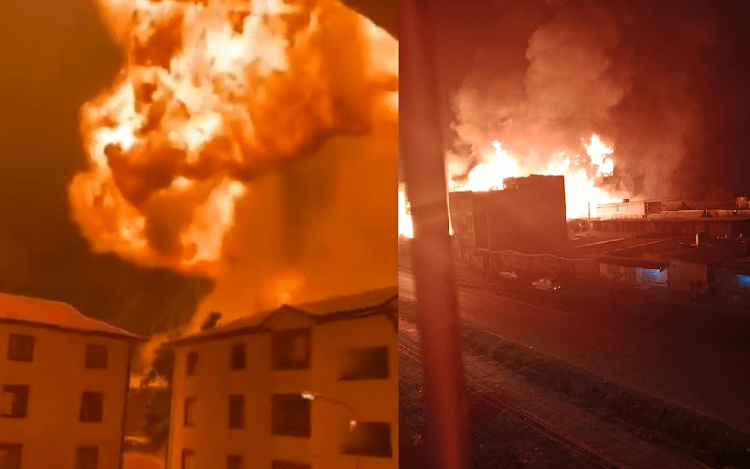
The government has now attributed the Thursday night explosion at an Liquefied Petroleum Gas (LPG) plant in Nairobi’s Embakasi area to the improper refilling of cylinders.
Energy Cabinet Secretary Davis Chirchir and Interior counterpart Prof. Kithure Kindiki issued a joint statement on Friday evening, revealing that the cylinders were filled using direct manifold connections to the LPG tanker, significantly elevating the risk of leakage and resulting in the tragic explosion that claimed three lives and injured at least 280 others.
“Preliminary findings indicate that on the fateful night, the refilling of LPG cylinders was done using direct manifold connections to the LPG tanker, increasing the risk of leakage and explosion,” stated the officials.
In response to the incident, the government announced plans to demolish all illegal gas storage and filling plants nationwide.
A series of measures will be implemented to prevent similar tragedies, including a comprehensive risk assessment for all LPG plants to ensure compliance. Punishments will be instituted for operators filling cylinders without proper authorization from the brand owners.
The government also outlined an immediate LPG growth strategy, involving the development and implementation of a track and trace framework for gas cylinders to enhance traceability and accountability.
Cabinet Secretaries Chirchir and Kindiki emphasized the necessity to strengthen the LPG data verification framework to improve accountability within the sector. Additionally, they proposed enhanced public awareness and sensitization programs to promote LPG safety.
Revealing further details, the Cabinet Secretaries disclosed that the Energy and Petroleum Regulatory Authority (EPRA) had rejected three permit applications (dated March 19, June 20, and July 31) to construct a gas plant at the Embakasi site in the previous year, as they did not meet the specified standards.