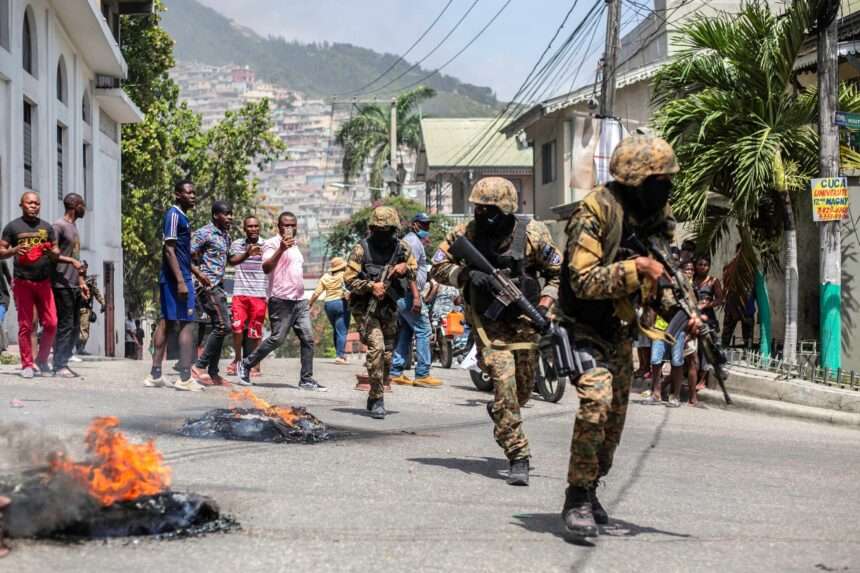
Haiti’s transition council announced on Tuesday that the country’s national police force will assume control of a UN-backed security mission set to launch by the end of May.
The police will oversee the force, aimed at regaining control over areas of Haiti overrun by gangs, and will have authority over its composition, objectives, rules of engagement, and health measures.
The UN Security Council authorized the mission’s deployment last year, but progress has been slow due to Haiti’s increasing turmoil, including the ousting of interim Prime Minister Ariel Henry and the installation of an interim council in April.
Despite delays, Kenya has offered 1,000 officers to lead the force, with President William Ruto expected to discuss the matter with U.S. President Joe Biden during his visit to Washington this week.
Several other countries, including Jamaica, the Bahamas, Barbados, Benin, Chad, and Bangladesh, have pledged personnel to the force. However, foreign governments and many Haitians remain cautious about international interventions, given past U.N. missions’ legacy of a cholera epidemic and sex abuse scandals.
The transition council emphasized that Haiti’s national police would have overall control of the mission on the ground, with deployment expected before the end of May. Haiti’s police force faces significant challenges, including heavily armed gangs, deteriorating humanitarian conditions, and insufficient equipment and infrastructure, resulting in the deaths of 80 police officers last year.