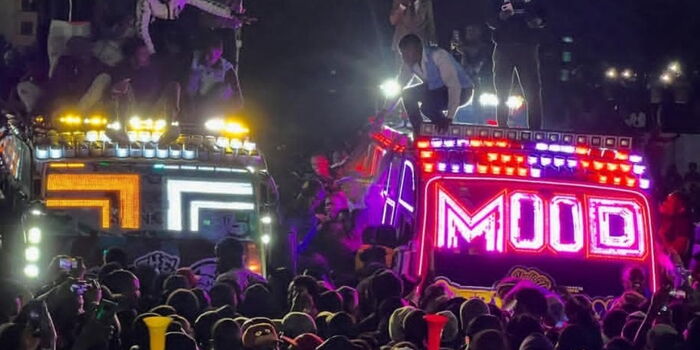
George Ruto, the son of Kenyan President William Ruto, is once again making headlines—this time for his latest matatu named “Mood.” The eye-catching public transport vehicle has sparked conversation across Nairobi just one week after its launch.
This comes as George Ruto’s matatu fleet continues to grow, adding flamboyance and style to Nairobi’s famed matatu culture. His other vehicles, like MoneyFest and Matrix, have previously attracted attention for both their striking designs and controversial conduct on the roads.
‘Mood’ Matatu: Still Trending in Nairobi
Mood, the latest addition to George’s fleet, has not only stirred social media buzz but also raised questions about how these high-profile vehicles interact with traffic laws.
Many Kenyans have speculated that vehicles tied to the president’s family are rarely stopped by police, fueling online discussions about preferential treatment.
However, these allegations were firmly denied by the matatu’s driver, Lenny, during a candid interview on Ghetto Radio.
“Yes, police can stop us—why wouldn’t they? They even stopped me just the other day. The police are here to help us,” Lenny said.
He also dismissed social media claims that officers fear confronting vehicles in George’s fleet.
“Those are just stories on the internet. We comply like everyone else. You must know how to coexist with them because they’re also doing their job,” he added.
Controversies from the Past: MoneyFest and Matrix
George’s earlier matatus, MoneyFest and Matrix, have previously made headlines for traffic violations. A viral video once showed two young men dangerously hanging off MoneyFest as it sped through Rongai, leading the NTSA to impound the vehicle.
In another incident, the same matatu was seen overtaking recklessly in heavy traffic—right in front of an indifferent traffic officer.
Police and Political Perception
The perception that police officers avoid stopping these vehicles due to their political ties has persisted, especially on platforms like Twitter and Facebook. But Lenny insists the matatus are treated like any other.
When pressed on whether bribes are used to evade law enforcement, Lenny declined to comment but maintained that the fleet operates legally.
Kenya’s Matatu Culture: Flash Meets Function
Kenya’s matatu culture has long been celebrated for its creativity and energy. From graffiti-laden bodies to booming sound systems and neon lighting, Nairobi’s public transport system is like no other.
To learn more about the roots and flair of Kenya’s matatu culture, check out BBC’s deep dive on Nairobi’s matatus.
What This Means for Road Safety in Nairobi
While flashy vehicles like Mood bring style to the streets, they also raise questions about enforcement, safety, and equality under the law. The NTSA has previously emphasized the importance of uniform enforcement of traffic regulations, regardless of ownership. You can read their official guidelines on the NTSA website.
For more updates on urban transport and road safety issues in Kenya, visit the News section of Sauce.co.ke.
Related on Sauce.co.ke:
- NTSA cracks down on rogue matatus
- Behind Kenya’s love for pimped-out public transport
- William Ruto addresses youth entrepreneurship in transport