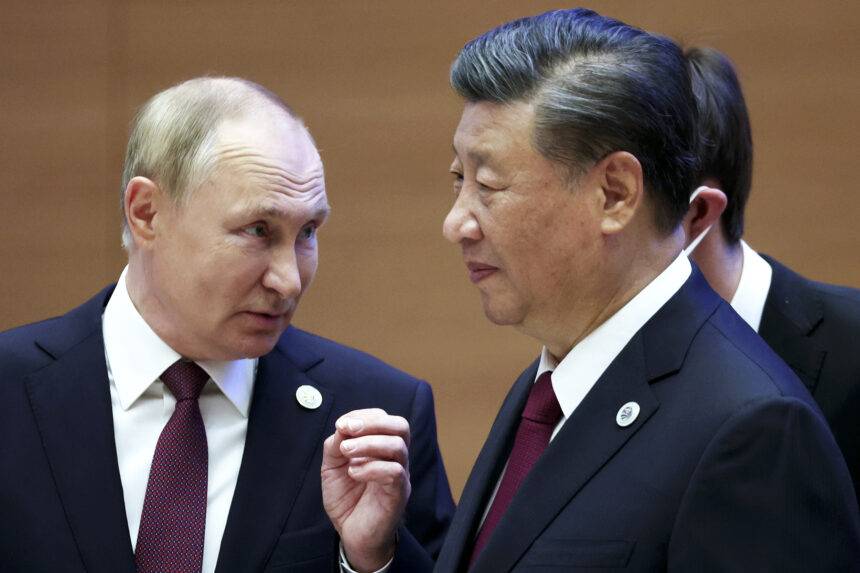
Beijing, China – August 28, 2025 — Vladimir Putin, Kim Jong-un, and Xi Jinping will march together in Beijing next week at a major military parade, sending a bold message of defiance to the West. The event, set for September 3, 2025, will commemorate Japan’s surrender in World War II.
According to the Chinese foreign ministry, 26 foreign leaders will attend. Only Robert Fico, Slovakia’s prime minister, will represent the European Union, making him the sole Western leader present.
Putin, Kim Jong-un, Xi Jinping Beijing Parade: A Show of Force
The parade will spotlight China’s growing military power and its alliances with countries under international pressure. Russia, a close Chinese partner, continues to face Western sanctions after its invasion of Ukraine. Putin, wanted by the International Criminal Court, last visited Beijing in 2024.
North Korea, China’s formal treaty ally, has endured UN sanctions since 2006. Kim Jong-un last traveled to China in 2019.
Other leaders attending include:
- Aleksandr Lukashenko, President of Belarus
- Masoud Pezashkian, President of Iran
- Prabowo Subianto, President of Indonesia
- Woo Won-shik, Speaker of South Korea’s National Assembly
- Aleksandar Vucic, President of Serbia
The United Nations will send Li Junhua, its Under-Secretary-General.
For comparison, Kenya has also deepened its ties with Beijing as global alliances shift.
Beijing Parade to Showcase China’s Military Strength
On the day of the parade, Xi Jinping will review tens of thousands of troops at Tiananmen Square alongside global leaders and senior Chinese officials.
Organizers will stage one of the largest parades in years, featuring fighter jets, missile defense systems, and hypersonic weapons. The Communist Party wants to demonstrate that China has the capability to defend itself against any threat.
The ceremony also recalls the Second Sino-Japanese War and World War II, when millions of Chinese people died. Beijing emphasizes that China will never allow itself to suffer such humiliation again.
Readers can also explore how African leaders navigate global diplomacy.
Geopolitical Impact
The Beijing parade illustrates a united bloc of Russia, North Korea, and China. Their leaders aim to resist Western dominance while strengthening ties with other nations outside the Western sphere.
This alignment challenges the United States, the European Union, and NATO allies, who already face security strains in Ukraine and the Indo-Pacific.
At the same time, shifts in power abroad mirror internal political changes at home. For example, Kenya’s Gen Z movements continue reshaping politics, showing how global and domestic transformations intersect.