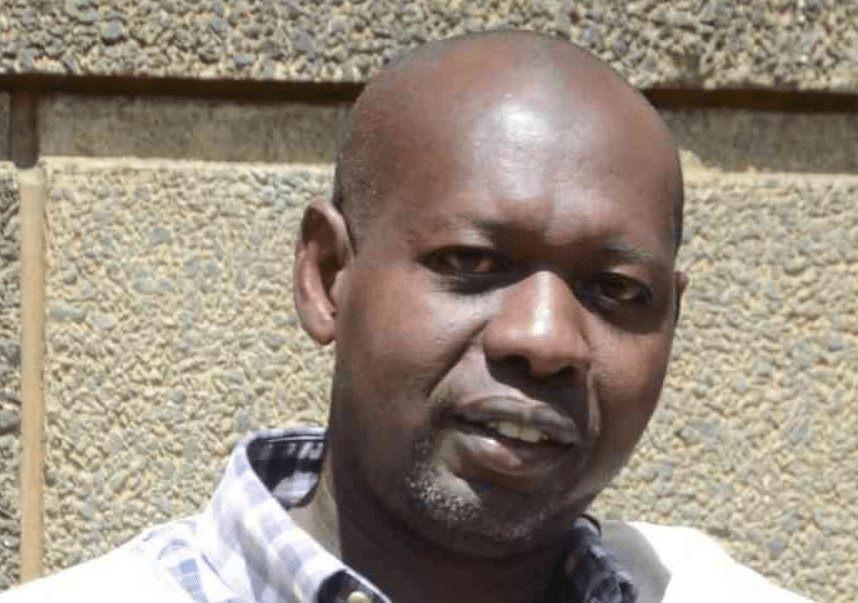
Migori, Kenya, Sept 25 – The case of Standard Group journalist Collins Kweyu has taken a dramatic turn after the Directorate of Criminal Investigations (DCI) confirmed that he will now serve as a state witness in an ongoing cybercrime probe.
Kweyu was dramatically arrested last month at a Nairobi hotel. He presented himself at the DCI offices in Migori this week to record a statement. According to senior investigators, he has cooperated fully with authorities. Preliminary findings suggest he is not the main suspect in the allegations.
Journalist insists on innocence
Kweyu had been accused of soliciting a bribe linked to a judge who allegedly demanded payment for a favourable ruling. However, he dismissed the claims, explaining that he only sought clarification to ensure balanced reporting.
“I did not in any way solicit or demand a bribe,” Kweyu told reporters in Migori. “As journalists, we follow the principle of giving a fair reply, and that is all I was trying to do before I found myself accused.”
His arrest sparked outrage within media circles. The Crime Journalists Association of Kenya (CJAK) condemned the incident. The association said that it is “an attack on press freedom and the rule of law.” CJAK also raised alarm over search orders for Kweyu’s home and equipment, warning that such actions could expose confidential sources, a cornerstone of independent journalism, according to Reporters Without Borders.
A controversial arrest
Witnesses say Kweyu was lured into what he believed was a routine meeting at a Nairobi hotel. He was then confronted by plainclothes officers. He was whisked away to Central Police Station, where he was allegedly held before being released on a free bond following pressure from journalists’ unions.
CJAK and other rights groups compared the incident to a growing global trend of governments using intimidation to muzzle critical reporting, a concern echoed in a Committee to Protect Journalists report on shrinking media freedoms in Africa.
A reprieve but questions remain
With the DCI now positioning Kweyu as a state witness rather than a suspect, his ordeal highlights the fragile state of press freedom in Kenya. Rights defenders say the saga should serve as a warning. Journalists remain vulnerable to harassment, particularly when reporting on corruption or the judiciary.
For more on Kenyan media and press freedom struggles, visit Sauce.co.ke.