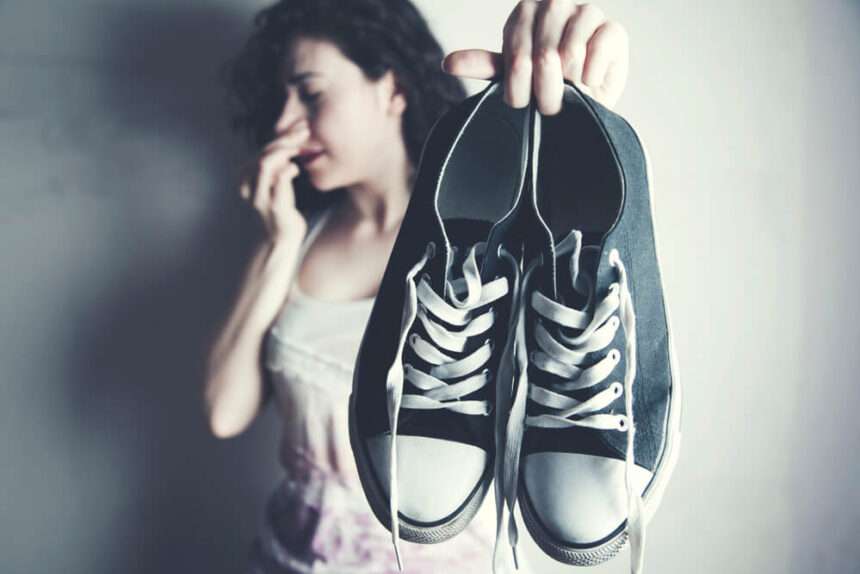
NEW DELHI, India, September 28, 2025 – Smelly shoes are a universal nuisance. From cluttered hostels to family shoe racks, unpleasant odour often turns convenience into embarrassment. Now, two Indian researchers say they have found a scientific solution that could change how households deal with stinky footwear.
Their unusual idea—using ultraviolet light to kill odour-causing bacteria—has even won them recognition at the Ig Nobel Prize, an international award that celebrates quirky yet thought-provoking research.
From Hostel Corridors to Science Labs
The discovery started at Shiv Nadar University, where assistant professor Vikash Kumar and his former student Sarthak Mittal noticed shoes piling up in hostel corridors. At first, they thought it was about space. But they soon realized the real culprit was smell.
“It wasn’t about racks or storage. The problem was frequent sweating and constant shoe use that made them stink,” Mittal said.
That observation sparked a question: does odour ruin the entire experience of using a shoe rack?
What the Survey Revealed
To answer, the researchers surveyed 149 students, most of them male. Their findings painted a familiar picture:
- Over half admitted feeling embarrassed by their own or others’ smelly shoes.
- Almost all kept shoes in racks at home.
- Few had tried deodorising products.
- Common tricks—like tea bags, baking soda, or deodorant sprays—rarely worked.
For more lifestyle insights, see our feature on how Kenyans tackle home hacks.
The Bacteria Behind Smelly Sneakers
Digging deeper, the researchers identified the culprit: Kytococcus sedentarius, a bacterium that thrives in sweaty shoes. Past studies suggested that UVC light, a germicidal form of ultraviolet light, can kill microbes.
Kumar and Mittal tested the idea with athletes’ shoes, notorious for their strong odour.
- After 2–3 minutes of UVC exposure, odour levels dropped sharply.
- At 4–6 minutes, the foul smell disappeared completely, while shoes stayed cool.
- Beyond 10 minutes, the rubber started to burn, producing a different unpleasant smell.
Their conclusion: short bursts of UVC light could banish odour without damaging shoes.
A Shoe Rack That Sterilises
The two went a step further. They designed a prototype shoe rack equipped with UVC tube lights, targeting bacteria near the toe area where build-up is strongest.
“In almost every Indian household, you find shoe racks. Imagine if they could also keep shoes odour-free,” the researchers wrote.
Unlike regular racks, theirs didn’t just store shoes—it sterilised them.
From Obscure Paper to Ig Nobel Fame
The research, first written up in 2022, had largely gone unnoticed. That changed when the Ig Nobel Prize team discovered it.
Organised by the Annals of Improbable Research with support from Harvard groups, the award celebrates “unusual and imaginative” studies.
“We never applied for it,” Kumar said. “They just called us. That alone makes you laugh and think.”
This year’s other winners included scientists who painted cows to deter flies, doctors who showed garlic makes breast milk more appealing, and Dutch researchers who found alcohol improves foreign language skills—while leaving fruit bats clumsy in flight. See the full list at the Ig Nobel Prize official site.
Why It Matters
For Kumar and Mittal, the award is more than a joke.
“Beyond recognition, it puts a burden on us,” Kumar said. “We now have to do more research on things people don’t usually think about. Today’s smelly sneakers could inspire tomorrow’s big discovery.”
Their work highlights how curiosity-driven research can solve everyday problems. By turning shoe odour into a design challenge, they’ve shown how science can make even ordinary life a little fresher.